
Beef Stew Recipe: Classic Homemade Comfort Food

The rich aroma of beef and herbs simmering for hours, vegetables softening into that deep gravy—beef stew is comfort in a bowl. This one-pot wonder has warmed American families for generations, especially on cold Sunday afternoons when the stew could bubble away on the stove while families gathered. The magic happens during those long hours of slow cooking when tough meat becomes fork-tender and vegetables absorb every bit of savory flavor. One spoonful of that thick, velvety gravy coating chunks of beef and vegetables explains why this simple dish has remained a staple for over a century.
Recipe Quick Stats
Beef Stew: At-a-Glance
Ingredients You’ll Need
Main Ingredients:
- 2 pounds beef stew meat, cut into 1-inch cubes
- ¼ cup all-purpose flour
- 1 teaspoon salt
- ½ teaspoon black pepper
- 2 tablespoons vegetable oil
- 2 medium onions, chopped
- 3 cloves garlic, minced
- 2 tablespoons tomato paste
- 4 cups beef broth
- 1 cup red wine (optional; substitute with additional beef broth)
- 1 tablespoon Worcestershire sauce
- 2 bay leaves
- 1 teaspoon dried thyme
- 4 large carrots, peeled and cut into 1-inch chunks
- 3 medium potatoes, peeled and cut into 1-inch chunks
- 2 stalks celery, cut into ½-inch pieces
- 1 cup frozen peas
How to Make Beef Stew Recipe
Preparing and Browning the Beef
Step 1: Pat beef cubes completely dry with paper towels—moisture prevents proper browning. In a large bowl, toss beef with flour, salt, and pepper until every piece is evenly coated. The flour creates a crust that browns beautifully and later thickens the stew.

Step 2: Heat vegetable oil in a large Dutch oven or heavy-bottomed pot over medium-high heat until shimmering but not smoking. The pot must be hot for proper browning.
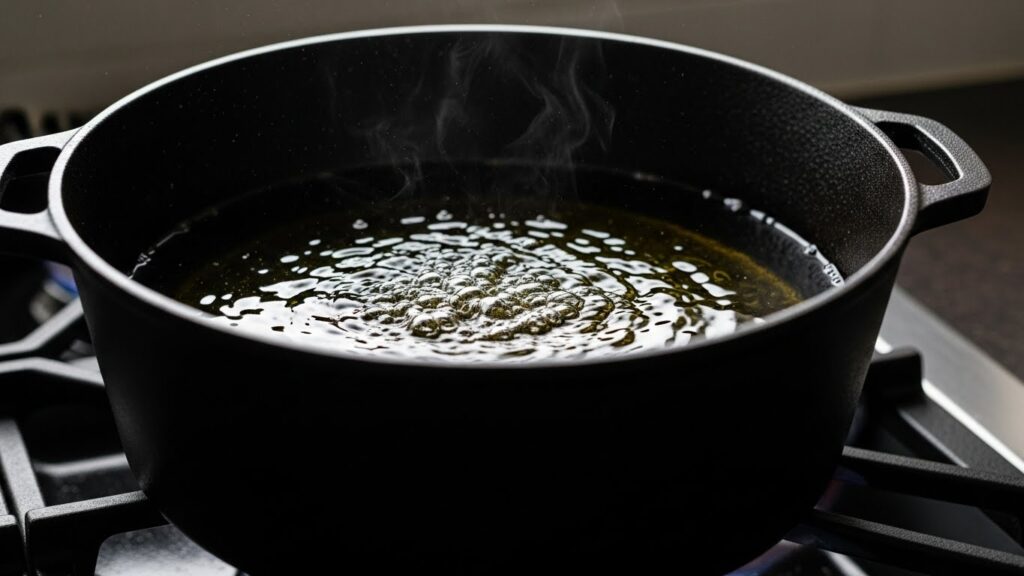
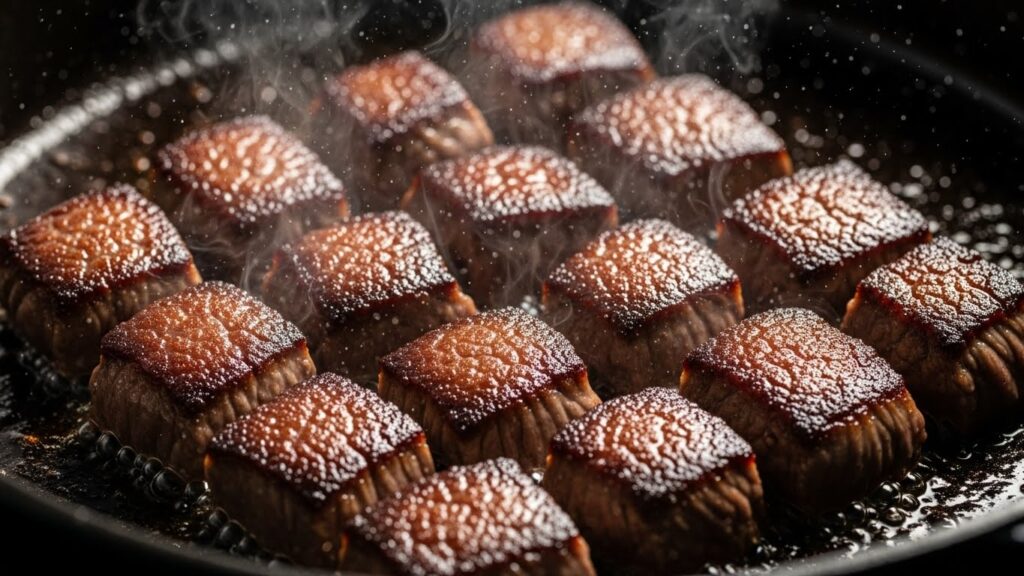
Step 3: Brown beef in batches, never crowding the pot. Overcrowding steams the meat instead of searing it. Place beef cubes in a single layer with space between each piece. Cook undisturbed for 2-3 minutes per side until deeply browned with a rich crust. The meat won’t be cooked through—you’re just creating flavor. Transfer browned beef to a plate and repeat with remaining batches.
Building the Flavor Base
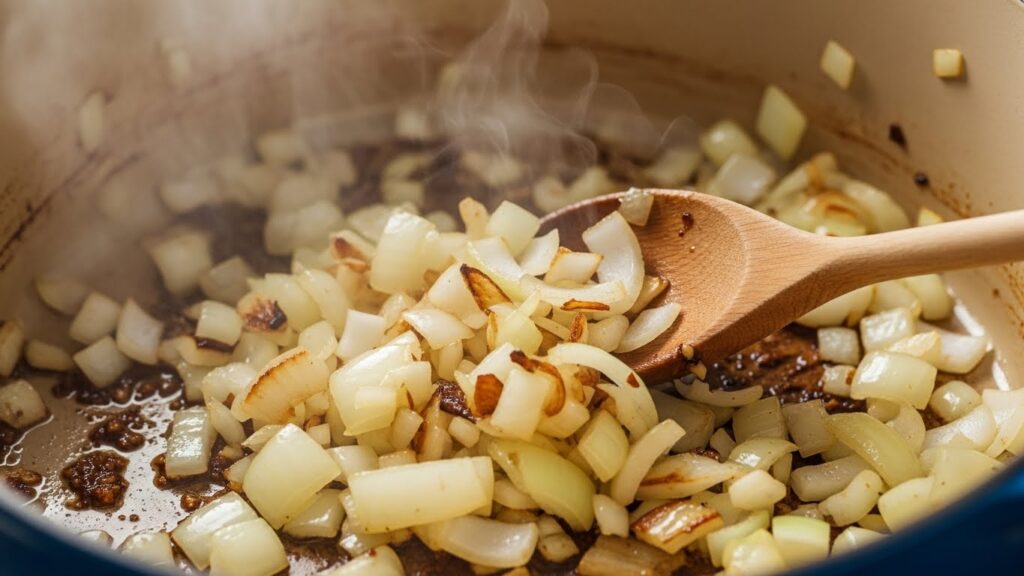
Step 4: Reduce heat to medium. Add chopped onions to the pot with all those flavorful browned bits stuck to the bottom. Cook, stirring occasionally, until softened and translucent, about 5 minutes. The onions will start releasing the stuck-on bits—this is called deglazing.
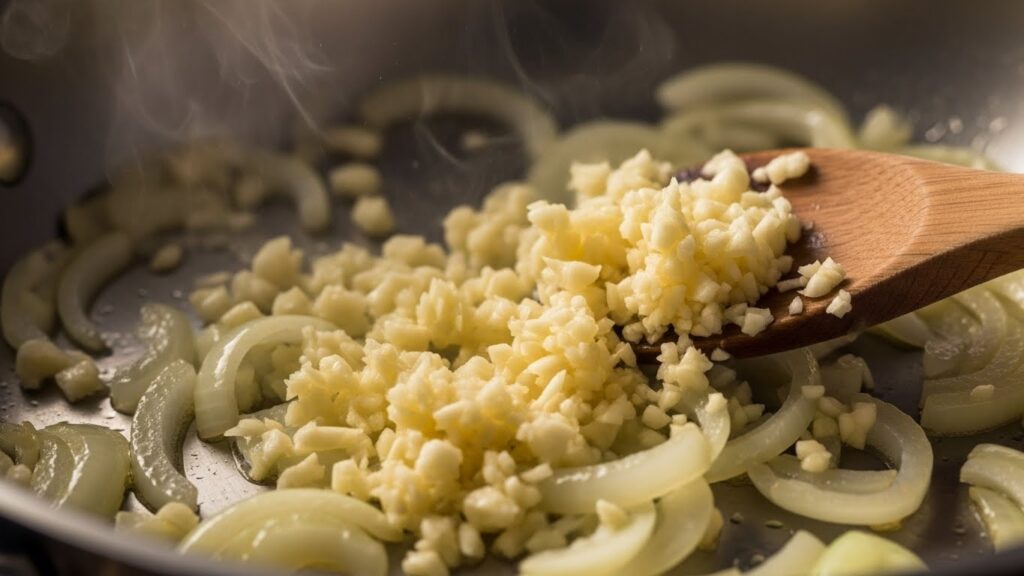
Step 5: Add minced garlic and cook for 1 minute until fragrant. Watch carefully—garlic burns quickly and turns bitter.
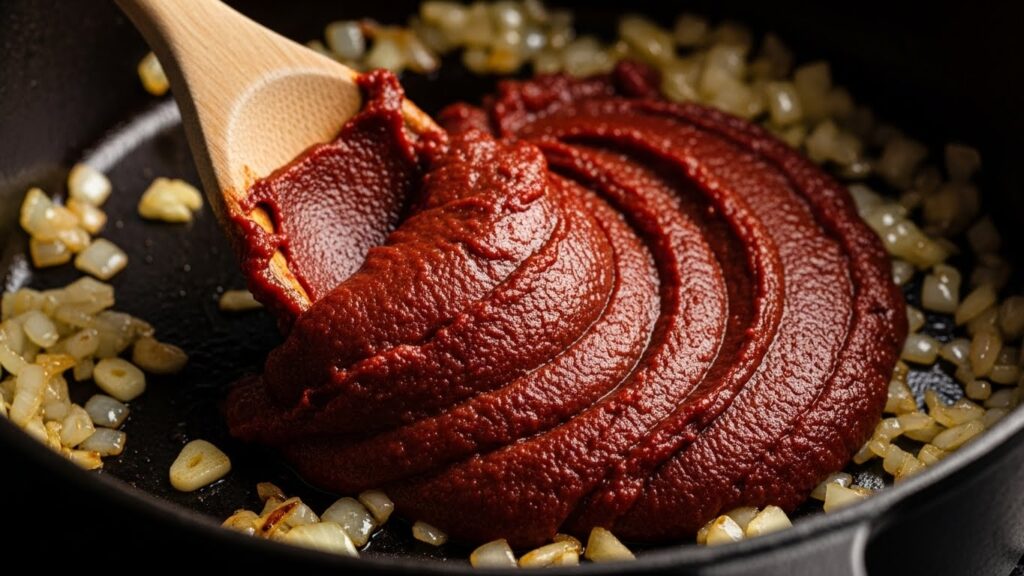
Step 6: Stir in tomato paste and cook for 2 minutes, stirring constantly. This concentrated step caramelizes the tomato paste, removing any raw taste and creating deep, rich flavor. The paste should darken slightly.
Simmering the Stew
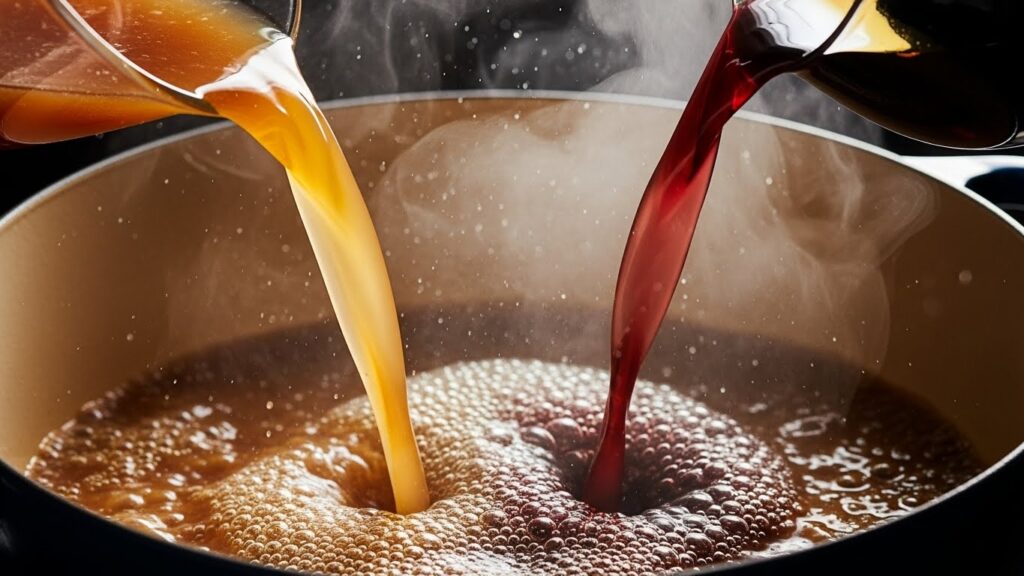
Step 7: Pour in beef broth, red wine if using, and Worcestershire sauce. Use a wooden spoon to scrape up every brown bit stuck to the pot bottom—this fond contains incredible flavor. The liquid should bubble vigorously and look cloudy from all those released flavors.
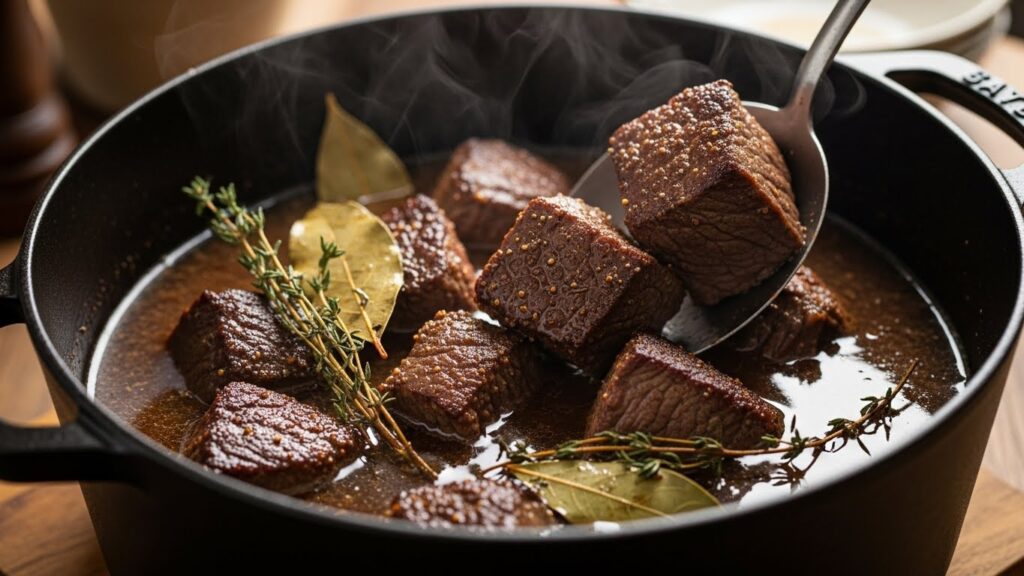
Step 8: Return browned beef and any accumulated juices to the pot. Add bay leaves and dried thyme. Stir everything together so the beef is mostly submerged in liquid.
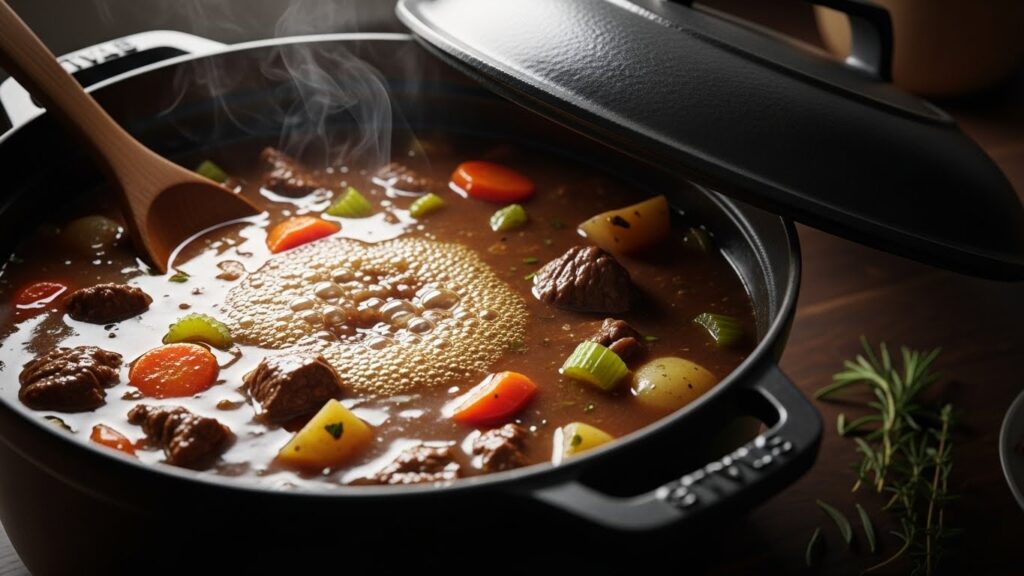
Step 9: Bring to a full boil, then immediately reduce heat to low. The liquid should barely bubble—just an occasional gentle blip on the surface. Cover with the lid slightly ajar (this allows some steam to escape and prevents overflow) and simmer for 1½ hours without disturbing. The beef will gradually become tender during this slow cooking.
Adding Vegetables
Step 10: After 1½ hours, add carrots, potatoes, and celery to the pot. Nestle them into the liquid—they don’t need to be completely submerged but should be mostly covered. These vegetables need less cooking time than the beef.
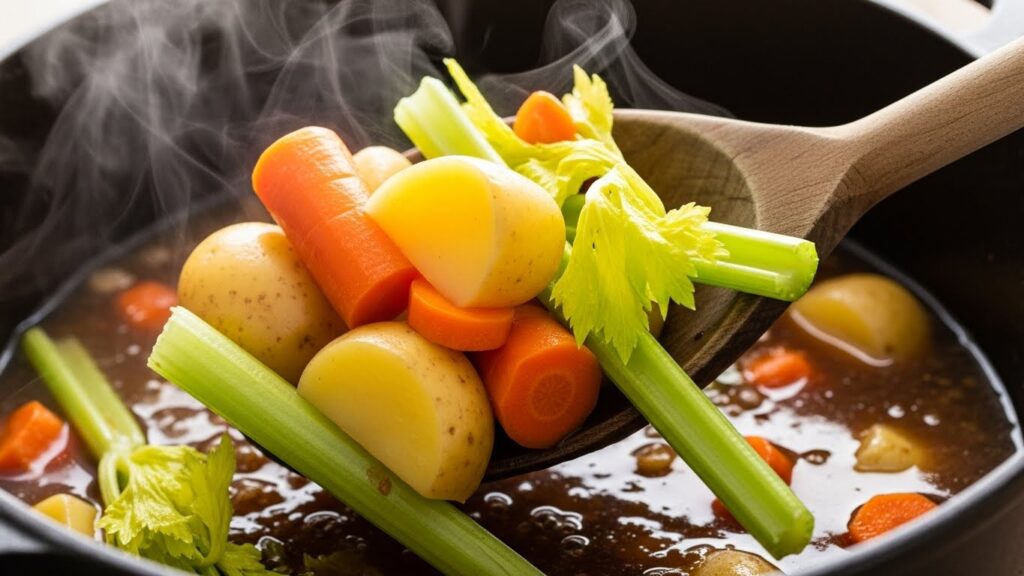
Step 11: Continue simmering covered for 45 minutes to 1 hour, stirring gently once or twice. The vegetables are done when you can easily pierce them with a fork and the beef shreds apart with light pressure. Taste a piece of potato—it should be creamy all the way through with no hard center.
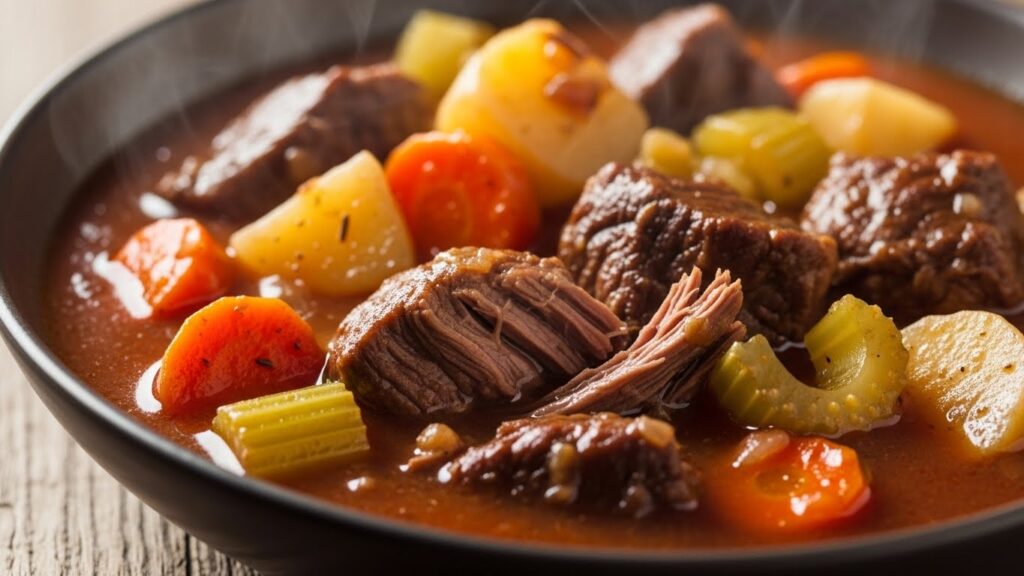
Step 12: Stir in frozen peas and cook for 5 minutes until heated through and bright green. The peas add color and freshness to the rich stew.
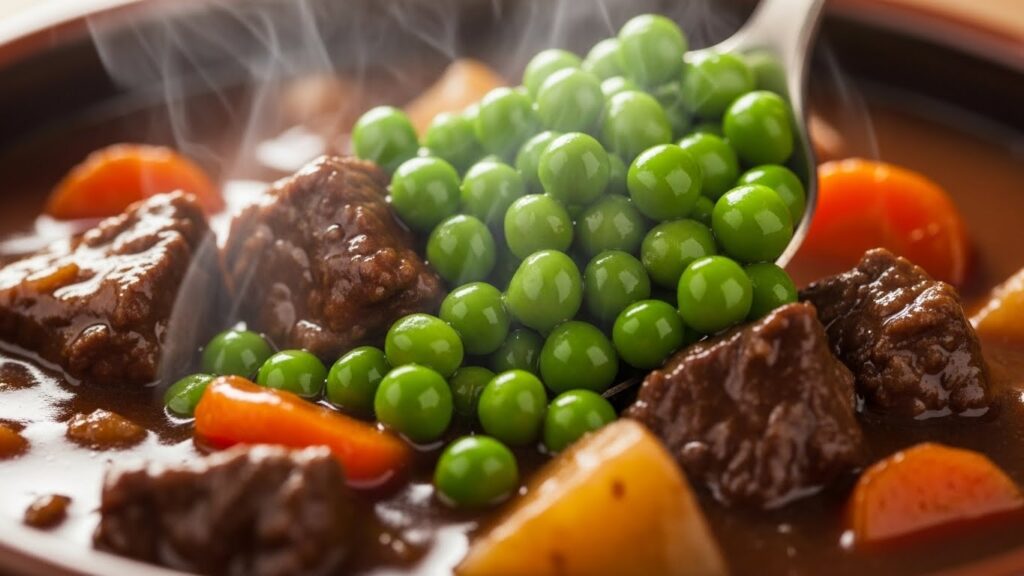
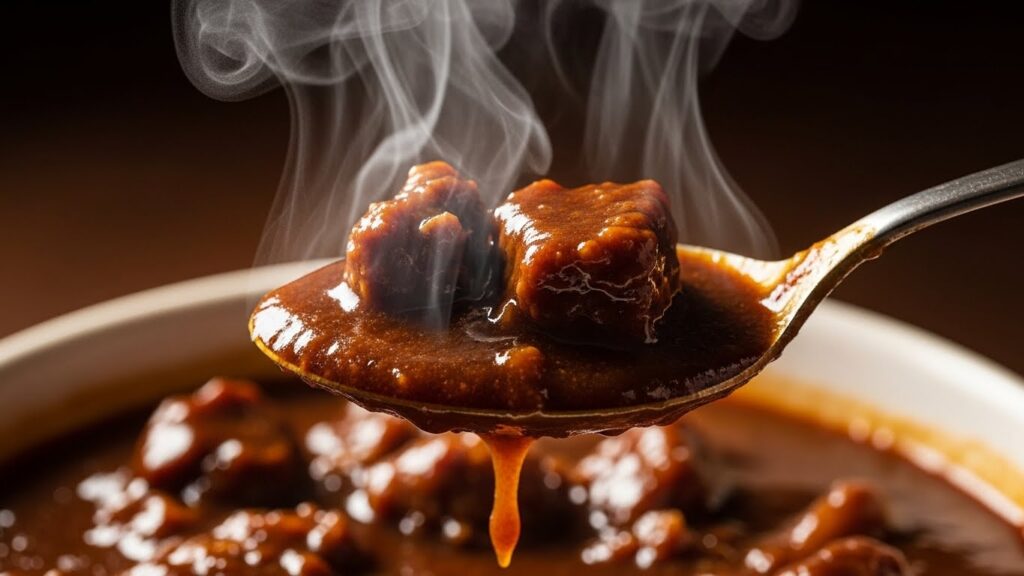
Step 13: Remove and discard bay leaves. Taste the stew and adjust seasoning with additional salt and pepper if needed. The stew should be thick enough to coat the back of a spoon heavily.
Why This Is an Easy Beef Stew Recipe
Despite the three-hour cooking time, the actual hands-on work takes about 30 minutes. The stew practically cooks itself once everything is in the pot. No special skills required—if you can chop vegetables and brown meat, you can make this. The forgiving nature means timing doesn’t need to be precise; an extra 15 minutes of simmering won’t hurt. One pot means minimal cleanup, and the recipe uses straightforward ingredients available at any grocery store.
What Is the Best Cut of Beef for Stew?
Chuck roast is the gold standard for beef stew. This cut comes from the shoulder and contains enough fat and connective tissue to become incredibly tender during long cooking without drying out. The marbling melts into the stew, adding rich flavor. Pre-cut “stew meat” at the store is usually chuck, making it convenient. Other excellent options include bottom round and brisket. Avoid lean cuts like sirloin—they become dry and tough with long cooking. The best stew meat should have some visible marbling and look slightly marbled rather than bright red and lean.
How Long Should Beef Stew Cook?
The beef needs at least 1½ hours of simmering to become tender, with total cooking time of 2½ to 3 hours including vegetables. You can’t rush this—the long, slow simmer breaks down tough connective tissue into gelatin that creates that luxurious, thick gravy. Undercooked stew has chewy meat and thin broth. Test doneness by pressing a piece of beef against the side of the pot with a spoon—it should shred easily. If the meat is still tough after 2 hours, keep simmering and check every 15 minutes.
Simple Recipe Tips
1: Brown the beef properly. This step creates the foundation of flavor. Don’t skip it or rush it—those brown bits (fond) on the pot bottom become the stew’s rich taste.
2: Cut vegetables uniformly. Same-sized pieces cook at the same rate, preventing some chunks from turning to mush while others stay hard.
3: For the richest stew, make it a day ahead. Refrigerate overnight, then gently reheat before serving. The flavors meld and deepen remarkably, and you can easily skim any fat from the surface.
Mistake to Avoid: Don’t boil the stew hard. Low, gentle simmering makes the beef tender. Hard boiling makes meat tough and stringy no matter how long you cook it.
How to Thicken Beef Stew
The flour coating on the beef should create enough thickness, but if your stew is too thin, you have several options. Mix 2 tablespoons flour with 2 tablespoons cold water into a smooth paste, then stir into the simmering stew and cook 10 minutes. Alternatively, mash a few potato chunks against the pot side and stir them in—they’ll dissolve and naturally thicken the liquid. For the clearest gravy, mix 1 tablespoon cornstarch with 2 tablespoons cold water and stir in during the last 15 minutes of cooking.
Old Fashioned Beef Stew: A Sunday Tradition
Before slow cookers existed, beef stew simmered on stovetops throughout lazy Sunday afternoons. Families would prepare the stew after breakfast, let it bubble gently while attending church and visiting neighbors, and return home to a house filled with irresistible aromas. The long cooking suited Sunday’s slower pace and created meals that stretched limited meat supplies by adding inexpensive vegetables. This stew fed large families affordably while providing complete nutrition—protein, vegetables, and satisfaction all in one pot.
Beef Stew Without Wine
Red wine adds depth, but the stew is equally delicious without it. Simply replace the wine with an equal amount of beef broth, bringing the total broth to 5 cups. The result is slightly less complex but still rich and satisfying. If you want extra depth without wine, add an extra tablespoon of Worcestershire sauce or a splash of balsamic vinegar. The tomato paste, browned beef, and long simmering create plenty of flavor on their own.
Perfect Pairings
This hearty stew is nearly a complete meal, but crusty bread for sopping up gravy makes it perfect. Serve with thick slices of our classic white bread recipe, warm buttermilk biscuits, or any favorite from our breads and biscuits collection. A simple green salad with vinaigrette cuts through the richness. For a complete cold-weather feast, explore more warming dishes in our soups and stews collection.
Serving Suggestions
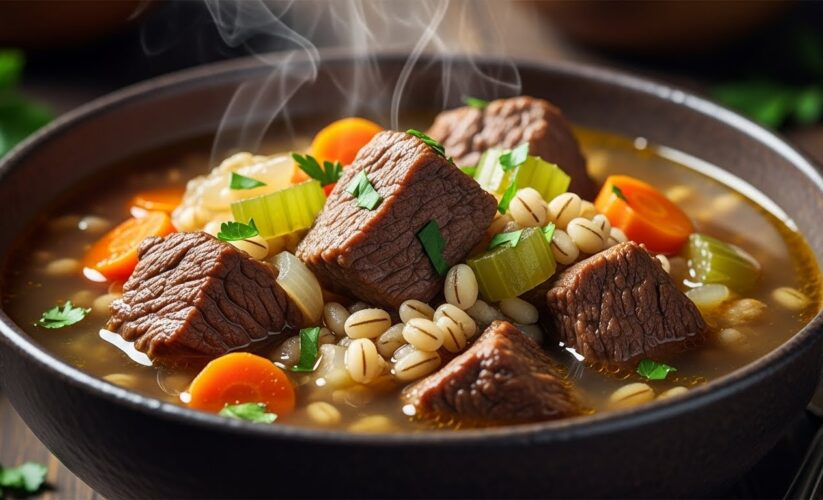
Ladle generous portions into deep, wide bowls that show off the colorful vegetables and rich gravy. The stew looks best when you can see chunks of beef, orange carrots, and green peas in every serving. Garnish with fresh chopped parsley for a pop of color and brightness. Place a basket of warm bread on the table for dipping. Serve immediately while piping hot—the gravy thickens as it cools. For casual gatherings, set up a serve-yourself station with bowls, ladles, and plenty of bread.
Storage and Leftover Advice
Store cooled stew in airtight containers in the refrigerator for up to 3 days. The stew will thicken considerably when cold—this is normal as the gelatin from the meat solidifies. Reheat gently on the stovetop over medium-low heat, stirring occasionally and adding ½ to 1 cup beef broth or water to restore the proper consistency. Microwave individual portions on 50% power, stirring every 2 minutes. The stew actually tastes better the next day after flavors have had time to meld.
Can Beef Stew Be Frozen?
Yes, beef stew freezes exceptionally well for up to 3 months. Cool completely, then transfer to freezer-safe containers or heavy-duty freezer bags, leaving 1 inch of headspace for expansion. Label with the date and contents. To use, thaw overnight in the refrigerator, then reheat gently on the stovetop. Add a splash of broth during reheating if needed. Potatoes can become slightly grainy after freezing—for best results, freeze the stew before adding potatoes, then add fresh potatoes when reheating.
Beef Stew on Stovetop vs Slow Cooker
This stovetop method gives you more control over browning and allows the stew to develop deeper flavor through proper searing. The stovetop also cooks faster than a slow cooker when you account for prep time. However, you can adapt this recipe for a slow cooker: brown the beef and vegetables on the stovetop first, transfer everything to the slow cooker with liquids, and cook on low for 8 hours or high for 4-5 hours. Add peas during the last 30 minutes. Stovetop stew has richer, more concentrated flavor, while slow cooker stew is more hands-off.
Frequently Asked Questions
1. Can I use stew meat that’s already cut?
Yes, pre-cut stew meat is convenient. Just ensure the pieces are roughly 1-inch cubes. Cut any larger pieces down to size so everything cooks evenly.
2. Why is my beef tough?
It hasn’t cooked long enough. Stew meat must simmer for at least 1½ hours to become tender. Keep cooking until the beef shreds easily with light fork pressure.
3. Can I add other vegetables?
Absolutely! Parsnips, turnips, mushrooms, and green beans all work well. Add harder vegetables like parsnips with the carrots. Add delicate vegetables like mushrooms during the last 30 minutes.
4. Do I have to use a Dutch oven?
Any large, heavy-bottomed pot with a lid works. Dutch ovens retain heat beautifully, but a regular stockpot is fine. Avoid thin pots that create hot spots and burn the bottom.
5. How do I prevent vegetables from getting mushy?
Add them in stages based on cooking time needed. Potatoes and carrots go in 45 minutes before the end. Quick-cooking vegetables like peas go in during the last 5 minutes.
6. Can I make this in an Instant Pot?
Yes. Brown beef using the sauté function, add remaining ingredients except peas, cook on high pressure for 35 minutes, natural release for 10 minutes, then quick release. Stir in peas and let sit 5 minutes.
7. Why add Worcestershire sauce?
Worcestershire adds umami depth and savory complexity that enhances the beef flavor without making it taste like the sauce itself. It’s a secret ingredient that makes people wonder what makes your stew so good.
A Note from the Author
Beef stew represents the kind of patient, nurturing cooking that built family traditions. There’s something deeply satisfying about tending a pot that fills your home with welcoming aromas for hours. This isn’t fast food—it’s food worth waiting for, the kind that brings people to the table eager and grateful. The recipe connects us to generations who understood that the best meals can’t be rushed, and that simple ingredients treated with care create extraordinary comfort. For more hearty one-pot meals and traditional comfort food, visit our soups and stews collection and subscribe to our Vintage Life of USA YouTube channel.
Conclusion
This classic beef stew recipe proves that the best comfort food requires nothing more than good ingredients, patience, and proper technique. The tender beef, hearty vegetables, and rich gravy come together in one pot to create a meal that satisfies on every level—physically, emotionally, and nostalgically. Whether you’re cooking for a cold winter evening or preparing Sunday dinner for family, this stew delivers the kind of deep, soul-warming comfort that makes people ask for seconds. Make a pot this weekend and discover why beef stew has remained an American favorite for generations.
Ready to fill your kitchen with the aroma of slow-simmered comfort? This rich, tender stew gets even better the next day. Find more hearty soups and stews at NostalgicEats.com!
1 Comment
Hola, quería saber tu precio..