The History of the Penny Candy Jar: Why Every Corner Store Had One (And Where They All Went)
The History of the Penny Candy Jar: Why Every Corner Store Had One (And Where They All Went)
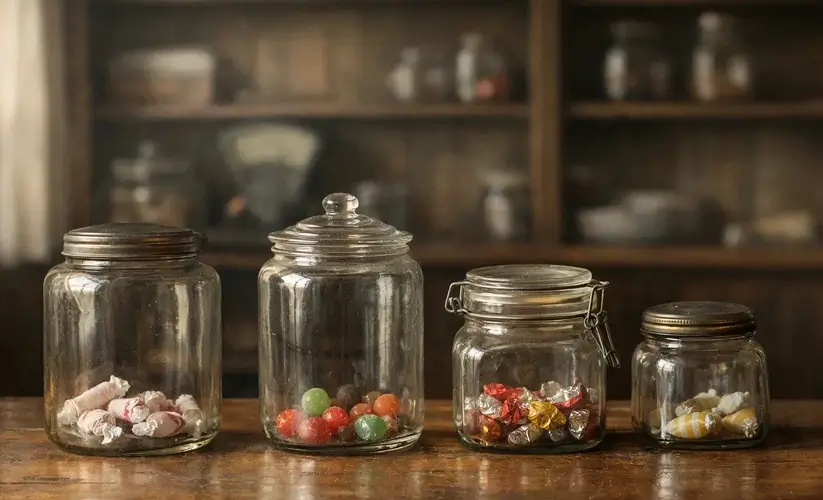
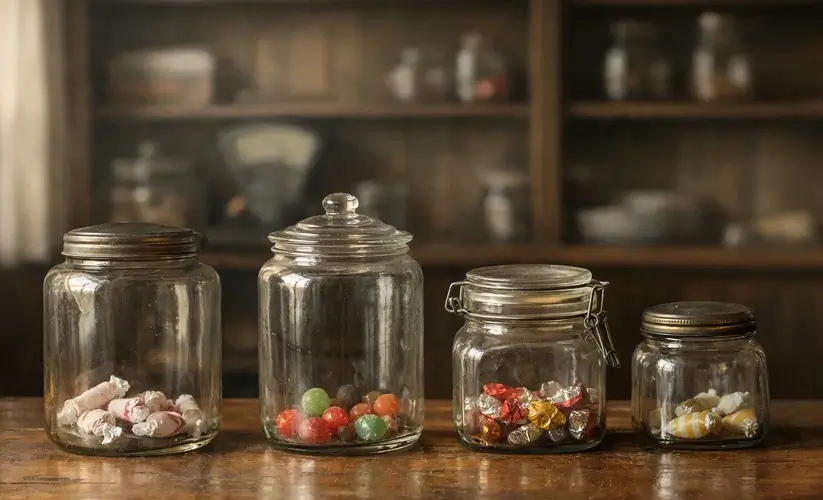
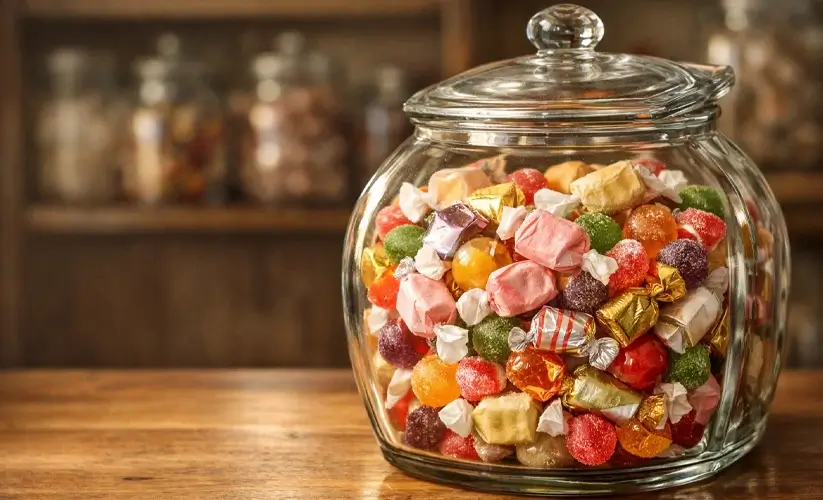
The penny candy jar represents one of the most iconic images in American childhood memory — a glass container filled with colorful wrapped treats sitting prominently on the corner store counter. Here at Nostalgic Eats, we have spent years documenting exactly why these memories run so deep, and the history of the penny candy jar is one of the richest stories we have explored. It reveals how a simple retail display became a cultural symbol of American childhood, affordable indulgence, and neighborhood commerce. Penny candy jars evolved from basic glass containers into essential retail fixtures during the penny candy from the 50s and 60s era, when the 2-gallon penny candy jar became the standard display vessel found in virtually every corner store and pharmacy across America.
Understanding the history of penny candy jars requires exploring the intersection of retail innovation, consumer demand, and cultural nostalgia that defined several generations of American childhood. The glass jars that defined penny candy from the 50s and 60s represented more than functional storage — they symbolized accessibility, choice, and the democratization of treats for children everywhere. Today, the penny candy jar has become a nostalgic artifact that captures the essence of a bygone era when simple pleasures and neighborhood commerce defined community life.
The Origins of Penny Candy Jars
The history of the penny candy jar begins in the late 1800s when retailers sought attractive, practical ways to display and sell individual pieces of loose candy. Before penny candy jars became standard, candy was sold from bulk containers or paper bags, with limited visibility and appeal. Retailers recognized that an attractive glass container could display candy appealingly while keeping it fresh and accessible. The early penny candy jars were often simple glass cylinders or octagonal vessels, designed primarily for function rather than aesthetic appeal. However, retailers quickly discovered that attractive displays encouraged purchases, leading to increasingly sophisticated jar designs intended to catch customers’ eyes and entice purchases.
The development of the 2-gallon penny candy jar represented a significant evolution in retail display technology. This specific size emerged through practical experimentation — retailers discovered that a 2-gallon penny candy jar held adequate variety (typically 200–300 pieces) while remaining manageable for store counter space and accessible to young customers. The history of the penny candy jar is thus intimately connected to understanding how retailers balanced visibility, capacity, and accessibility. Manufacturers began producing specialty jars designed specifically for candy display, with features like wide openings for easy selection, tight-fitting lids for freshness, and glass clarity for maximum visual appeal. To understand the full sweep of this tradition from its earliest roots, our complete guide to old-fashioned penny candy puts the candy jar story into its broader historical context.
The Golden Era: Penny Candy Jars in the 1950s and 1960s
The penny candy from the 50s and 60s era represented the absolute peak of penny candy jar popularity and cultural significance. During this period, the 2-gallon penny candy jar evolved from simple retail tool into beloved cultural icon. Every corner store, pharmacy, and general store featured penny candy jars prominently on the counter, often displaying multiple 2-gallon penny candy jar containers with different varieties. The penny candy from the 50s and 60s created unprecedented demand for accessible, visible candy displays. The 2-gallon penny candy jar became the standard because it provided the perfect balance of variety and manageable size during the golden era of penny candy.
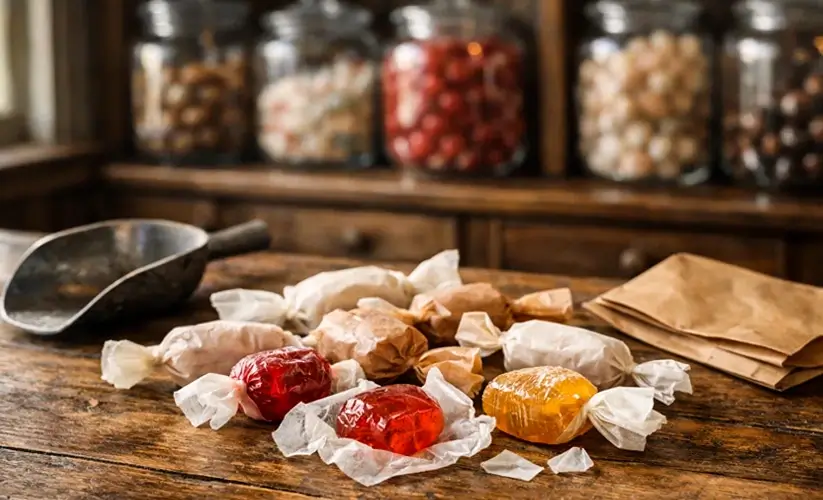
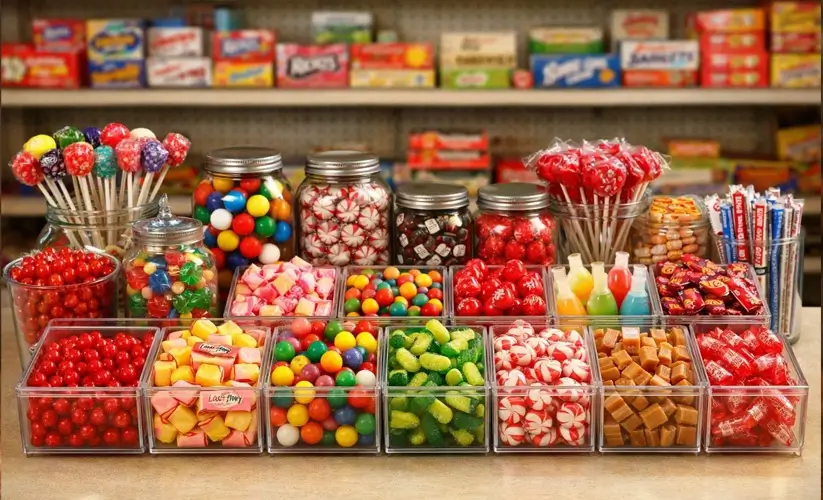
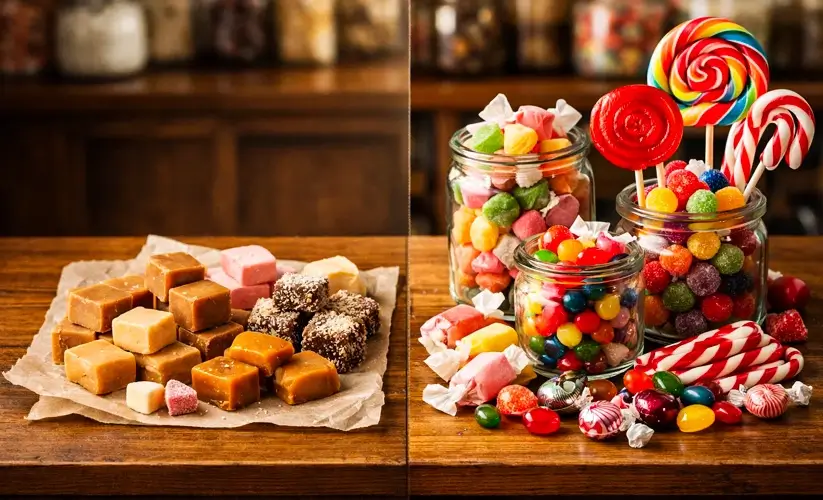
The penny candy from the 50s and 60s era saw manufacturers increasingly design products specifically for sale from penny candy jars. Individual wrappings became standardized, colors became more vibrant, and shapes became more varied to create visual appeal within the 2-gallon penny candy jar display. Wax bottles with bright colors, lollipops in rainbow varieties, hard candies in assorted hues — all were designed to look beautiful displayed together in a penny candy jar. The history of the penny candy jar is thus also a history of product design and visual merchandising innovation driven by the demands of retail display.
The Role of Penny Candy Jars in Community Retail
The history of the penny candy jar cannot be separated from the broader story of neighborhood commerce and community retail. The 2-gallon penny candy jar represented a physical manifestation of the relationship between store owners and young customers. By placing the penny candy jar prominently on the counter where children could see and access it, retailers communicated that young customers were welcome, their business was valued, and their desires mattered. Penny candy jars created gathering points in stores, places where children felt agency and choice despite their limited purchasing power. The penny candy from the 50s and 60s era relied on this retail approach, with candy jars serving as key attractions that brought young customers into stores.
Why the 2-Gallon Size Became Standard
Understanding why the 2-gallon penny candy jar became the dominant size during penny candy from the 50s and 60s requires examining practical retail considerations. Smaller jars held insufficient variety to satisfy consumer demand, while larger containers became unwieldy for counter display and difficult for young customers to access comfortably. The 2-gallon penny candy jar represented the optimal solution, holding enough assorted candy to provide meaningful choice while remaining accessible and manageable. Retailers discovered that this specific size encouraged customers to browse longer, compare options more carefully, and ultimately make purchases.
The 2-gallon penny candy jar also proved efficient from a retail operations perspective. Store managers could refill them regularly, rotating inventory and keeping displays fresh without excessive effort. Multiple 2-gallon penny candy jar containers could be arranged attractively together, creating visually impressive displays that didn’t overwhelm individual counter space. The history of the penny candy jar demonstrates how practical constraints shaped product design and retail practice. The 2-gallon penny candy jar became standardized not through deliberate industry planning but through natural selection — retailers discovered this size worked best and manufacturers responded by producing specialty 2-gallon penny candy jar containers designed specifically for candy retail. If you want to recreate this experience at home, our homemade penny candy jar mix recipe shows you exactly how to fill your own jar with the classic assortment.
The Decline: What Happened to Penny Candy Jars?
The history of the penny candy jar includes a dramatic decline that mirrors broader economic and retail changes in American society. Several factors combined to reduce the prevalence of penny candy jars during the 1970s, 1980s, and beyond. First, inflation gradually made single-penny purchases impossible. As candy that once cost one penny required nickels, dimes, or quarters, the fundamental economic model that supported penny candy jars disappeared. Second, chain pharmacies and convenience stores replaced many independent corner stores, and these larger retailers preferred pre-packaged, individual-portion candy displays over bulk containers. The full story of how this happened is told in detail in our piece on whatever happened to penny candy — the economic forces involved were more complex than most people realize.
The disappearance of penny candy jars from most American retail settings represents a cultural loss beyond mere commercial evolution. The history of the penny candy jar is also the history of a particular retail experience that fostered child agency, community interaction, and personal choice. When penny candy jars disappeared, children lost a significant retail experience — the ability to select from visible options, make personal choices with limited resources, and experience the autonomy that penny candy from the 50s and 60s had provided. The decline of penny candy jars thus marks a broader shift in American retail culture and childhood experience. By the time 80s penny candy corner store culture peaked and then faded, the glass jar was already well on its way out.
The Nostalgia Factor and Modern Revival
Interestingly, the history of the penny candy jar has entered a new chapter in recent years, driven by nostalgia and the growing market for vintage retail experiences. The 2-gallon penny candy jar has become collectible, with authentic examples from penny candy from the 50s and 60s commanding premium prices from collectors. Antique shops increasingly feature penny candy jars as merchandise, marketed as symbols of American nostalgia and retail history. Restaurants, theme parks, and entertainment venues have begun recreating penny candy jars as nostalgic attractions, offering visitors the experience of selecting from a 2-gallon penny candy jar display as their parents or grandparents once did. If you want to see what these original jars and corner store environments actually looked like in their prime, this vintage candy footage captures the era in remarkable detail.
This nostalgia revival demonstrates the emotional power of the penny candy jar in American collective memory. The history of the penny candy jar taps into fundamental human yearnings for simpler times, community retail experiences, and childhood autonomy. Modern recreations of penny candy jars — both in vintage reproduction form and in contemporary settings — sell successfully because they connect people to cherished memories. The 2-gallon penny candy jar has transcended its historical role as a retail fixture to become a symbol of a particular era and a particular childhood experience that many Americans regard with affection and nostalgia. It is also worth noting that a remarkably similar tradition developed in Britain at the same time — our comparison of penny sweets vs penny candy explores how two countries arrived at almost identical childhood experiences through very different retail paths.
The Design Evolution of Penny Candy Jars
The history of the penny candy jar includes fascinating evolution in design and aesthetics. Early penny candy jars were simple glass cylinders, functional but relatively plain. As the penny candy from the 50s and 60s era developed, manufacturers began producing increasingly sophisticated designs. Octagonal jars offered more visual interest. Jars with ribbed glass enhanced reflectivity and visual appeal. Specialty finials (decorative tops) became standard features. Manufacturers began etching “Penny Candy” or store names onto glass, creating personalized fixtures that became community landmarks. The evolution toward more decorative designs reflected retailers’ understanding that attractive displays drove sales — the prettier the penny candy jar, the more appealing the product display, the greater the purchasing impulse.
The 2-gallon penny candy jar also evolved to address practical retail needs. Wider openings made product access easier for young customers. Tight-fitting lids helped preserve freshness. Clear glass improved visibility — any cloudiness or discoloration made the container less appealing. Manufacturers began producing specialized lids with convenient hinged access points that reduced individual exposure of candy while allowing easy selection. The history of the penny candy jar demonstrates how product design responded to the specific demands of retail display and customer interaction. By the peak of penny candy from the 50s and 60s, penny candy jars represented sophisticated retail tools designed specifically to maximize visual appeal and sales.
Frequently Asked Questions
Q1: What is the history of the penny candy jar in America?
The history of the penny candy jar began in the late 1800s when retailers needed attractive displays for loose candies. By the penny candy from the 50s and 60s era, penny candy jars had become standard fixtures in virtually every corner store and pharmacy. The 2-gallon penny candy jar became the iconic display vessel during this golden era of affordable treats. You can explore what the first wrapped penny candy in America looked like to understand what those earliest jars were actually filled with.
Q2: Why did corner stores use penny candy jars?
Penny candy jars served multiple purposes: they displayed candy attractively, kept treats fresh and accessible, encouraged impulse purchases, and created gathering points for young customers. The 2-gallon penny candy jar became the standard size during penny candy from the 50s and 60s because it held enough variety while remaining accessible.
Q3: What was special about the 2-gallon penny candy jar?
The 2-gallon penny candy jar became the iconic size during penny candy from the 50s and 60s. This size was large enough to hold 200–300 pieces of assorted candy, providing variety and visual appeal while remaining manageable for store counters and young customers reaching in to select treats.
Q4: Where did penny candy jars go and why did they disappear?
Penny candy jars declined as inflation made single-penny purchases impossible, chain pharmacies replaced corner stores, and modern food safety regulations discouraged open containers. The retail model supporting penny candy jars became incompatible with contemporary business practices.
Q5: Are vintage penny candy jars from the 50s and 60s collectible?
Yes, authentic penny candy jars from penny candy from the 50s and 60s era are highly collectible. Original 2-gallon penny candy jars in good condition command premium prices from collectors. Reproduction versions are also available for those seeking nostalgic recreations. If you want to fill your own jar with authentic recipes, our homemade 1950s penny candy recipes give you everything you need to recreate the real thing.
Conclusion
The history of the penny candy jar represents far more than the story of a retail fixture — it encompasses the evolution of American retail culture, childhood experience, and consumer behavior across generations. The 2-gallon penny candy jar became iconic during penny candy from the 50s and 60s not through deliberate marketing strategy but through natural selection as retailers discovered the optimal balance between variety, accessibility, and visual appeal. Penny candy jars served critical retail functions while simultaneously fostering child agency, community interaction, and personal choice in ways that resonated deeply in American collective memory.
The modern revival of penny candy jars — through vintage reproduction, antique market value, and nostalgic recreation — proves that these humble glass containers captured something meaningful about American childhood and community life. The 2-gallon penny candy jar from penny candy from the 50s and 60s has transcended its historical role to become a symbol of a particular era, a particular retail experience, and a particular childhood that many Americans remember with affection. The history of the penny candy jar thus continues to evolve, as contemporary appreciation for vintage retail traditions keeps alive the memory of corner stores where children made choices, discovered treats, and experienced the simple joy of selecting penny candy from a beloved glass jar.