Oatmeal Sandwich: A Depression-Era Testament to Resourcefulness and Transformation
Oatmeal Sandwich – A Testament to Making Nothing Into Something
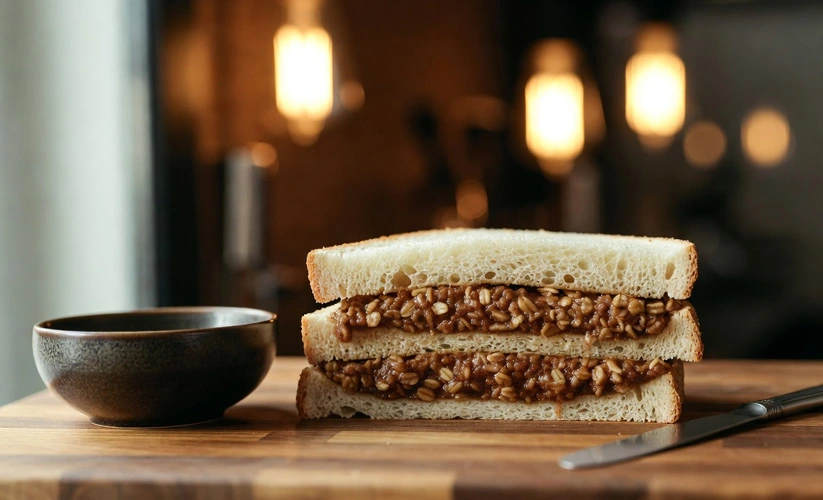
This Depression-era sandwich turned breakfast leftovers into lunch when nothing else was available, transforming morning oatmeal that might otherwise be discarded into genuine sustenance for afternoon meals. Families cooked oatmeal in the morning for breakfast, and any uneaten portion was left to cool and thicken into a spreadable paste that mothers carefully preserved for later use. Mothers spread the cold, firm oatmeal between slices of bread, sometimes adding a touch of butter or molasses for flavor when these additions were possible and affordable. The oats provided filling bulk and genuine nutrition during times when meat and cheese were impossible luxuries that existed only in memory or imagination. Children carried these sandwiches to school wrapped in newspaper, and while classmates might have laughed at the unfamiliar sandwich, everyone understood that making do was simply how families survived in a world where waste represented the ultimate sin and every calorie counted toward another day of survival. This sandwich represents perhaps the most complete expression of Depression-era cooking philosophy: nothing wasted, everything valued, breakfast transformed into lunch through intention and care.
Oatmeal Sandwich: Quick Reference
Cost: Budget-Friendly
Ingredients You’ll Need
For the Sandwich:
You’ll need 2 slices of white bread or homemade bread, ½ cup of cooked oatmeal that’s been cooled and thickened, 1 tablespoon of softened butter (optional), 1 teaspoon of molasses or honey (optional), a pinch of salt, and a pinch of cinnamon (optional). The oatmeal is the essential component—it must be completely cold and firm to spread properly without soaking through the bread.
Optional Additions:
Some families enjoyed adding softened butter to their cooled oatmeal for richness and additional moisture, though butter represented a luxury many Depression-era families couldn’t consistently afford. Molasses or honey provided sweetness and additional flavor when available, transforming a plain oatmeal sandwich into something more interesting and appealing to children. A pinch of cinnamon added warmth and complexity without cost or waste. Some modern variations include adding nutmeg, vanilla extract, or even a touch of salt to enhance the oatmeal’s natural flavor.
Understanding Oatmeal Sandwich: History and Heritage
To understand the oatmeal sandwich is to understand Depression-era creativity, the principle of waste avoidance, and how families stretched every ingredient across multiple meals and multiple purposes.
The Oatmeal Breakfast Tradition
Oatmeal had been a staple breakfast food in America for generations, particularly in working-class and farming communities. It was inexpensive, filling, and nutritious—providing carbohydrates, fiber, and protein. A pot of oatmeal could feed a family breakfast, costing mere pennies. During good economic times, this represented practical, economical breakfast. During the Depression, oatmeal became even more central to family meals as one of the few foods families could reliably afford.
The oatmeal breakfast tradition carried with it an important cultural understanding: this was food for everyone. Rich families might have bacon and eggs; working-class families had oatmeal. But everyone understood that oatmeal was nutritious, respectable food. It wasn’t deprivation—it was practical feeding. This cultural acceptance of oatmeal made it perfect for Depression-era families seeking to maintain dignity while managing severe economic hardship.
How to Make Oatmeal Sandwich
While this recipe requires oatmeal that’s been cooked and cooled, the assembly process is straightforward and requires minimal effort.
Step 1: Cook Your Oatmeal
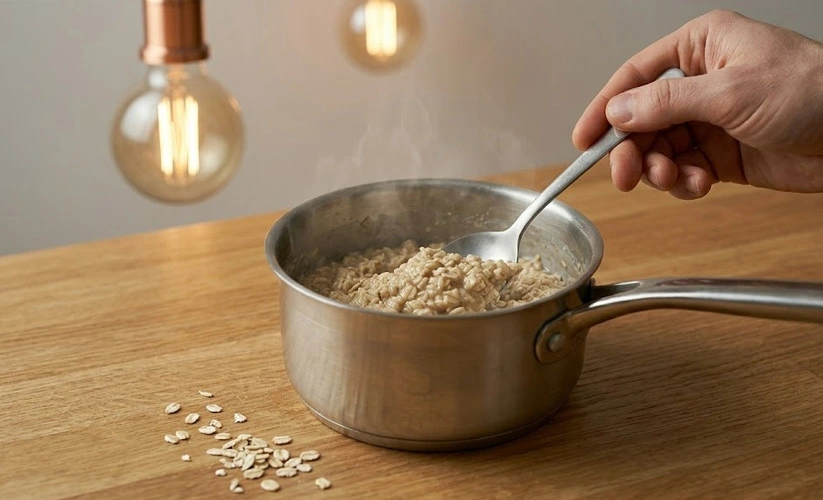
Cook oatmeal according to package directions. Most packages call for boiling water, adding oats, and simmering until cooked—typically 5-10 minutes depending on the oat variety. Stir occasionally to prevent sticking and ensure even cooking. Cook enough to have ½ cup remaining after any morning consumption.
For oatmeal sandwiches, you want a thicker consistency than typical breakfast oatmeal. If your oatmeal seems too thin, let it cook a bit longer to achieve thicker consistency that will spread well without soaking through bread.
Step 2: Cool Completely
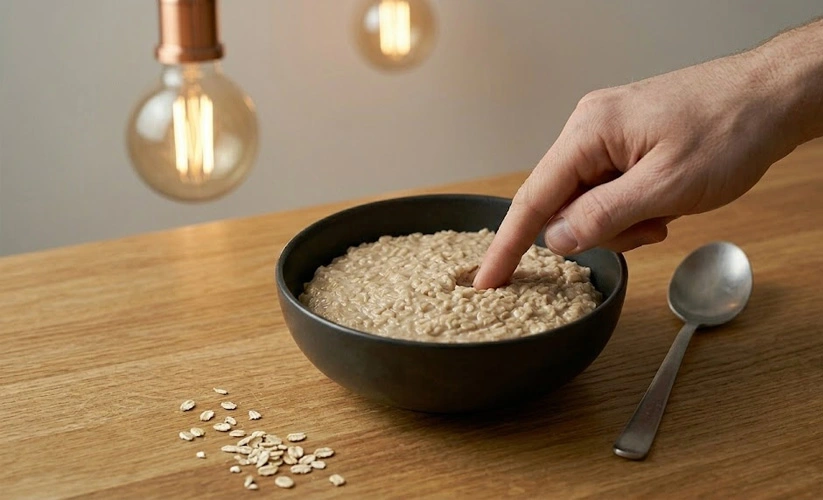
Let the oatmeal cool completely until it becomes thick and firm. This is absolutely essential—warm or even room-temperature oatmeal will soak through bread and create a mushy, unpleasant sandwich. Complete cooling takes approximately 30-60 minutes depending on quantity and cooling method. You can speed cooling by spreading oatmeal on a plate rather than leaving it in a thick pot.
The cooled oatmeal should be firm enough to spread with a knife without falling apart or running off the bread. When pressed with a finger, it should yield slightly but maintain shape.
Step 3: Add Butter (Optional)
If desired, stir a tablespoon of softened butter into the cooled oatmeal for richness. The butter should be soft enough to mix smoothly without leaving lumps. Thoroughly combine the butter throughout the oatmeal for even distribution.
This step is optional. Some families added butter when available; others kept the filling plain. Both approaches create satisfying sandwiches. The butter adds richness but isn’t necessary.

Step 4: Add Molasses or Honey (Optional)
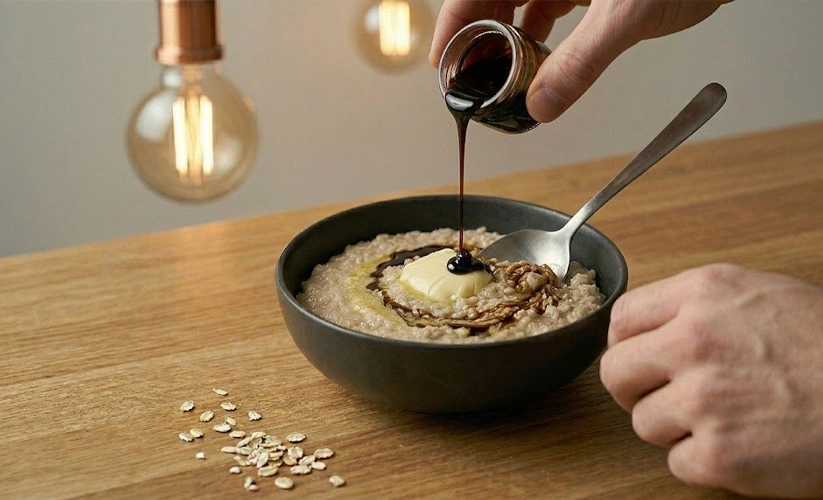
Add molasses or honey if you prefer a sweeter sandwich, mixing well. Molasses adds deeper flavor and slight bitterness that complements oatmeal beautifully. Honey adds lighter sweetness. Use only 1 teaspoon—you want gentle sweetness, not aggressive sugar.
If adding molasses or honey, stir thoroughly to distribute evenly throughout the oatmeal. Uneven distribution creates some bites that are too sweet and others that are plain.
Step 5: Add Seasonings
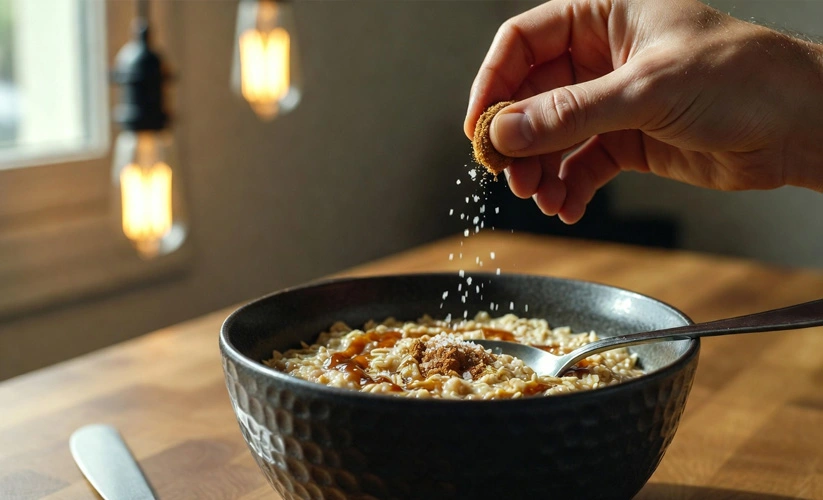
Sprinkle a pinch of salt into the oatmeal and stir to combine. Salt heightens oatmeal’s natural savory notes and creates depth. Add a pinch of cinnamon if desired—cinnamon adds warmth and complexity without requiring additional cost.
These seasonings should be subtle, adding depth rather than dominating. The oatmeal should taste like oatmeal, enhanced by seasonings rather than transformed by them.
Step 6: Lay Out Your Bread
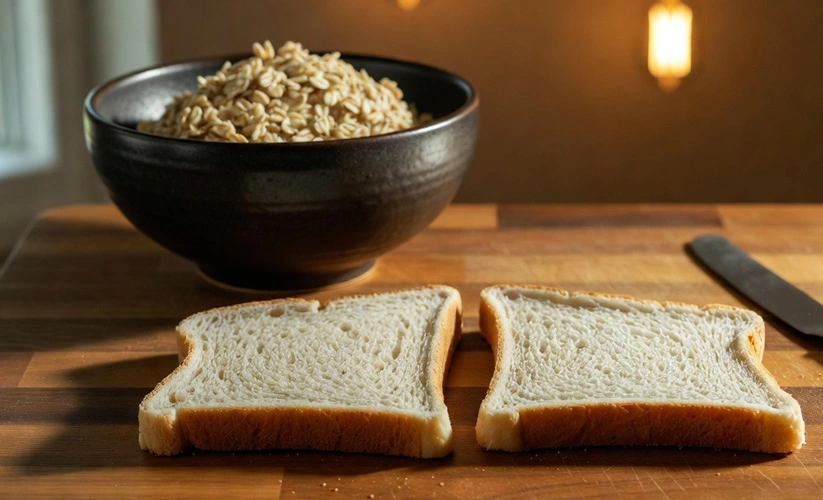
Lay out the two slices of bread on a clean work surface. Use bread you enjoy eating—whether store-bought white bread, whole wheat, or homemade. The bread quality influences the overall sandwich quality, so choose accordingly.
Step 7: Spread the Oatmeal
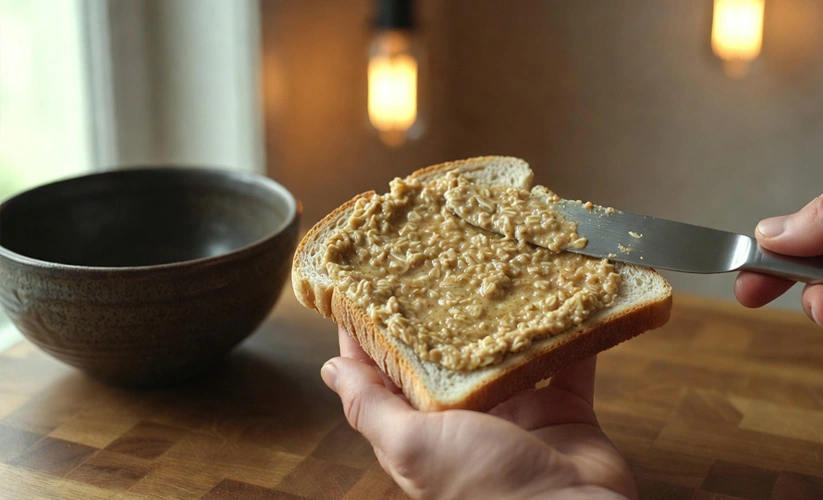
Spread the thickened oatmeal generously on one slice of bread, covering it edge to edge. Use a knife to smooth the oatmeal into an even layer. The layer should be thick enough to provide substantial filling but not so thick that the sandwich becomes difficult to manage.
Even spreading ensures every bite of the finished sandwich contains adequate oatmeal filling. Uneven spreading creates some bites that are too rich and others that are too plain.
Step 8: Assemble
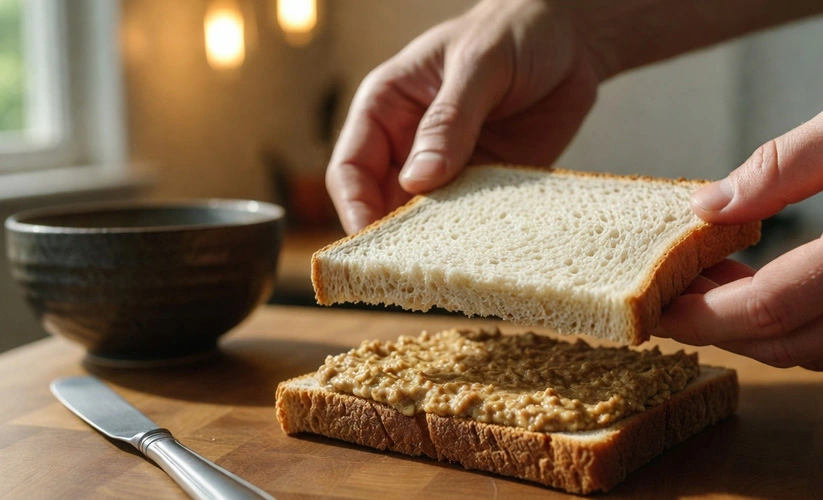
Place the second slice of bread on top to form a sandwich. The oatmeal acts as adhesive, helping the slices bond slightly.
Step 9: Press Gently
Press down gently so the slices stick together. Don’t apply excessive pressure—just enough to ensure the sandwich holds as a unified unit. Gentle pressing distributes the filling evenly without compressing it excessively.

Step 10: Cut and Serve
Cut diagonally in half if desired, though this is optional. Some people find the diagonal cut makes the sandwich easier to handle and creates more appealing presentation. Others prefer eating it whole.
Serve immediately or wrap for later. The sandwich is best eaten fresh but remains acceptable if wrapped and eaten within a few hours.
Pro Tips for Perfect Oatmeal Sandwich
Cool Completely
This is absolutely essential for success. Warm or even room-temperature oatmeal will soak through bread and create unpleasant mushy sandwich. Allow adequate cooling time before assembly. You can speed cooling by spreading oatmeal on a plate rather than leaving it in a thick mass.
Cook to Thick Consistency
Oatmeal for sandwiches should be thicker than typical breakfast oatmeal. Cook it longer if necessary to achieve thickness that spreads well without running. Thin oatmeal will create soggy sandwiches; thick oatmeal spreads properly and holds together.
Mix Thoroughly
When adding optional butter, molasses, or seasonings, mix thoroughly to distribute evenly throughout the oatmeal. Uneven mixing creates inconsistent eating experience with some bites too rich and others too plain.
Spread Evenly
Uneven spreading creates parts of the sandwich with too much filling and parts with too little. Take time to spread evenly across the entire bread surface. Even distribution creates more satisfying and consistent eating experience.
Don’t Overspreading
Resist the urge to use excessive filling. Too much oatmeal makes the sandwich difficult to hold and eat, and can cause filling to squish out the sides. Spread generously but with restraint—approximately ¼ inch thickness.
Choose Quality Bread
The bread is structural component contributing to overall eating experience. Choose bread you genuinely enjoy eating. Fresh, soft bread spreads more easily than stale bread. Homemade bread offers superior flavor and texture compared to commercial varieties.
Eat Fresh or Wrap Carefully
These sandwiches are best eaten fresh but can be wrapped tightly in wax paper or plastic wrap for later consumption. Without wrapping, they dry out quickly. With wrapping, they remain acceptable for a few hours at room temperature or up to one day refrigerated.
Consider Temperature
These sandwiches can be eaten at room temperature or cold. Some people enjoy them slightly warm, straight after assembly. Cold oatmeal sandwiches eaten hours later also work well. Temperature preference is personal.
Easy Variations to Try
Sweeter Version
Increase molasses or honey for more pronounced sweetness, creating something between a sandwich and a sweet bread. This variation appeals to those preferring sweeter food or serving as light dessert.
With Nuts
Mix finely chopped nuts (such as walnuts or pecans) into the cooled oatmeal before spreading. Nuts add texture, nutrition, and flavor complexity. This represents a slight enhancement when nuts are available.
With Dried Fruit
Mix finely chopped dried fruit (such as raisins, cranberries, or apricots) into the oatmeal before spreading. Dried fruit adds sweetness, chewy texture, and nutritional value. This variation creates more interesting sandwich.
With Additional Spices
Add nutmeg, ginger, or allspice in addition to or instead of cinnamon. Different spices create different flavor profiles while maintaining the sandwich’s essential character.
With Cream Cheese
Spread thin layer of cream cheese on bread before adding oatmeal. Cream cheese adds richness and slight tartness that complements oatmeal’s natural flavor. This represents modern variation moving away from Depression-era simplicity.
With Jam or Preserves
Spread thin layer of jam or preserves on bread before adding oatmeal, or mix jam directly into the oatmeal. Jam adds sweetness and concentrated fruit flavor, transforming the sandwich into something more dessert-like.
With Peanut Butter
Spread thin layer of peanut butter on bread before adding oatmeal. Peanut butter adds protein, richness, and nutty flavor that complements oatmeal beautifully. This creates more nutritionally complete sandwich.
Warm Oatmeal Sandwich
Some people enjoy oatmeal sandwiches served warm or reheated. While not traditional to Depression-era preparation (as reheating would require fuel), modern ovens make this possible. Warm oatmeal sandwiches have different eating experience than cold.
Frequently Asked Questions
What is an oatmeal sandwich?
An oatmeal sandwich is two slices of bread filled with cooled, thickened oatmeal, sometimes with optional butter, molasses, honey, or spices. It’s a Depression-era food representing the resourcefulness of transforming breakfast leftovers into lunch.
Can you make a sandwich with oatmeal?
Yes, absolutely. Oatmeal, when cooled and thickened, becomes spreadable and appropriate for sandwich filling. The result might seem unusual to those unfamiliar with this tradition, but it creates genuinely satisfying sandwich.
Is oatmeal sandwich healthy?
Oatmeal sandwich provides carbohydrates from both oatmeal and bread, fiber from oats, and protein from both components. It’s nutritionally respectable—providing genuine sustenance without excessive fat or calories. It’s not nutrient-dense by modern standards but represents perfectly acceptable food providing real nutrition.
Why eat oatmeal as a sandwich?
People eat oatmeal as sandwich because it’s inexpensive, filling, and genuinely satisfying. Historically, it represented resourcefulness—transforming breakfast leftovers into lunch. Today, people eat them for nostalgia, to understand food history, or simply because they enjoy the humble flavors.
Did people really eat oatmeal sandwiches?
Yes, absolutely. Oatmeal sandwiches appear throughout Depression-era reminiscences, oral histories, and food journals. They were common lunch-box fare, particularly for school children and workers. The sandwich represents legitimate historical food with genuine cultural significance.
What should I drink with this?
Water, milk, coffee, or tea all work well with oatmeal sandwich. Milk complements the wholesome, grain-based sandwich beautifully. Hot tea or coffee provides warmth and comfort. The beverage choice is less important than approaching the sandwich mindfully.
Can I make this ahead?
Yes, wrap tightly in wax paper or plastic wrap and store at room temperature for up to 4 hours, or refrigerate for up to 1 day. The bread will soften but remains edible. The sandwich is best eaten fresh but remains acceptable if stored properly.
What if my oatmeal isn’t thick enough?
If your cooled oatmeal is too thin to spread properly, you can cook it longer next time to achieve thicker consistency. If you need to rescue thin oatmeal, you can let it cool slightly more (though it might never thicken sufficiently), or you can use it as filling for a bowl rather than a sandwich.
Can I freeze oatmeal sandwiches?
Freezing is not recommended. The bread becomes tough and unpleasant after thawing. The oatmeal filling may become grainy and lose quality. For best results, eat fresh or refrigerate and consume within one day.
What bread works best?
White bread, whole wheat bread, and homemade bread all work well. Choose bread you genuinely enjoy eating. Softer bread spreads more easily than dense varieties. Fresh bread creates more pleasant experience than stale bread.
Conclusion
This classic oatmeal sandwich delivers genuine Depression-era authenticity—a food that transformed breakfast leftovers into sustaining lunch, demonstrating resourcefulness and the principle of waste avoidance. The combination of cooled oatmeal with bread creates satisfying, affordable nourishment that sustained families through America’s greatest economic crisis. Whether you’re seeking authentic historical food experience, wanting to understand Depression-era resourcefulness, or simply craving something genuinely delicious and easy, oatmeal sandwich delivers perfect results. Ready to experience this fundamental aspect of Depression-era survival? Gather simple ingredients and prepare this treasured sandwich.
Related Recipes and Resources
Explore more beloved vintage comfort foods that celebrate simplicity and resourcefulness. Don’t miss our recipe for Corn Pudding, another Depression-era favorite that transforms simple ingredients into genuine comfort and satisfaction. For something hearty and filling that sustained families through hard times, our Hamburger Hash Brown Casserole Recipe showcases how vintage cooks created substantial meals from affordable, accessible ingredients.
For video explorations of vintage American cooking and the stories behind these beloved recipes, visit Vintage Life of USA on YouTube, where food traditions come to life through cooking demonstrations and historical context that brings these cherished recipes and the resourcefulness they represent into your modern kitchen.