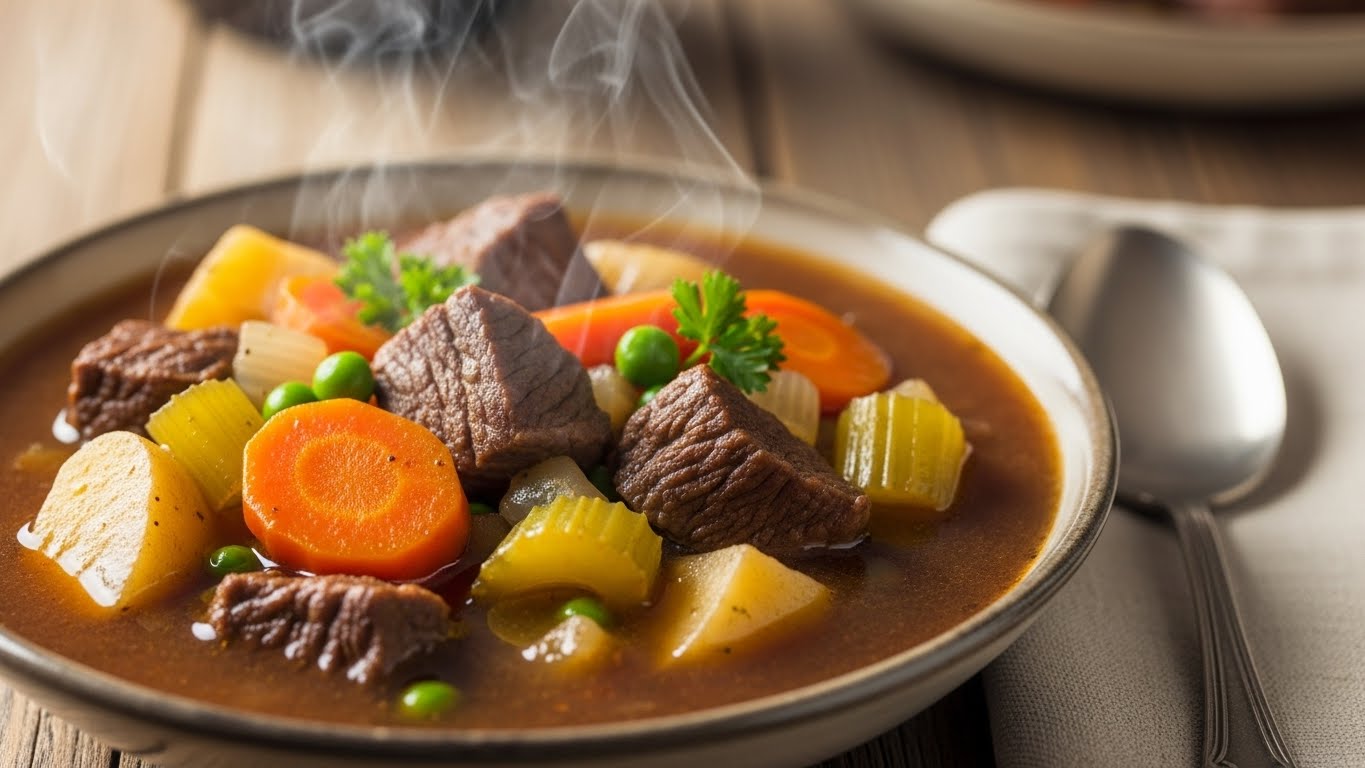
Split Pea Soup Recipe: Easy Classic with Ham

The thick, velvety texture coating your spoon, chunks of ham scattered throughout, that earthy comfort only peas can deliver—split pea soup represents thrift and wisdom in a bowl. For generations, this humble soup transformed leftover ham bones into meals that fed entire families for pennies, proving that resourcefulness and deliciousness aren’t mutually exclusive. The magic happens as dried peas slowly break down over gentle heat, creating a naturally creamy soup without any cream while ham bones infuse deep, smoky flavor into every spoonful. One bowl on a cold day explains why this Depression-era staple has remained a beloved classic.
Recipe Quick Stat
Split Pea Soup: At-a-Glance
Ingredients You’ll Need
Main Ingredients:
- 1 pound dried split peas (green or yellow), rinsed and sorted
- 1 ham bone or 2 ham hocks (smoked for best flavor)
- 1 cup diced cooked ham
- 1 large onion, chopped
- 2 medium carrots, diced into ½-inch pieces
- 2 celery stalks, diced into ½-inch pieces
- 2 cloves garlic, minced
- 8 cups water or chicken broth (or combination)
- 2 bay leaves
- 1 teaspoon dried thyme
- ½ teaspoon dried marjoram (optional but traditional)
- Salt and pepper to taste
How to Make Split Pea Soup Recipe
Starting the Soup
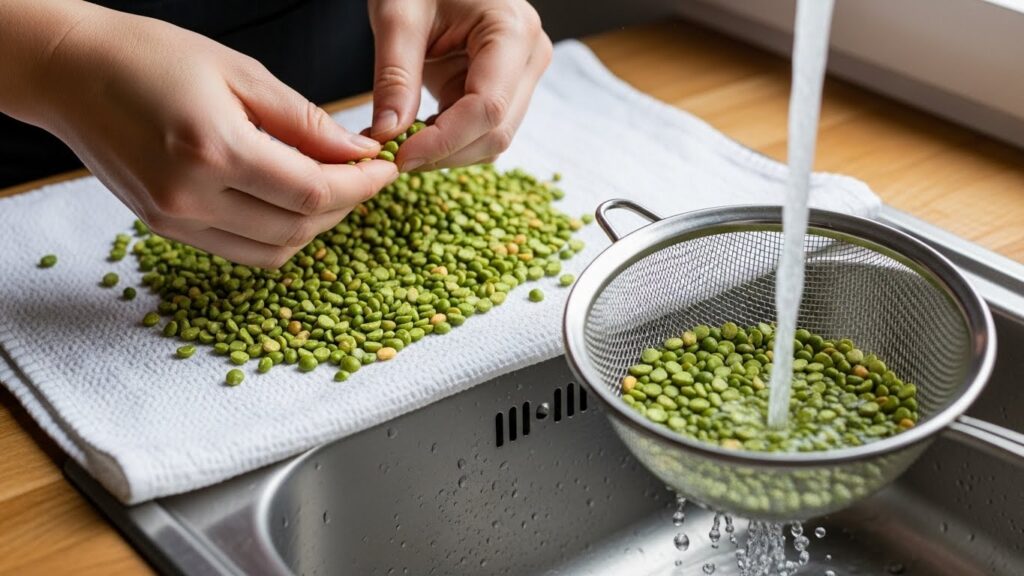
Step 1: Spread the dried split peas on a clean kitchen towel or plate. Sort through them carefully, removing any small stones, debris, or shriveled peas. This step is crucial—split peas come straight from fields and occasionally contain tiny rocks. Place sorted peas in a fine-mesh strainer and rinse thoroughly under cold running water until the water runs clear.
Step 2: In a large pot or Dutch oven (at least 6 quarts), combine the rinsed split peas, ham bone or hocks, chopped onion, diced carrots, diced celery, minced garlic, water or broth, bay leaves, thyme, and marjoram if using. Stir everything together so the peas are mostly submerged in liquid. Don’t add salt yet—the ham bone will contribute significant saltiness.

Simmering to Perfection
Step 3: Bring the mixture to a full rolling boil over high heat. Once boiling vigorously, immediately reduce heat to low so the soup maintains a gentle simmer. You should see small bubbles occasionally breaking the surface. Cover the pot, leaving the lid slightly ajar to allow steam to escape and prevent overflow.

Step 4: Simmer for about 1½ hours, stirring every 20-30 minutes to prevent peas from sticking to the pot bottom. As the peas cook, they’ll gradually soften and begin breaking down, creating a naturally thick, creamy texture. The soup will transform from watery with whole peas floating to thick and cohesive. If the liquid level drops too much and peas aren’t tender yet, add more water or broth ½ cup at a time.

Adding the Ham
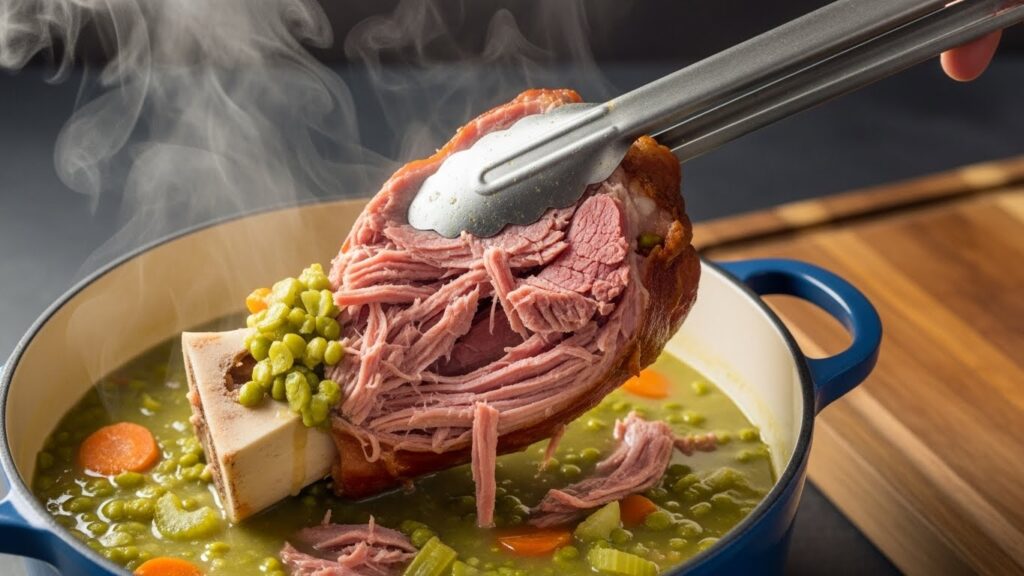
Step 5: After 1½ hours, carefully remove the ham bone or hocks from the pot using tongs—they’ll be very hot and falling apart. Place on a cutting board and let cool for 5-10 minutes until cool enough to handle safely.
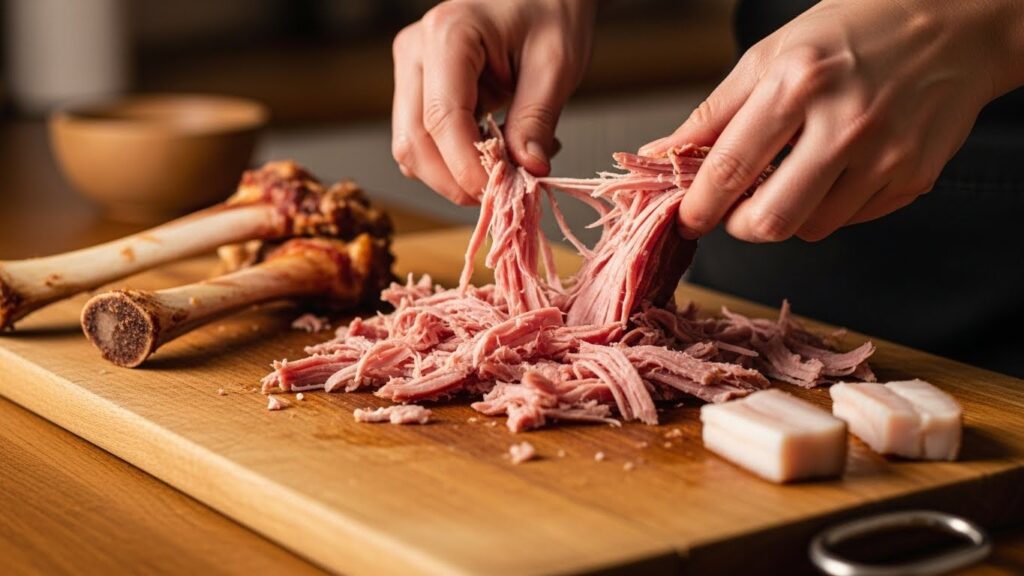
Step 6: Once cooled, use your fingers or a fork to pull off any meat clinging to the bones. Discard bones, skin, and excessive fat. Chop the retrieved meat into bite-sized pieces. You’ll usually get ½ to 1 cup of meat from a ham bone or hocks, depending on how much meat remained on them.
Step 7: Return the chopped ham bone meat to the pot along with the 1 cup diced ham. Stir to incorporate. Continue simmering uncovered for another 30 minutes. The soup will thicken further as it reduces. Stir occasionally to prevent sticking. If the soup becomes too thick and pasty, add water or broth ¼ cup at a time until you reach desired consistency—it should coat a spoon thickly but still be pourable.

Finishing Touches
Step 8: Remove and discard the bay leaves. Taste the soup and season with salt and pepper as needed. Start conservatively with salt since the ham provides plenty—add ¼ teaspoon at a time, tasting between additions.
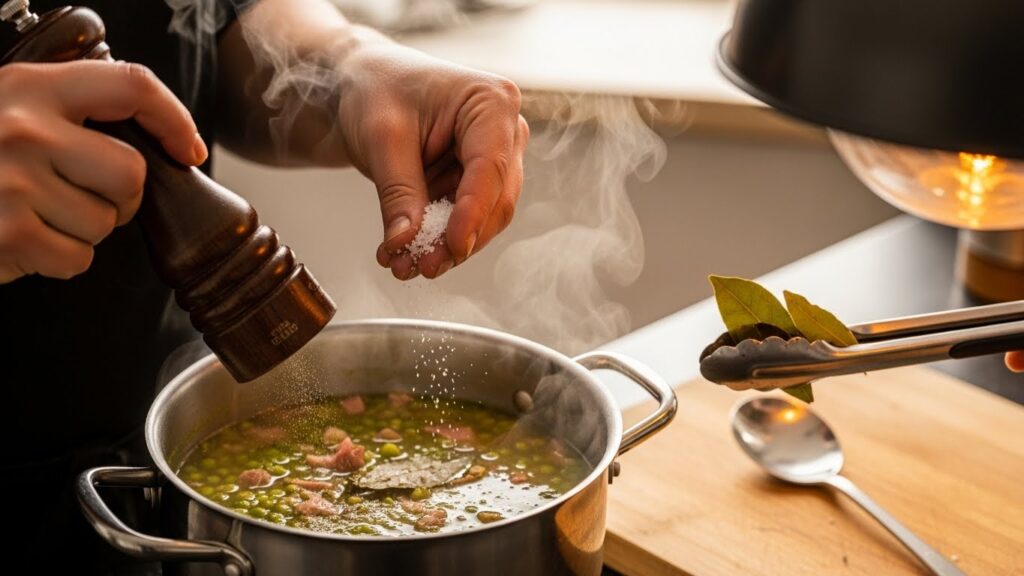
Step 9: For a smoother, creamier consistency, use an immersion blender to partially blend the soup right in the pot. Blend for just 10-15 seconds in several spots—you want to puree some peas while leaving chunks of vegetables and ham intact for texture. Alternatively, transfer 2 cups of soup to a regular blender, puree until smooth, and stir back into the pot.

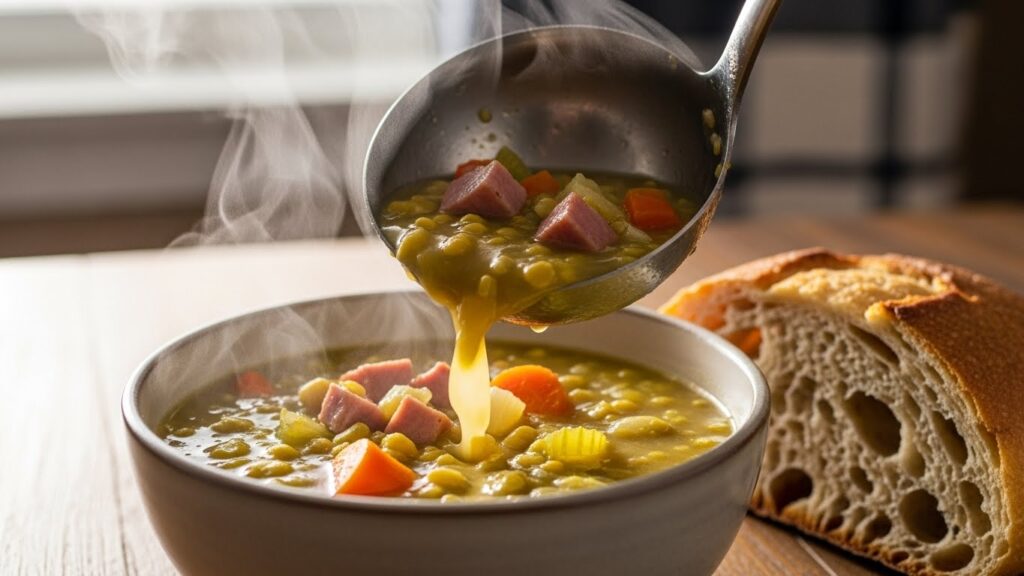
Step 10: Ladle into bowls and serve hot with crusty bread for dipping into the thick, flavorful soup.
What Is Split Pea Soup?
Split pea soup is a thick, hearty soup made from dried split peas—peas that have been peeled and split in half. Unlike other dried legumes, split peas break down completely during cooking, naturally creating a creamy, velvety texture without any dairy. Traditionally made with a ham bone or ham hock for smoky depth, the soup combines the earthy sweetness of peas with savory ham and aromatic vegetables. It’s peasant food at its finest—simple, nourishing, incredibly economical, and deeply satisfying.
Why This Is Easy Split Pea Soup
This recipe requires minimal prep and no special skills. Split peas need no pre-soaking unlike other beans, saving hours of advance planning. Everything cooks together in one pot with minimal hands-on work—just occasional stirring. The ingredients are basic and inexpensive. No complicated techniques or precise timing required. The soup is almost impossible to ruin; it forgives variations in cooking time and liquid amounts. Even novice cooks succeed because the peas do most of the work themselves, breaking down into that signature creamy texture.
Is Split Pea Soup Healthy?
Split pea soup is remarkably nutritious. One serving provides about 15-18 grams of protein and 10-12 grams of fiber, supporting satiety and digestive health. Split peas deliver complex carbohydrates for sustained energy, vitamins A and K, folate, iron, and potassium. The soup is naturally low in fat unless you add excessive ham. It’s cholesterol-free and can easily be made vegetarian. The fiber content helps regulate blood sugar and supports heart health. At approximately 300 calories per generous bowl, it’s filling without being calorie-dense. This is genuinely healthy comfort food.
Simple Recipe Tips
1: Use a ham bone or hocks for deepest flavor. The bones release gelatin that adds body and richness. If you don’t have a bone, use 2 cups diced ham plus a tablespoon of liquid smoke for similar depth.
2: Stir the soup regularly during cooking to prevent peas from settling and sticking to the pot bottom. Once stuck and scorched, the burnt taste permeates the entire pot.
3: Adjust consistency to preference. Some prefer thick soup that’s almost like porridge, others like it brothier. Add liquid until it’s just right for you.
Mistake to Avoid: Don’t add salt until the end. Ham bones and hocks are very salty, and the soup reduces during cooking, concentrating the salt. Season at the finish to avoid oversalting.
How Long Does Split Pea Soup Take to Cook?
Total cooking time is approximately 2 hours from start to finish, with about 10 minutes of active prep. The first simmering phase takes 1½ hours to soften the peas completely. The second phase after adding ham takes another 30 minutes to blend flavors and thicken further. You can’t rush split pea soup—the peas need time to break down properly. However, the timeline is flexible; an extra 15-30 minutes of simmering only improves flavor. This is forgiving cooking where timing doesn’t need to be precise.
Can You Freeze Split Pea Soup?
Yes, split pea soup freezes excellently for up to 3 months. Cool completely, then transfer to freezer-safe containers, leaving 1 inch of headspace for expansion. Label with date and contents. To use, thaw overnight in the refrigerator, then reheat on the stovetop over medium-low heat, stirring frequently. The soup will be very thick after freezing—add water or broth ½ cup at a time while reheating until you reach desired consistency. The texture remains smooth and the flavor actually improves as it sits.
How to Make Split Pea Soup From Scratch Successfully
Success starts with sorting and rinsing the peas thoroughly—this prevents biting into rocks. Use enough liquid so peas stay submerged; they absorb a lot as they cook. Maintain a gentle simmer rather than hard boil; boiling makes the soup foam and can scorch the bottom. Stir regularly to prevent sticking. Don’t add acidic ingredients like tomatoes until the end—acid prevents peas from softening. Let the soup thicken naturally through the peas breaking down rather than adding thickeners. Finally, season at the end when you can taste the base saltiness from the ham.
Split Pea Soup Without Ham (Vegetarian Version)
For vegetarian split pea soup, omit the ham bone and meat. Increase vegetables by adding 1 diced potato and 1 parsnip. Use vegetable broth instead of water. Add 1 tablespoon olive oil for richness. Include 1 teaspoon smoked paprika or a dash of liquid smoke to mimic ham’s smoky depth. Season with an extra ½ teaspoon thyme. The soup will be lighter but still hearty and satisfying. For added protein, stir in cooked lentils during the last 15 minutes.
Split Pea Soup Slow Cooker Method
To make in a slow cooker, combine all ingredients (split peas, ham bone, vegetables, liquid, herbs) in the slow cooker insert. Cook on low for 8-10 hours or high for 4-5 hours until peas are completely soft and breaking down. Remove ham bone, retrieve meat, and return to pot as directed. Season and adjust consistency. The slow cooker method is even more hands-off but takes longer. The flavor develops beautifully with the extended cooking time.
Perfect Pairings
This hearty soup is filling enough to be a complete meal with just bread alongside. Serve with crusty sourdough, rye bread, or our warm apple cinnamon coffee cake for a sweet contrast. It pairs well with simple salads dressed with vinaigrette to cut the richness. For a complete comfort food spread, serve after our pork chops with apples and onions as part of a cold-weather dinner. End the meal with our vinegar pie for a Depression-era menu. Find more warming soups in our soups and stews collection.
Serving Suggestions
Ladle generous portions into deep bowls to showcase the thick, creamy texture. The soup looks appealing with visible ham chunks and vegetable pieces throughout the smooth base. Garnish with a drizzle of olive oil, cracked black pepper, or fresh chopped parsley for color. Serve with a basket of bread or cornbread for soaking up every drop. For casual meals, put the pot on the table and let everyone serve themselves. The humble presentation suits this peasant-food classic perfectly.
Storage and Leftover Advice
Cool soup completely before refrigerating in airtight containers for up to 4 days. The soup will thicken dramatically overnight as the peas continue absorbing liquid—this is completely normal. When reheating, the soup will seem like thick paste. Add water or broth ½ cup at a time over medium-low heat, stirring frequently, until you restore the proper pourable consistency. The flavor improves after a day as the seasonings meld. Many people prefer day-two split pea soup for this reason. Reheat gently to prevent scorching the bottom.
Split Pea Soup for Winter
This soup embodies cold-weather comfort with its warming, stick-to-your-ribs quality. The thick texture and hearty ingredients provide the sustenance needed on freezing days. Making a big pot on Sunday means lunches and dinners covered for the week when you don’t want to venture out. The aroma filling your kitchen creates that cozy feeling that makes winter more bearable. It’s exactly what you crave when snow is falling and you need something hot and filling. Split pea soup represents winter survival food that happens to taste wonderful.
Frequently Asked Questions
1. Do I need to soak split peas?
No, split peas don’t require soaking. They cook completely in about 2 hours without pre-soaking. Just rinse and sort them before cooking.
2. Can I use a smoked turkey leg instead of ham?
Yes, smoked turkey works beautifully and creates similar depth. Use the same way you’d use a ham bone—simmer with the peas, then remove and shred the meat.
3. Why is my soup too thin?
Keep simmering uncovered. The peas need more time to break down, or too much liquid was added. Simmer 30 more minutes, stirring occasionally, to thicken.
4. My peas won’t soften. What’s wrong?
Old peas take forever to soften. Always use peas within a year of purchase. Also, acidic ingredients added too early prevent softening—add tomatoes or vinegar only at the end.
5. Can I add other vegetables?
Absolutely. Potatoes, parsnips, leeks, or turnips all work well. Add them with the initial vegetables so they cook fully.
6. Is green or yellow split pea better?
Both work identically and taste nearly the same. Green peas have slightly earthier flavor, yellow are marginally sweeter. Choose based on availability.
7. How do I prevent the soup from sticking?
Use a heavy-bottomed pot, maintain gentle heat, and stir every 20-30 minutes. If you leave it unattended on high heat, it will stick and burn.
A Note from the Author
Split pea soup represents the resourcefulness that helped families through hard times while creating food worth celebrating. This humble soup turns scraps—a ham bone and dried peas—into comfort that nourishes body and soul. It reminds us that the best cooking often comes from making the most of what we have, that thrift and flavor aren’t opposites, and that some of the most satisfying meals cost almost nothing. Every bowl connects us to cooks who understood that waste was unacceptable and that even the simplest ingredients deserve respect. For more recipes that celebrate resourceful cooking and warming comfort, visit our soups and stews collection and subscribe to our Vintage Life of USA YouTube channel.
Conclusion
This classic split pea soup recipe proves that humble ingredients create extraordinary comfort when treated with patience and care. The naturally creamy texture from broken-down peas, the smoky depth from ham, and the earthy satisfaction unique to legumes come together in one pot to create something that warms you from the inside out. Whether you’re using up a holiday ham bone or simply seeking affordable, healthy comfort food, this soup delivers on every level. Make a big batch this weekend and discover why split pea soup has fed families for generations.
Ready to transform a ham bone into liquid comfort? This thick, hearty soup is pennies per serving but priceless in satisfaction. Find more warming soups and stews at NostalgicEats.com!