What Is the First Wrapped Penny Candy in America? The Surprising History Behind the Corner Store Jar
What Is the First Wrapped Penny Candy in America? The Surprising History Behind the Corner Store Jar
What is the first wrapped penny candies in America remains a question that surprises most candy enthusiasts and history buffs alike. The answer—Tootsie Roll, introduced in 1896—revolutionized the candy industry by introducing individual wrapping to affordable penny candy. This innovation transformed penny candy from loose bulk treats into convenient, hygienic individual portions that changed consumer expectations forever. The first wrapped penny candy in America set the standard for all future candy packaging, making it a pivotal moment in sweet treat history and American consumer culture. Understanding what is the first wrapped penny candy in America helps us appreciate how penny candy from the 50s and 60s built upon this revolutionary foundation. The journey from the first wrapped penny candy in America to the golden era of 1950s penny candy represents a fascinating evolution of affordability, convenience, and childhood nostalgia that shaped generations of Americans. This curiosity-driven history post explores the surprising origins of wrapped candy and how it led to the beloved penny candy from the 50s and 60s that defined childhood experiences for millions.
The Discovery: What Is the First Wrapped Penny Candy in America?
What is the first wrapped penny candies in America is a question with a surprisingly clear answer that most people get wrong. The first wrapped penny candy in America is the Tootsie Roll, created in 1896 by Leo Hirschfeld in New York City. Leo Hirschfeld developed what is the first wrapped penny candy in America as a solution to a growing problem in the confectionery industry—how to keep candy clean, hygienic, and easy to transport while maintaining affordability for consumers.
The name “Tootsie” came from Hirschfeld’s affectionate nickname for his daughter, Clara, whose favorite dessert was taffy. By wrapping individual Tootsie Rolls in paper, Hirschfeld created what is the first wrapped penny candies in America that could be produced efficiently, sold affordably at one penny each, and kept clean from handling and contamination.
The significance of what is the first wrapped penny candy in America cannot be overstated. Before Tootsie Roll’s introduction, most candy was sold loose from bulk containers, creating sanitation concerns and making portioning difficult. What is the first wrapped penny candy in America solved these problems elegantly, establishing packaging standards that the entire candy industry would eventually adopt. This innovation directly influenced how penny candy from the 50s and 60s would be sold decades later, with individual wrapping becoming the standard format for nearly all penny candy varieties.
Why Wrapping Changed Everything: The Impact of the First Wrapped Penny Candy
Understanding why what is the first wrappe penny candy in America mattered so much requires appreciating the context of candy retail in the late 1800s. Before Tootsie Roll revolutionized the industry, candy purchases involved reaching into open bins with bare hands, creating obvious hygiene problems. What is the first wrapped penny candy in America introduced consumers to the idea of pre-packaged, hygienic confections that maintained freshness and cleanliness throughout distribution and purchase. This innovation transformed consumer expectations and set the standard that penny candy from the 50s and 60s would build upon decades later.
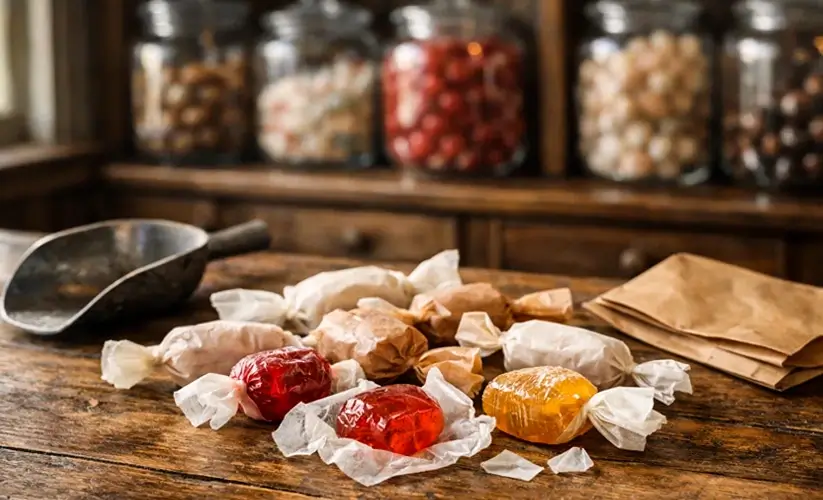
The wrapper itself became an important marketing tool. What is the first wrapped candy in America featured distinctive paper wrapping that helped the Tootsie Roll stand out on store shelves and made it recognizable to consumers. This packaging innovation influenced how penny candy from the 50s and 60s would be marketed, with colorful wrappers and eye-catching designs becoming standard features of these beloved treats. To explore the full scope of these treats, check out our old-fashioned penny candy complete guide. The wrapper’s role in distinguishing products from competitors became a fundamental principle of penny candy marketing that continues today.
From the First Wrapped Penny Candy to the 1950s Boom
The journey from what is the first wrapped candy in America to 1950s penny candy represents nearly 60 years of evolution, innovation, and growing consumer demand. While Tootsie Roll introduced wrapping in 1896, the concept didn’t immediately dominate the entire candy industry. Unwrapped penny candy remained common for decades, sold from bulk containers in general stores and pharmacies. However, throughout the early 20th century, manufacturers increasingly recognized the advantages of wrapping, leading to gradual adoption across the industry. This transition set the stage for penny candy from the 50s and 60s to flourish as a standardized, convenient, affordable treat.
1950s penny candy benefited directly from the packaging innovations that began with what is the first wrapped candy in America. By the 1950s, wrapped penny candy had become the dominant format, with manufacturers offering unprecedented variety in flavors, shapes, sizes, and styles. Penny candy from the 50s and 60s included wax bottles, lollipops, licorice twists, hard candies, and taffy—almost all individually wrapped for convenience and hygiene. Curious about wax bottles specifically? Learn more about the old-fashioned wax bottle candy 1950s recipe. The standardization that began with what is the first wrapped penny candy in America made it possible for corner stores to stock diverse penny candy varieties efficiently while maintaining freshness and cleanliness.
The Golden Era: Penny Candy from the 50s and 60s
Penny candy from the 50s and 60s represents the apex of wrapped candy popularity and affordability. While what is the first wrapped candy in America established the basic concept of individual wrapping in 1896, 1950s penny candy perfected the format and created a cultural phenomenon. The post-World War II economic boom provided children with more spending money than previous generations had enjoyed, making penny candy from the 50s and 60s more accessible than ever before. Children could visit corner stores with their nickels and dimes, selecting from dozens of penny candy varieties—each individually wrapped, hygienic, and affordable.
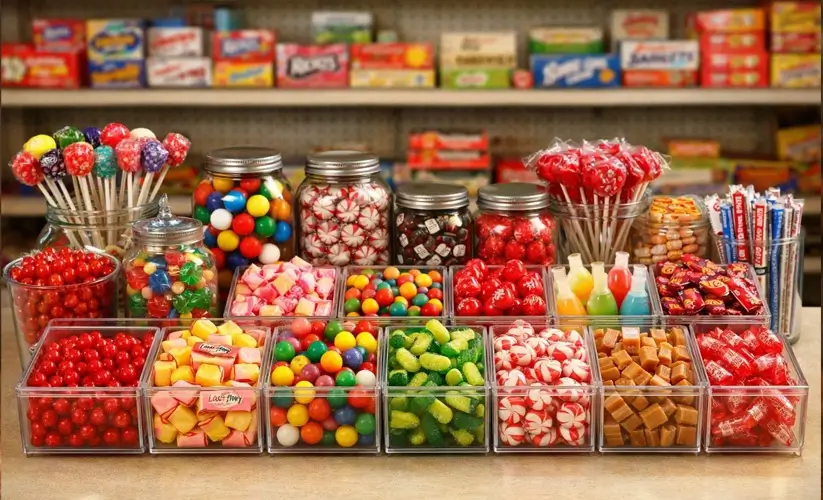
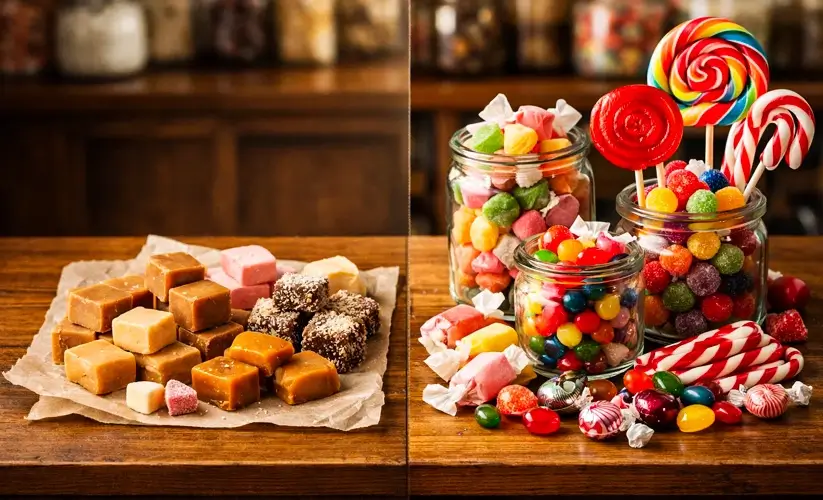
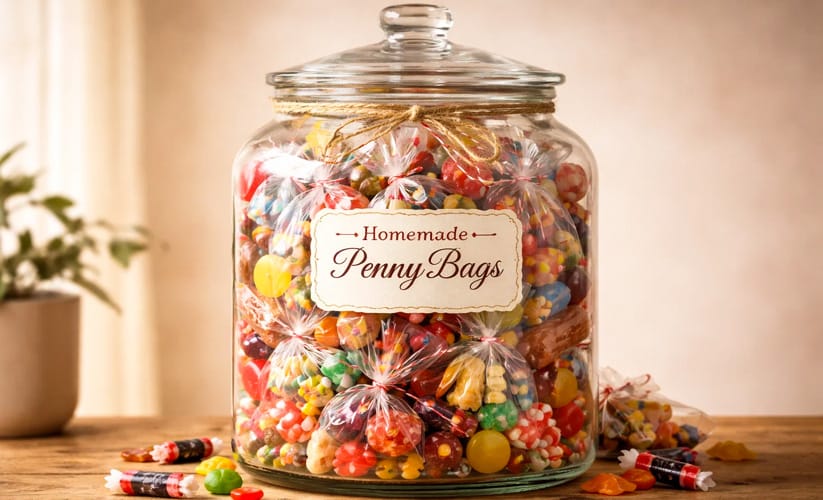
The diversity of penny candy from the 50s and 60s would have amazed Leo Hirschfeld, the creator of what is the first wrapped candy in America. While Tootsie Rolls established the wrapping concept, 1950s penny candy expanded exponentially with new shapes, textures, and flavors. Penny candy from the 50s and 60s included cherry, grape, lemon, lime, and orange hard candies. Wax bottles filled with syrup offered novelty and flavor. Licorice products appeared in numerous varieties. Lollipops came in rainbow colors. Taffy twisted into countless flavors. This remarkable variety made penny candy from the 50s and 60s the most exciting time in affordable candy history. You can even try recreating this magic at home with our homemade 1950s penny candy recipe.
Manufacturing Innovation and Distribution
The ability to produce and distribute penny candy from the 50s and 60s at such enormous scale depended directly on innovations that traced back to candy in America. Wrapping machines, standardized packaging sizes, and efficient distribution systems—all enabled by the wrapping concept that Tootsie Roll introduced—made it possible to produce, store, and sell millions of pieces of penny candy annually. 1950s penny candy manufacturers could wrap candies rapidly, pack them into boxes, ship them to retailers nationwide, and ensure that penny candy from the 50s and 60s reached stores fresh and appealing to young consumers.
The supply chain that made penny candy from the 50s and 60s ubiquitous would have been impossible without what is the first penny in America establishing standardized wrapping as the industry norm. Manufacturers could produce specialized equipment for wrapping, retailers could store varieties efficiently without contamination concerns, and consumers could select from dozens of options knowing each piece maintained consistent quality. The history of penny candy jars shows just how deeply this systematic approach shaped retail display. This systematic approach to production and distribution created the perfect conditions for penny candy from the 50s and 60s to flourish as a cultural phenomenon.
The Cultural Impact of Wrapped Candy
What is the first penny candy in America did more than introduce a packaging innovation—it fundamentally shaped how Americans purchased and consumed candy. The wrapper transformed candy from a loose commodity into a discrete product with identity and marketing appeal. This shift influenced consumer behavior in ways that made penny candy from the 50s and 60s possible as a widespread cultural phenomenon. Children could select specific varieties by brand name and wrapper design, creating brand loyalty and preference from a young age.
The ritualistic aspects of penny candy from the 50s and 60s—selecting from the store’s offerings, reading wrapper labels, unwrapping the treat, and enjoying the contents—all became part of childhood experience. What is the first penny candy in America introduced the concept of the wrapper as packaging, protection, and marketing tool simultaneously. By the time 1950s penny candy flourished, wrappers had become essential to the experience, with manufacturers using colorful designs, distinctive fonts, and brand imagery to appeal to young consumers. The 80s penny candy corner store experience kept this same tradition alive well into the next generation. Penny candy from the 50s and 60s represented the perfection of this marketing approach, with wrappers becoming collectible objects in their own right.
The Economics of Affordable Treats
Understanding what is the first penny candy in America requires appreciating the economics that made wrapped candy production feasible. Tootsie Rolls’ success proved that wrapping, far from increasing costs prohibitively, actually reduced overall expenses by enabling efficient mass production and preventing product loss from contamination. This economic reality changed manufacturing calculations across the entire candy industry, making wrapping economically attractive for producing affordable penny candy from the 50s and 60s.
The penny candy pricing point—one penny per piece—became sustainable specifically because wrapping and mass production made manufacturing costs manageable. 1950s penny candy manufacturers could produce, wrap, distribute, and sell pieces while maintaining profit margins that made the business model viable. Without what is the first penny candy in America establishing wrapping as an efficient, economical production method, penny candy from the 50s and 60s might never have achieved its cultural dominance. The wrapper itself became an inexpensive but essential component that added value by ensuring freshness, cleanliness, and consistent quality.
Evolution Beyond the 1950s
While penny candy from the 50s and 60s represented the golden era of wrapped candy affordability, the fundamental concept introduced by what is the first penny candy in America continued to evolve. Manufacturers experimented with different wrapper materials, colors, and designs. 1950s penny candy innovations like wax bottles with glass-like transparency in the wrapper showed how wrapping materials themselves could become part of the product appeal. The principle that what is the first wrapped penny candy in America established—that wrapping adds value through hygiene, convenience, and marketing—remained constant even as specific applications changed.
The decline of penny candy from the 50s and 60s as inflation reduced purchasing power represents economic change rather than rejection of the concept introduced by what is the first wrapped penny candy in America. Wrapping remained standard for all candy products, even as prices increased beyond the single-penny range. Wondering whatever happened to penny candy? The standards for sanitation, convenience, and marketing that what is the first wrapped penny candy in America established became universal expectations, influencing candy production and packaging practices that continue today. For more on these beloved treats, visit NostalgicEats.com.
Frequently Asked Questions
Q1: What is the first wrapped penny candies in America exactly?
The first wrapped penny candy in America is the Tootsie Roll, introduced in 1896 by Leo Hirschfeld. What is the first wrapped penny candy in America revolutionized the candy industry by introducing individual paper wrapping to affordable, mass-produced confections.
Q2: Why was the first wrapped penny candy in America so important?
What is the first wrapped penny candy in America introduced hygiene standards, individual portioning, and marketing innovation to the candy industry. Before wrapping, candy was sold loose from bulk containers. This innovation established standards that influenced penny candy from the 50s and 60s and all subsequent candy production.
Q3: How did the first wrapped penny candies lead to 1950s penny candy?
What is the first wrapped penny candy in America established wrapping as an efficient, economical production method. This made mass production of affordable penny candy feasible. By the 1950s, wrapping was standard practice, enabling penny candy from the 50s and 60s to flourish with unprecedented variety.
Q4: What was penny candy from the 50s and 60s like?
Penny candy from the 50s and 60s included wrapped wax bottles, lollipops, hard candies, licorice, and taffy in numerous flavors and colors. 1950s penny candy offered remarkable variety at affordable prices, becoming a defining part of childhood experience. You can relive it with our homemade penny candy jar mix recipe.
Q5: Are there any historic Tootsie Rolls still in existence?
While original 1896 Tootsie Rolls are extremely rare, the candy remains in production today. What is the first wrapped penny candy in America represented a beginning point for wrapped candy that continues in modern form, though with modern manufacturing and packaging updates.
Conclusion
What is the first wrapped penny candy in America? The answer—Tootsie Roll in 1896—reveals far more than a simple historical fact. The first wrapped penny candy in America represents a pivotal innovation that transformed not just candy production and marketing, but consumer expectations about hygiene, convenience, and value. This single innovation established the foundation upon which penny candy from the 50s and 60s would build, creating one of the most beloved and nostalgic aspects of American childhood culture.
Understanding what is the first penny candy in America helps us appreciate how 1950s penny candy became possible. The wrapping concept that Tootsie Roll introduced proved economically viable, allowing manufacturers to produce and distribute candy efficiently while maintaining quality and cleanliness. By the time penny candy from the 50s and 60s flourished, wrapping had become so standardized that children didn’t question it—they simply selected their favorite varieties with confidence that each piece was fresh, clean, and exactly as described on the wrapper. For a fun visual trip back to that era, check out this vintage candy history playlist on YouTube.
The journey from what is the first penny candy in America to penny candy from the 50s and 60s represents American innovation, entrepreneurship, and the democratization of treats. Leo Hirschfeld solved a practical problem and inadvertently created the framework for decades of candy industry development. What is the first penny candy in America continues to influence candy production and marketing today, proving that sometimes the most transformative innovations address simple, practical needs—like keeping candy clean and convenient for consumers. Explore more sweet history and recipes at NostalgicEats.com.