Woolton Pie Recipe – Historic British Wartime Classic

This remarkable vegetable pie emerged from one of Britain’s darkest periods and became a symbol of resilience and creativity. Created in 1941 at London’s prestigious Savoy Hotel by Chef Francis Latry, Woolton pie was named after Lord Woolton, the Minister of Food during World War II. During wartime rationing, when meat was scarce and every ingredient precious, this ingenious dish transformed humble root vegetables into something genuinely satisfying and nourishing.
The original recipe was broadcast on BBC radio’s “Kitchen Front” program and printed in newspapers across Britain, helping families make the most of their vegetable gardens and ration allowances. Woolton pie represents British determination and culinary ingenuity at its finest—simple vegetables transformed into hearty comfort food that sustained a nation. Whether you’re exploring historic recipes, seeking vegetarian comfort food, or simply wanting wholesome vegetable pies, this classic Woolton pie delivers authentic taste and remarkable history every single time.
Woolton Pie: Quick Reference
Ingredients You’ll Need
Main Ingredients:
For the Filling:
- 1 pound potatoes, peeled and diced
- 1 pound mixed root vegetables (carrots, parsnips, turnips), peeled and diced
- 1 medium cauliflower, cut into small florets
- 2 medium onions, chopped
- 1 cup vegetable stock
- 2 tablespoons rolled oats
- 2 tablespoons fresh parsley, chopped
- 1 teaspoon mixed dried herbs (thyme, sage, or oregano)
- Salt and pepper to taste
- 1 tablespoon butter or margarine
For the Pastry:
- 2 cups whole wheat flour (or all-purpose flour)
- ½ cup butter or margarine, cold and cubed
- 4-5 tablespoons cold water
- Pinch of salt
Optional Additions:
- 1 cup green beans, chopped
- ½ cup peas (fresh or frozen)
- 2 cloves garlic, minced
- 1 teaspoon Marmite or vegetable extract for deeper flavor
- 1 tablespoon nutritional yeast for savory depth
- ½ teaspoon paprika
- 2 tablespoons grated cheese for topping
- 1 egg, beaten (for egg wash on pastry)
Understanding Woolton Pie: History and Heritage
Woolton pie was born from necessity during Britain’s darkest hour. In 1940, German U-boats blockaded British ports, cutting off food imports and creating severe shortages. The Ministry of Food, led by Frederick Marquis, Lord Woolton, launched campaigns encouraging citizens to “Dig for Victory” and grow their own vegetables. Every garden, park, and unused plot was converted to vegetable production.
Lord Woolton understood that morale depended partly on satisfying meals. He commissioned the Savoy Hotel’s head chef to create a recipe using only vegetables that British families could grow or obtain through rationing. The result was Woolton pie—a savory vegetable pie that was nutritious, filling, and genuinely tasty despite containing no meat. The original recipe was deliberately flexible, allowing cooks to substitute whatever vegetables they had available.
The pie became a symbol of British resilience and creativity during wartime. Families across the nation made Woolton pie weekly, adapting it to their gardens’ harvests. The oatmeal thickening stretched the filling while adding nutrition and substance. The whole wheat pastry provided heartiness that white flour couldn’t match during rationing.
After the war ended, Woolton pie largely disappeared from British tables as meat became available again. However, it has experienced a revival in recent years as people rediscover historic recipes and seek vegetarian comfort food. Modern cooks appreciate the pie’s sustainability, affordability, and surprising deliciousness despite its humble origins.
What Makes This Woolton Pie Special
The genius of Woolton pie lies in how simple vegetables combine into something genuinely satisfying and hearty. The mixed root vegetables provide sweetness, earthiness, and substantial texture. The potatoes add creamy starchiness that helps bind everything together. The cauliflower contributes delicate flavor and interesting texture. The onions provide aromatic depth and natural sweetness when cooked.
The oatmeal thickening is particularly clever—it absorbs vegetable juices and stock, creating a savory gravy that binds the filling without requiring flour-based roux or cream. The oats also add nutritional value and subtle nuttiness that enhances the overall flavor. During wartime, this thickening method conserved precious flour for the pastry topping.
The whole wheat pastry provides nutty flavor and rustic texture that complements the vegetables beautifully. Unlike delicate pastries, this robust crust stands up to the moist filling and provides satisfying contrast. The pastry becomes golden and slightly crisp on top while the bottom layer absorbs some vegetable juices, creating wonderful texture variation.
The result is a pie that’s hearty and satisfying without any meat, nutritious and filling without being heavy, and genuinely flavorful despite using only vegetables and basic seasonings. Woolton pie proves that limitation can inspire creativity and that simple ingredients, treated with respect, can create something truly special.
How to Make Woolton Pie
Step 1: Prepare the Vegetables
Peel and dice the potatoes, carrots, parsnips, and turnips into roughly ½-inch pieces. This size ensures even cooking and pleasant texture. Cut the cauliflower into small florets, about bite-sized. Chop the onions finely. Having all vegetables prepared before you start cooking makes the process smooth and efficient.

Step 2: Cook the Filling
In a large saucepan or pot, melt 1 tablespoon butter over medium heat. Add the chopped onions and cook for 3-4 minutes until softened and slightly golden. The onions provide aromatic foundation for the entire filling.

Step 3: Add Vegetables and Stock
Add all the diced root vegetables and cauliflower to the pot with the onions. Pour in 1 cup vegetable stock. The stock should not completely cover the vegetables but should come about halfway up. Bring to a gentle boil, then reduce heat to medium-low.

Step 4: Simmer Until Tender
Cover the pot and simmer for 15-20 minutes until the vegetables are just tender when pierced with a fork. You want them cooked through but not mushy since they’ll bake further in the oven. Stir occasionally to ensure even cooking.

Step 5: Thicken with Oats
Sprinkle 2 tablespoons rolled oats over the cooked vegetables and stir gently. The oats will absorb the cooking liquid and create a thick, savory gravy that binds everything together. Add the chopped parsley, mixed dried herbs, salt, and pepper. Stir gently to combine. Taste and adjust seasoning as needed. Remove from heat and let cool slightly while you prepare the pastry.

Step 6: Make the Pastry
In a large bowl, combine 2 cups whole wheat flour with a pinch of salt. Add the cold, cubed butter and use your fingertips to rub the butter into the flour until the mixture resembles coarse breadcrumbs. This usually takes 3-4 minutes of rubbing and lifting.

Step 7: Add Water and Form Dough
Add cold water, one tablespoon at a time, mixing with a fork after each addition. Add just enough water for the dough to come together when pressed. You may need 4-5 tablespoons total. Gather the dough into a ball, wrap in plastic wrap or cover with a damp cloth, and let rest for 10 minutes. This resting allows the gluten to relax, making rolling easier.

Step 8: Preheat Oven and Prepare Dish
Preheat your oven to 375°F. Grease a deep 9-inch pie dish or 8×8-inch square baking dish with butter.

Step 9: Assemble the Pie
Transfer the cooled vegetable filling into the prepared baking dish, spreading evenly. On a lightly floured surface, roll out the pastry dough to about ¼-inch thickness, large enough to cover the top of your dish with a little overhang. Carefully lay the pastry over the filling. Trim any excess pastry, leaving about ½-inch overhang, then crimp or press the edges to seal. Cut several small slits in the top of the pastry to allow steam to escape during baking.
Step 10: Bake Until Golden
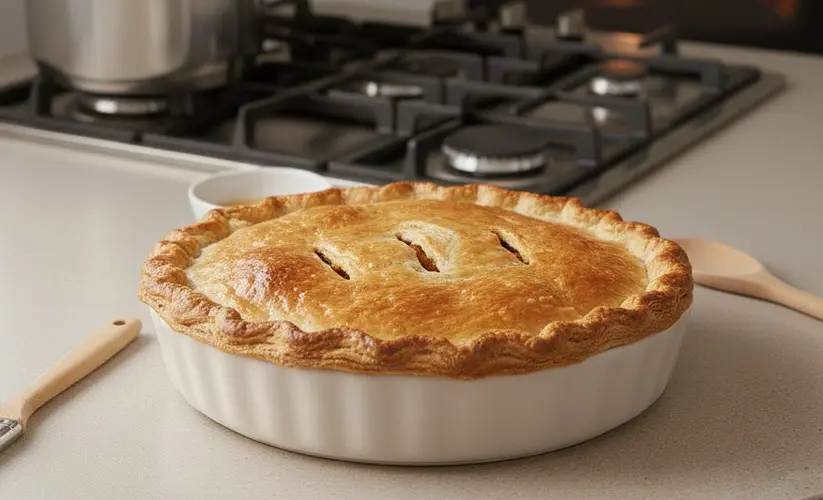
If desired, brush the pastry top with beaten egg or a little milk for a golden finish. Place in the preheated 375°F oven and bake for 45-50 minutes until the pastry is golden brown and the filling is bubbling through the steam vents. The pastry should be crisp and beautifully colored.
Step 11: Cool and Serve
Remove from the oven and let cool for 10 minutes before serving. This allows the filling to set slightly, making serving easier. Cut into generous portions and serve hot with additional vegetables or a simple salad.
Pro Tips for Perfect Woolton Pie
Cut Vegetables Uniformly: Consistent sizing ensures even cooking. Pieces that are too large remain undercooked while smaller pieces become mushy.
Don’t Overcook the Filling: Remember the vegetables will continue cooking in the oven. Slightly undercook them during the initial simmering for best final texture.
Use Cold Butter for Pastry: Cold butter creates flaky texture. If your kitchen is warm, chill the flour and butter in the freezer for 10 minutes before starting.
Don’t Overwork the Dough: Handle pastry dough minimally. Overworking develops gluten, creating tough rather than tender pastry.
Let Dough Rest: The 10-minute rest relaxes gluten, making rolling easier and preventing shrinkage during baking.
Cool Filling Slightly: Hot filling can melt the pastry before baking begins. Let the filling cool for 10-15 minutes before assembling.
Cut Steam Vents: Steam vents prevent soggy pastry by allowing moisture to escape during baking.
Brush with Egg Wash: Beaten egg creates beautiful golden color and appetizing shine on the finished pastry.
Make It Ahead: Prepare the filling completely, cool, refrigerate, then assemble and bake when ready. The filling keeps for 2 days refrigerated.
Use What You Have: The original recipe was flexible by design. Substitute whatever root vegetables are available or affordable.
Easy Variations to Try
Cheese-Topped Version: Sprinkle 2 tablespoons grated cheddar over the pastry during the last 10 minutes of baking for extra richness.
Marmite Depth: Add 1 teaspoon Marmite or vegetable extract to the filling for deeper, more savory flavor—very British and authentic.
Herb-Enhanced: Double the fresh herbs and add fresh thyme or sage for more pronounced herbal notes.
Mashed Potato Topping: Instead of pastry, top with mashed potatoes for a shepherd’s pie style variation.
Puff Pastry Luxury: Use store-bought puff pastry instead of whole wheat pastry for lighter, flakier topping.
Green Vegetable Addition: Add 1 cup chopped green beans or peas during the last 5 minutes of simmering for color and additional vegetables.
Garlic Forward: Add 2 minced garlic cloves when cooking the onions for more pronounced flavor.
Nutritional Yeast Boost: Stir 1 tablespoon nutritional yeast into the filling for cheesy, savory depth without dairy.
Can Woolton Pie Be Frozen
Yes, freeze for up to 3 months. Cool completely after baking, wrap tightly with plastic wrap and aluminum foil, then freeze. Alternatively, assemble the pie completely but don’t bake, then freeze. Bake from frozen, adding 15-20 minutes to the baking time and covering with foil if the top browns too quickly. Thawed baked pie can be reheated covered at 350°F for 25-30 minutes until heated through.
How Long Does Woolton Pie Last
Refrigerate covered for up to 4 days. The flavors actually deepen and integrate more fully overnight, making leftovers particularly delicious. The pastry will soften during storage but remains tasty. Reheat individual portions in the microwave for 2-3 minutes or reheat the whole pie covered at 350°F for 20-25 minutes until heated through.
Is Woolton Pie Healthy
Woolton pie is remarkably healthy. It’s packed with nutrient-dense root vegetables providing vitamins, minerals, and dietary fiber. The dish is naturally vegetarian and can easily be made vegan by using plant-based butter in the pastry and filling. It’s high in complex carbohydrates from vegetables and whole wheat flour, providing sustained energy. The oats add additional fiber and nutrition. While the pastry contains butter, the overall dish is wholesome and nutritious, especially compared to meat pies with similar heartiness.
What Vegetables Are Best for Woolton Pie
Traditional Woolton pie uses whatever vegetables are available, but root vegetables work best because they hold up to cooking and provide substantial texture. Potatoes, carrots, parsnips, and turnips are classic choices. Cauliflower adds delicate flavor and interesting texture. Onions provide essential aromatic foundation. You can also include rutabaga, celeriac, leeks, green beans, or peas. Avoid vegetables that release too much water like zucchini or tomatoes, as they make the filling too wet.
Woolton Pie Paired with Other Dishes
Traditionally served as a main course with simple accompaniments. A fresh green salad with vinaigrette provides freshness and cuts the richness. Steamed greens like cabbage or kale complement the pie beautifully. Pickled vegetables or chutney add tangy contrast. During wartime, Woolton pie was often the entire meal, perhaps with bread. Today, serve it with roasted Brussels sprouts or braised red cabbage for a complete British-inspired vegetarian feast.
Frequently Asked Questions About Woolton Pie
Can Woolton pie be frozen?
Yes, freeze for up to 3 months. Cool completely, wrap tightly, then freeze. Can also freeze unbaked—just bake from frozen, adding 15-20 minutes to baking time.
How long does Woolton pie last?
Refrigerate for up to 4 days. Flavors deepen overnight. Pastry softens but remains tasty. Reheat covered at 350°F for 20-25 minutes.
Is Woolton pie healthy?
Very healthy. Packed with nutrient-dense vegetables, high in fiber and vitamins. Naturally vegetarian and easily made vegan. Wholesome comfort food without excessive calories.
What vegetables are best for Woolton pie?
Root vegetables work best: potatoes, carrots, parsnips, turnips. Also cauliflower and onions. Can include rutabaga, celeriac, green beans, or peas. Avoid watery vegetables like zucchini.
How to make Woolton pie?
Cook diced root vegetables and cauliflower with onions in vegetable stock until tender, thicken with oats, season with herbs, transfer to baking dish, top with whole wheat pastry, and bake at 375°F for 45-50 minutes until golden.
Woolton pie for beginners?
Very beginner-friendly. Simple vegetable preparation, basic pastry making, straightforward assembly. No complex techniques required. Perfect introduction to pie making.
Conclusion
This historic Woolton pie delivers genuine British comfort food that represents resilience, creativity, and the remarkable things we can create from simple ingredients. The combination of hearty root vegetables, savory oat gravy, and golden whole wheat pastry creates satisfaction that transcends its humble wartime origins. Whether you’re exploring historic recipes, seeking vegetarian comfort food, or simply wanting wholesome vegetable pies, Woolton pie delivers authentic taste and remarkable nutrition. Ready to make culinary history? Gather your root vegetables, roll out some pastry, and discover why this wartime creation deserves a place at modern tables. In about seventy-five minutes, you’ll have a pie that tastes like vintage tradition