Irish Soda Bread Recipe – Easy Traditional Loaf
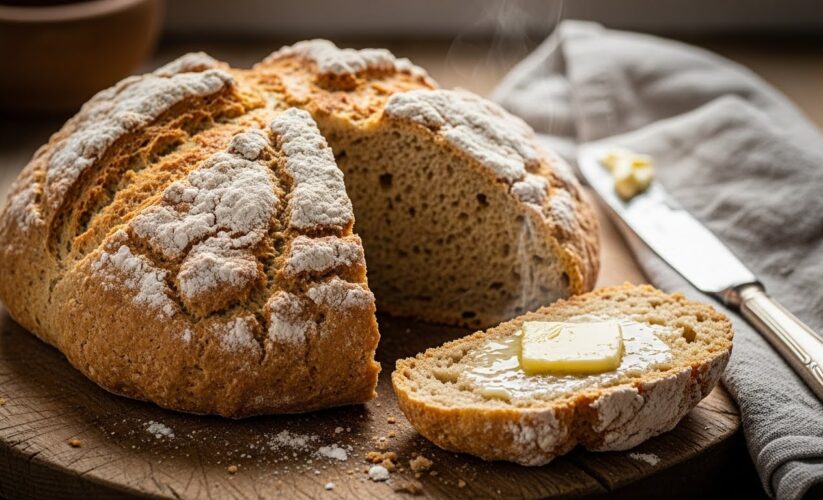
This quick bread required no yeast, making it perfect for times when other ingredients were scarce or when bakers needed fresh bread quickly without lengthy fermentation. The buttermilk gave it a tender crumb and slight tang that made it a beloved staple. Irish soda bread represents one of the most practical baking innovations—a bread that rises through the chemical reaction of baking soda and acidic buttermilk rather than relying on temperamental yeast cultures. This simple chemistry meant that even during difficult economic times or in remote locations where commercial yeast wasn’t available, families could still have fresh, delicious bread. Whether you’re exploring Irish culinary heritage, seeking a quick bread that requires no special skills, or wanting something satisfying for breakfast or alongside soup, this classic Irish soda bread delivers authentic results with remarkable simplicity.
Irish Soda Bread: Quick Reference
Ingredients You’ll Need
Main Ingredients:
- 4 cups all-purpose flour
- 1 teaspoon baking soda
- 1 teaspoon salt
- 1 tablespoon sugar
- 4 tablespoons cold butter
- 1 3/4 cups buttermilk
- 1 egg, lightly beaten
Optional Additions:
- 1 cup raisins or currants
- 1 teaspoon caraway seeds
- 1/2 teaspoon dried thyme
- 1 tablespoon honey
- 2 tablespoons fresh parsley, chopped
Understanding Irish Soda Bread: History and Heritage
Irish soda bread emerged from practical necessity in Irish kitchens where baking yeast wasn’t readily available or affordable. Ireland’s soft wheat and abundant buttermilk created perfect conditions for soda bread chemistry. The baking soda, combined with the acidity of buttermilk, created reliable leavening without requiring fermentation time or special ingredients. This made fresh bread achievable daily in even the poorest households.
The distinctive “X” score on top of Irish soda bread has practical roots. The score allows heat to penetrate the dense dough evenly, ensuring the interior cooks through while the exterior browns properly. This simple technique was essential when ovens were communal or unreliable. The score also became decorative, making the bread recognizable and traditional.
Irish soda bread traveled with Irish immigrants to America, becoming part of American culinary heritage alongside the communities that brought it. During St. Patrick’s Day celebrations and Irish-American gatherings, soda bread represents cultural connection and tradition. Yet the bread has transcended ethnic boundaries to become appreciated by anyone seeking reliable, quick bread that tastes genuinely good.
The recipe has remained remarkably unchanged for over a century. While modern variations include raisins, caraway seeds, or other additions, the basic formula of flour, baking soda, salt, and buttermilk remains constant. This consistency proves that the original recipe was already perfect—there’s simply no need for significant improvement.
What Makes This Irish Soda Bread Special
The chemistry of Irish soda bread is elegantly simple. Baking soda is a base, and buttermilk is acidic. When combined, they react immediately, creating carbon dioxide bubbles that leaven the dough. This chemical reaction happens so quickly that kneading is minimal and fermentation time is unnecessary. The result is bread ready to bake within minutes of mixing—perfect when you need fresh bread without advance planning.
The buttermilk creates tender crumb and adds subtle tanginess that distinguishes soda bread from other quick breads. The acid in buttermilk also begins breaking down gluten, which contributes to the tender, slightly dense texture characteristic of traditional soda bread. The cold butter, cut into small pieces, creates pockets of fat that develop during baking, adding richness and contributing to the tender crumb.
The high baking temperature (425°F) creates a sturdy crust quickly while the interior remains tender and moist. The score on top allows steam to escape evenly, preventing the top from exploding and ensuring the bread develops an attractive appearance. The result is bread with contrasting textures—a firm crust containing a tender, moist interior.
How to Make Irish Soda Bread
Step 1: Preheat the Oven
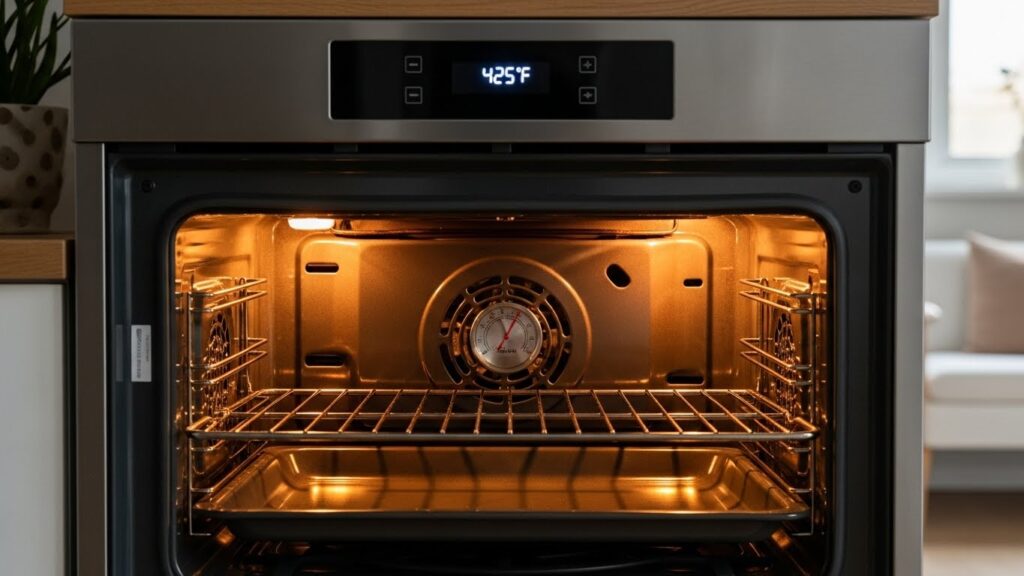
Preheat your oven to 425°F. A hot oven is essential for proper crust development and cooking the interior before the exterior browns too much. Make sure the oven has fully preheated before proceeding. An oven thermometer ensures accuracy, since oven temperatures can vary.
Step 2: Combine Dry Ingredients
In a large mixing bowl, combine 4 cups all-purpose flour, 1 teaspoon baking soda, 1 teaspoon salt, and 1 tablespoon sugar. Whisk these together thoroughly, breaking up any lumps in the baking soda. The whisking distributes the baking soda evenly throughout the flour, ensuring the chemical reaction occurs uniformly for even leavening. Uneven distribution results in some areas rising more than others.

Step 3: Cut in the Butter
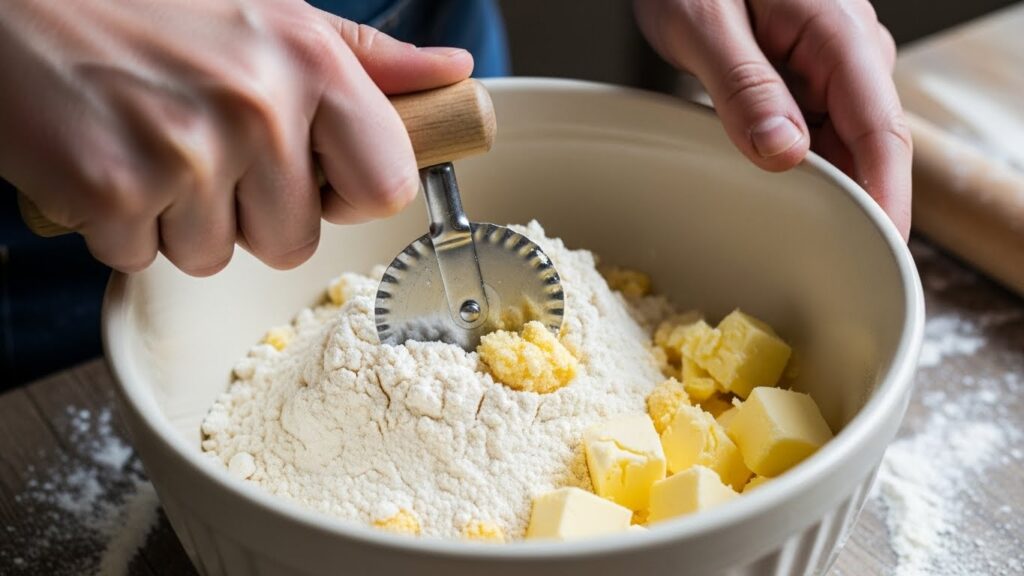
Add 4 tablespoons cold butter cut into small cubes to the flour mixture. Using a pastry cutter, two knives, or your fingertips, work the butter into the flour until the mixture resembles coarse crumbs. This should take about 2-3 minutes. The cold butter remains separate from the flour, creating pockets that contribute to the tender texture. If butter becomes too warm and blends completely into the flour, the bread becomes dense.
Work quickly and keep everything cold. If your kitchen is very warm, you can chill the bowl for a few minutes before this step.
Step 4: Create a Well and Add Wet Ingredients
Make a well in the center of the flour mixture by pushing the flour toward the sides of the bowl. Pour 1 3/4 cups buttermilk and 1 lightly beaten egg into the well. The egg adds richness and helps bind the dough, while the buttermilk provides the acidity that reacts with baking soda.

Step 5: Mix Just Until Combined
Using a sturdy spoon or wooden spoon, gently pull the flour from the sides into the wet ingredients in the center, stirring just until a rough dough forms. This should take only about 30 seconds of mixing. The dough should look shaggy and slightly rough. Do not overmix—the baking soda needs the buttermilk to begin reacting immediately, and additional mixing develops gluten that toughens the bread.
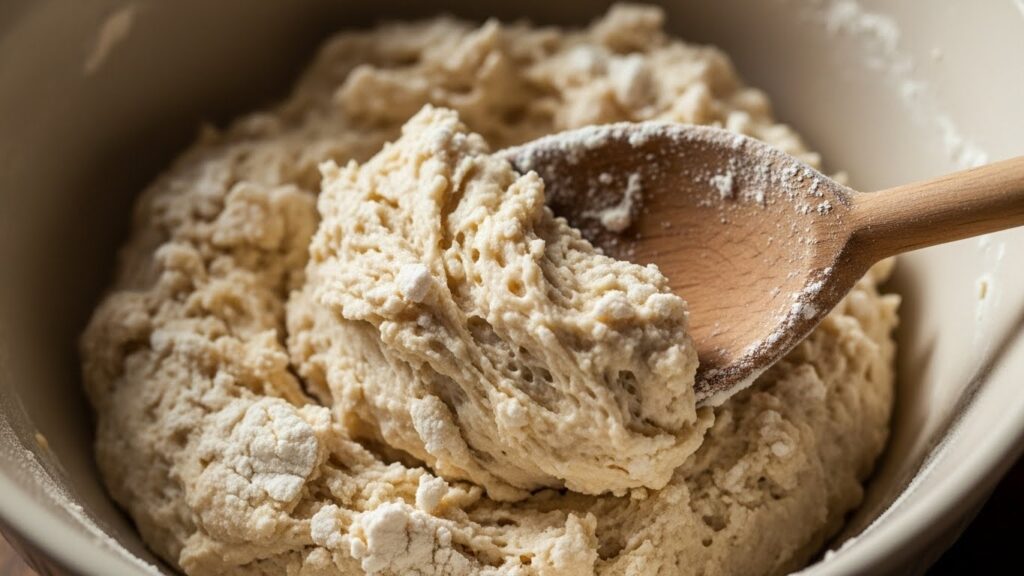
Step 6: Turn onto Floured Surface
Turn the dough onto a lightly floured surface. The dough will be slightly sticky and soft—this is normal and correct. If it seems very wet, dust with a bit more flour. If it seems dry and crumbly, add a splash of buttermilk.
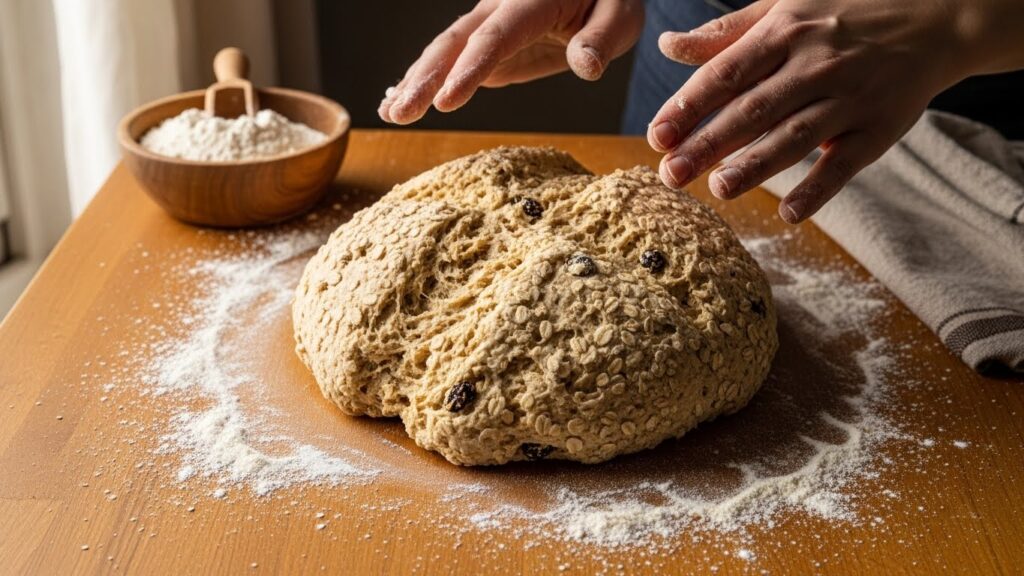
Step 7: Knead Gently
Knead the dough gently 5 to 6 times, just enough to bring it together into a cohesive ball. Do not knead vigorously or for an extended period. Unlike bread doughs where kneading develops gluten, soda bread actually becomes worse with too much kneading. The goal is simply to incorporate all ingredients, not to develop gluten structure.

Step 8: Shape into Round Loaf
Shape the dough into a round loaf by gently gathering it into a ball and smoothing the surface slightly. Place the shaped loaf on a greased baking sheet. The round shape is traditional and helps the bread cook evenly.
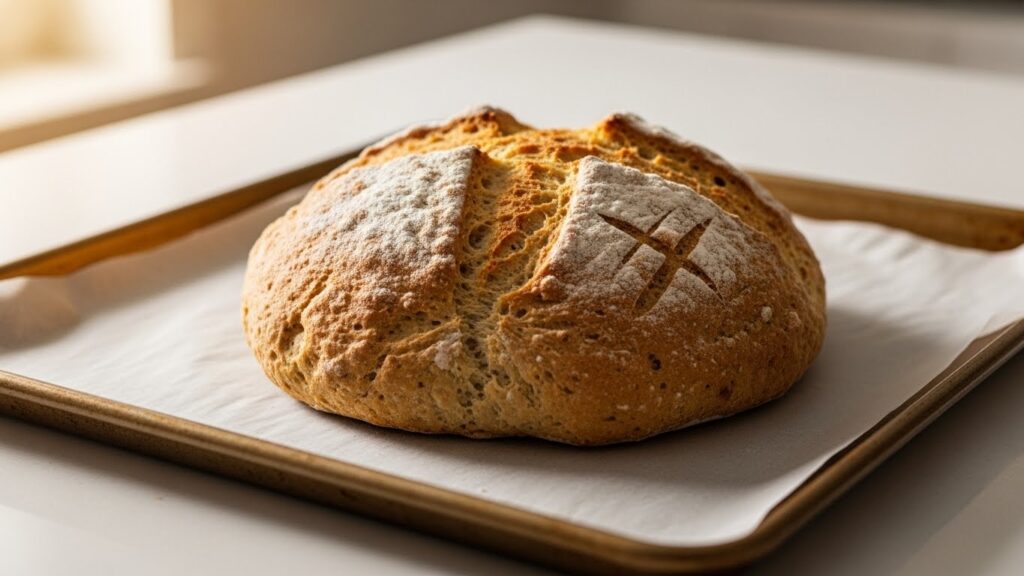
Step 9: Score the Top
Using a sharp knife, cut an “X” on the top of the loaf, about 1/2-inch deep. Make two cuts crossing each other from one edge to the opposite edge. The score should be decisive and confident—this is both practical and decorative. It allows steam to escape evenly and is the signature mark of authentic Irish soda bread.

Step 10: Bake Until Done
Place the baking sheet in the preheated 425°F oven and bake for 25 to 30 minutes until the loaf is golden brown and sounds hollow when tapped on the bottom. The exact baking time depends on your oven and the size of your loaf. Start checking at 25 minutes. The crust should be firm and golden, and a toothpick inserted into the thickest part should come out clean or with just a few moist crumbs.

Step 11: Cool on Wire Rack
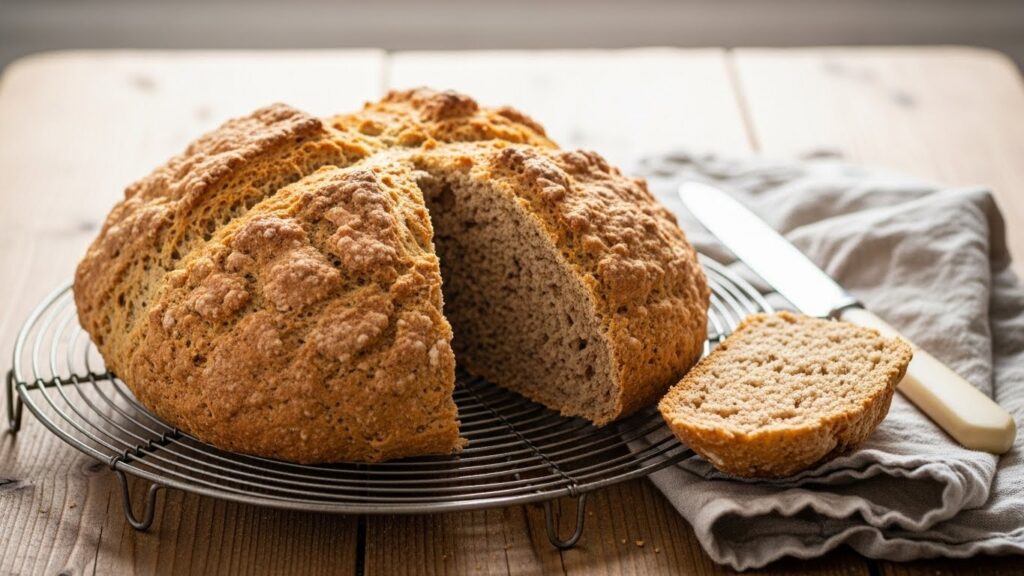
Remove from the oven and transfer to a wire cooling rack. Let cool for at least 15-20 minutes before slicing. Cooling allows the structure to set. If you slice too early, the bread will be slightly gummy and fall apart more easily. However, soda bread is wonderful served warm with plenty of butter.
Pro Tips for Perfect Irish Soda Bread
Use Quality Buttermilk: Real buttermilk (the liquid left after butter is churned) produces better results than buttermilk substitute. If you don’t have buttermilk, mix 1 tablespoon vinegar or lemon juice with 1 3/4 cups regular milk and let sit for 5 minutes before using.
Keep Ingredients Cold: Cold butter creates better texture. If your kitchen is warm, chill the mixing bowl and ingredients before starting.
Don’t Overmix: Overmixing develops gluten and toughens the bread. Stir just until a rough dough forms. The mixture should look shaggy and rough.
Don’t Over-knead: Gentle kneading is sufficient. Five to six turns is plenty. Additional kneading makes the bread tough and dense.
Make a Confident Score: A hesitant or shallow score doesn’t allow steam to escape properly. Make two decisive cuts crossing each other.
Use an Instant-Read Thermometer: Interior temperature should reach 205-210°F when fully cooked. This is more reliable than the hollow-tap test.
Serve While Still Warm: Soda bread is best served warm from the oven with plenty of butter. The warmth allows butter to melt in perfectly.
Don’t Refrigerate: Store wrapped in a clean towel at room temperature rather than refrigerating, which dries out the bread faster.
Making Irish Soda Bread for Beginners
If you’re new to baking, Irish soda bread is an excellent starting point. There’s no kneading technique to master, no fermentation timing to worry about, and no special equipment required. The chemistry of baking soda and buttermilk does the work automatically. Simply mix and bake—it’s genuinely foolproof.
The key is restraint with mixing. Resist the urge to beat the dough or mix it longer. The shaggy, rough dough that looks like it needs more mixing is exactly right. This restraint produces tender bread, while additional mixing produces dense bread.
Easy Variations to Try
With Raisins: Add 1 cup raisins or currants to the dry ingredients. They plump slightly during baking, creating pockets of sweetness throughout. This creates a slightly sweeter soda bread.
Caraway Seed Version: Add 1 teaspoon caraway seeds to the dry ingredients for a more traditional Irish flavor that pairs beautifully with cheese and ham.
Herb Garden Fresh: Add 1/2 teaspoon dried thyme and 2 tablespoons fresh parsley for herbaceous flavor that makes this suitable as a dinner bread.
Honey Sweetened: Add 1 tablespoon honey to the buttermilk before mixing for subtle additional sweetness without changing the character of the bread.
Cheese Soda Bread: Add 1 cup shredded sharp cheddar cheese to the dry ingredients for savory depth. This transforms soda bread into more of a dinner bread.
Quick Breakfast Version: Serve slices warm from the oven with butter and jam for a quick breakfast that feels special without requiring advance planning.
Without Raisins: The basic recipe without any additions produces traditional Irish soda bread that’s more versatile for pairing with various meals.
Stovetop Method: For a cast iron skillet variation, bake the loaf in a preheated cast iron skillet on the oven bottom rack for different crust development.
What Is Irish Soda Bread
Irish soda bread is a quick bread made with flour, baking soda, salt, and buttermilk, leavened by the chemical reaction between baking soda and buttermilk acid rather than yeast. The bread has tender crumb with slight tanginess from the buttermilk. It’s traditionally scored with an “X” on top. The bread bakes quickly without fermentation time, making it practical for daily baking.
Is Irish Soda Bread Healthy
Irish soda bread is made from basic, recognizable ingredients without preservatives or additives. While not low-calorie or low-fat—it contains butter and is a carbohydrate-rich bread—it’s a genuine whole food without processed ingredients. A single slice contains modest fat and calories while providing carbohydrates and some protein from the egg.
The buttermilk provides probiotics beneficial for digestion. Compared to commercial breads with preservatives and additives, homemade soda bread is genuinely healthier. Best served as part of a balanced meal rather than eaten alone.
How Long Does Irish Soda Bread Last
Irish soda bread is best eaten the day it’s made. Store wrapped in a clean towel for 1-2 days at room temperature. The bread actually dries out and becomes dense when refrigerated, so don’t refrigerate it. To refresh day-old bread, wrap in foil and heat in a 300°F oven for 10 minutes—this restores the warm, fresh quality.
For longer storage, wrap tightly and freeze for up to 3 months. Thaw at room temperature or reheat wrapped in foil at 350°F for 15-20 minutes. Frozen and thawed soda bread tastes nearly identical to fresh.
Can Irish Soda Bread Be Frozen
Yes, freeze for up to 3 months. Cool completely, wrap tightly in plastic wrap and then aluminum foil before freezing. You can also freeze individual slices for convenient thawing. Thaw at room temperature or reheat wrapped in foil at 350°F for 15-20 minutes until warmed through.
Irish Soda Bread Paired with Other Dishes
Traditional pairings include soups and stews, where the bread’s tender crumb and slight tanginess complement rich, savory broths. Serve alongside colcannon, Irish potato dishes, or corned beef. The bread also pairs beautifully with cheese and ham for simple meals.
For complete meal planning, explore our collection of traditional comfort food recipes. Try our southern style green beans recipe for a vegetable side, bean and ham soup recipe for hearty comfort, or browse our breads and biscuits collection for more baking options.
Frequently Asked Questions About Irish Soda Bread
How to make irish soda bread at home?
Combine flour, baking soda, salt, and sugar. Cut in cold butter until mixture resembles crumbs. Add buttermilk and egg, mix just until dough forms, knead gently 5-6 times, shape into round, score with X, and bake at 425°F for 25-30 minutes.
Simple irish soda bread recipe?
This recipe is genuinely simple—just combine dry ingredients, cut in butter, add buttermilk and egg, mix gently, shape, and bake. No fermentation or special techniques required.
Irish soda bread for beginners?
Soda bread is perfect for beginners. There’s no complicated kneading technique or timing to master. Simply mix gently, shape, and bake. The chemistry works automatically.
What is irish soda bread?
Quick bread leavened by baking soda reacting with buttermilk acid rather than yeast. It has tender crumb with slight tanginess and is traditionally scored with an X on top.
Is irish soda bread healthy?
Made from basic ingredients without preservatives, soda bread is relatively healthy for a bread product. Not low-calorie or low-fat but a genuine whole food without additives.
How long does irish soda bread last?
Best eaten the day it’s made. Store wrapped in a towel for 1-2 days. Refrigeration dries it out faster than room temperature storage.
Can irish soda bread be frozen?
Yes, freeze wrapped tightly for up to 3 months. Thaw at room temperature or reheat wrapped in foil at 350°F for 15-20 minutes.
What if I don’t have buttermilk?
Add 1 tablespoon vinegar or lemon juice to 1 3/4 cups regular milk and let sit for 5 minutes before using. This creates a similar acidic environment.
Why is my soda bread dense?
Overmixing or over-kneading develops gluten and creates dense bread. Mix just until dough forms, knead only 5-6 times, and handle gently.
Can I add raisins?
Yes, add 1 cup raisins or currants to the dry ingredients. They plump during baking, creating pockets of sweetness.
Why This Recipe Endures
Irish soda bread represents one of the most successful quick bread formulas ever developed. The chemistry is reliable, the technique is simple, and the results are genuinely delicious. The bread requires no special skills, no fermentation time, and minimal equipment—just basic ingredients and about 15 minutes of active work.
This bread also carries cultural significance beyond its practical qualities. It represents Irish culinary heritage and continues traditions brought by Irish immigrants to America. Making soda bread connects people to that heritage and to generations of families who baked this bread in their kitchens.
For more classic recipes celebrating traditional baking and cultural heritage, explore our collection at Nostalgic Eats. Subscribe to our Vintage Life of USA YouTube channel for more recipes and stories about the food that shaped American families and culinary traditions.
Conclusion
This classic Irish soda bread recipe proves that genuinely excellent bread doesn’t require complicated techniques, lengthy fermentation, or special skills. The simple chemistry of baking soda and buttermilk creates reliable leavening while producing tender, flavorful bread. Whether you’re exploring Irish culinary heritage, seeking quick bread for breakfast or alongside soup, or wanting to bake something authentic and satisfying, Irish soda bread delivers perfect results every time. Ready to make it? Gather flour, buttermilk, baking soda, and butter. In less than an hour, you’ll have a warm, golden loaf that tastes like tradition and home.