Berry Grunt Recipe – Easy Classic Stovetop Dessert
Grandma’s Old Fashioned Stovetop Mixed Berry Grunt Recipe No Oven — The Dessert That Made a Strange Sound and Tasted Like Heaven
The first time I heard it, I thought something had gone wrong.
A low, wet, rhythmic sound coming from the covered pot on the back burner — somewhere between a slow boil and something alive. A soft, muffled gurgling that rose and fell with the heat, steady and purposeful, filling the kitchen with the kind of berry-sweet steam that settles on your forearms and stays there.
“What is that noise?” I asked grandma.
She didn’t look up from what she was doing. “That’s the grunt,” she said.
And that was the entire explanation.
Grandma’s old fashioned stovetop mixed berry grunt recipe no oven is one of those desserts that has been hiding in plain sight for two hundred years — made in New England and Maritime Canada kitchens since before the Civil War, cooked entirely on the stovetop in a single covered pot, finished in thirty minutes, and somehow almost completely forgotten by the rest of the country despite being one of the most honest and deeply satisfying warm fruit desserts ever invented.
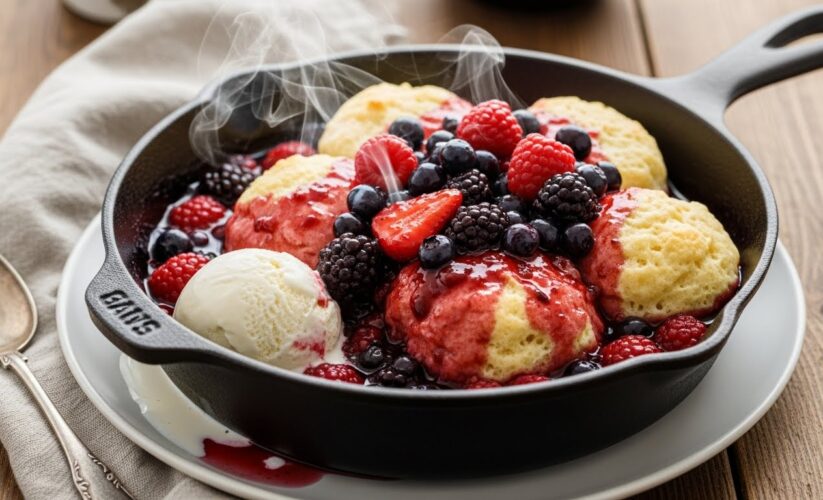
It is berries simmered until they burst and form a deep, concentrated sauce. It is soft biscuit dumplings dropped directly onto the simmering fruit, covered with a tight lid, and left to steam for fifteen minutes without being touched. It is the sound of fruit bubbling gently beneath dough — that low, muffled grunt — that gave this dessert its name and made it impossible for a nine-year-old standing in a summer kitchen to ever forget.
Welcome to Nostalgic Eats, where the forgotten recipes are usually the best ones.
Not Sure What to Cook Today?
Open your fridge, pick a few ingredients… and turn them into a real recipe in seconds.
No guessing. No waste. Just simple, nostalgic meals.Why Nobody Has Heard of This Dessert — And Why That’s About to Change
Ask anyone to name a classic American berry dessert and they’ll say cobbler. Maybe crisp. Maybe pie. Almost nobody will say grunt — and that gap between the dessert’s quality and its name recognition is one of the quiet injustices of American food history.
The berry grunt is older than the cobbler. It predates the baking sheet and the Dutch oven as common kitchen equipment. It was made in cast iron pots over wood fires, on ship galleys, in frontier kitchens where an oven was a luxury and a covered pot over an open flame was the only baking vessel available. The technique — simmering fruit with dumplings steamed on top — is essentially identical across dozens of regional variations: grunt in New England, slump in some parts of the Northeast, duff on sailing ships, and pandowdy in the mid-Atlantic states.
King Arthur Baking explains the name directly: as the fruit slowly bubbles, the wet sounds it makes beneath the dough supposedly resemble an animal’s grunt — and when served, the whole thing slumps on the plate in a sweet, juicy heap. The name, in other words, is not flattering. The dessert doesn’t care. It has been outlasting more attractively named competitors for two centuries.
Grandma made it because her mother made it and her mother’s mother made it — a recipe that traveled generations without ever being written down because the technique was simple enough to carry in memory. Simmer the fruit. Drop the dumplings. Cover the pot. Don’t lift the lid.
That’s the whole secret. It has always been the whole secret.
💡 Grandma’s Rule: “The grunt tells you when it’s ready. You don’t need to check. You just need to listen.” She meant the sound — the quality of the bubble changes as the dumplings cook through and absorb the steam. A hollow, steady sound means done. A thin, wet slap means more time. She knew the difference by ear. We’ll give you a timer as backup.
Berry Grunt: Quick Reference
Ingredients You’ll Need
For the Berry Base:
- 4 cups mixed berries (blueberries, blackberries, raspberries, or combination)
- ¾ cup sugar
- 1 tablespoon fresh lemon juice
- ¼ cup water
For the Dumplings:
- 1 cup all-purpose flour
- 1½ teaspoons baking powder
- ½ teaspoon salt
- 2 tablespoons sugar
- 3 tablespoons cold butter
- ½ cup milk
Optional Additions:
- 1 teaspoon vanilla extract
- ⅛ teaspoon nutmeg (for berries)
- Pinch of cinnamon
- ½ teaspoon lemon zest
- Fresh mint for garnish
Not Sure What to Cook Today?
Open your fridge, pick a few ingredients… and turn them into a real recipe in seconds.
No guessing. No waste. Just simple, nostalgic meals.The Mixed Berry Question — Why Three Berries Are Always Better Than One
Most grunt recipes are written for a single berry. Blueberry grunt is the most famous, because wild blueberries — small, tart, and intensely flavored — have always been abundant in the New England and Maritime Canadian regions where this dessert originated. But grandma never made it with one berry when she could use three.
Her combination: blackberries, blueberries, and raspberries. Each one brings something the others don’t.
Blackberries bring body — they are the largest berry and hold their shape the longest during simmering, creating pockets of whole fruit in the finished sauce. Blueberries burst quickly and dissolve into the sauce, thickening it naturally with their pectin and staining everything that deep, complicated purple. Raspberries are the last addition — they go in at the end, barely simmered, holding their structure just enough to give the sauce a bright, seedy, sharp counterpoint to the blackberry and blueberry depth.
Serious Eats documents the science behind mixed-berry cooking: different berries have different pectin levels and different cell wall thicknesses, which means they break down at different rates. A single-berry sauce goes uniformly one direction — all texture or no texture, all tart or all sweet. A mixed-berry sauce builds in layers, with varying textures and a flavor complexity that no single fruit achieves on its own.
Grandma didn’t know the word “pectin.” She just knew the grunt tasted better with three kinds of berries, and she was completely right, as usual.
📌 On fresh versus frozen: This recipe works beautifully with both. King Arthur Baking notes that if you can find small, tart, wild blueberries, use them for a traditional rendition — but don’t let access to fresh fruit stop you from making this recipe, as it’s excellent with frozen berries too. Use frozen berries straight from the bag — no thawing. Frozen blackberries and blueberries go in at the start of the simmer. Frozen raspberries go in during the last 5 minutes. The result is indistinguishable from fresh-berry grunt in the middle of January.
How to Make Berry Grunt
Step 1: Prepare the Berries
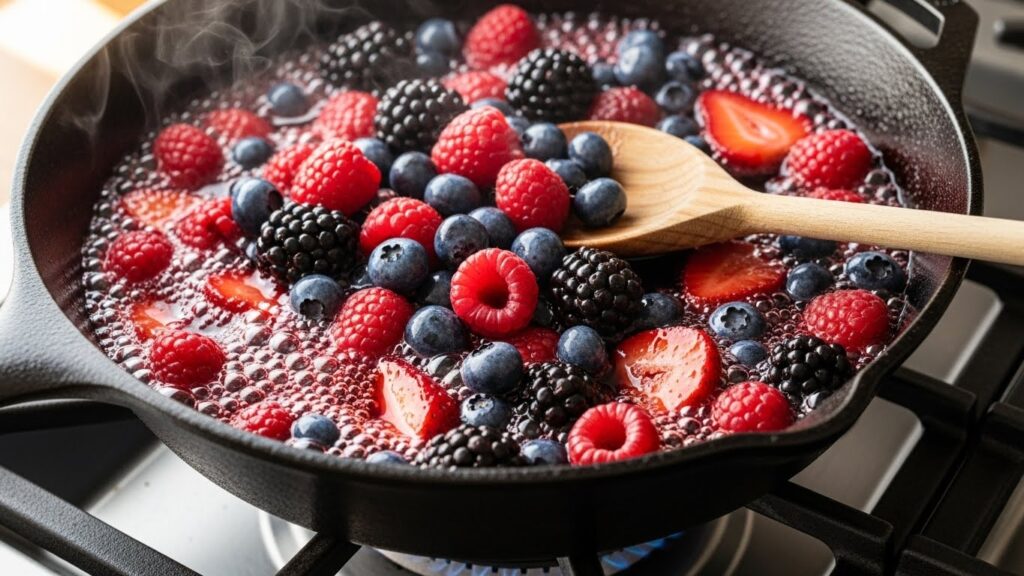
If using fresh berries, rinse them gently and allow to drain. If using frozen berries, thaw them partially—they should be mostly defrosted but still cold. In a large, heavy skillet or Dutch oven, combine 4 cups mixed berries, ¾ cup sugar, 1 tablespoon lemon juice, and ¼ cup water.

Step 2: Bring to Simmer
Place the skillet over medium heat and bring the berry mixture to a simmer, stirring occasionally. This takes about 5-7 minutes. The berries will release their juice, and the sugar will dissolve, creating a syrupy mixture. The berries should be noticeably bubbling and aromatic but not boiling vigorously.
Step 3: Make the Dumpling Dough
While the berries heat, prepare the dumpling dough. In a bowl, combine 1 cup all-purpose flour, 1½ teaspoons baking powder, ½ teaspoon salt, and 2 tablespoons sugar. Whisk these together thoroughly, breaking up any lumps in the baking powder.

Step 4: Cut in Butter
Add 3 tablespoons cold butter cut into small pieces to the flour mixture. Using a pastry cutter, two knives, or your fingertips, work the butter into the flour until the mixture resembles coarse crumbs, about 1-2 minutes. The cold butter creates pockets of fat that contribute to tender dumplings.

Step 5: Add Milk
Pour in ½ cup milk and stir gently just until the dough comes together. The dough should be slightly sticky and rough—don’t overmix. A few lumps are actually preferable to overdeveloped dough, which would create tough dumplings.

Step 6: Drop Dumplings onto Berries
Using a spoon or small ice cream scoop, drop spoonfuls of dumpling dough directly onto the simmering berry mixture. Space them about 1 inch apart—they’ll expand as they cook. You should have about 12 dumplings. The dough will partially sink into the berries, which is normal and desired.

Step 7: Cover and Simmer
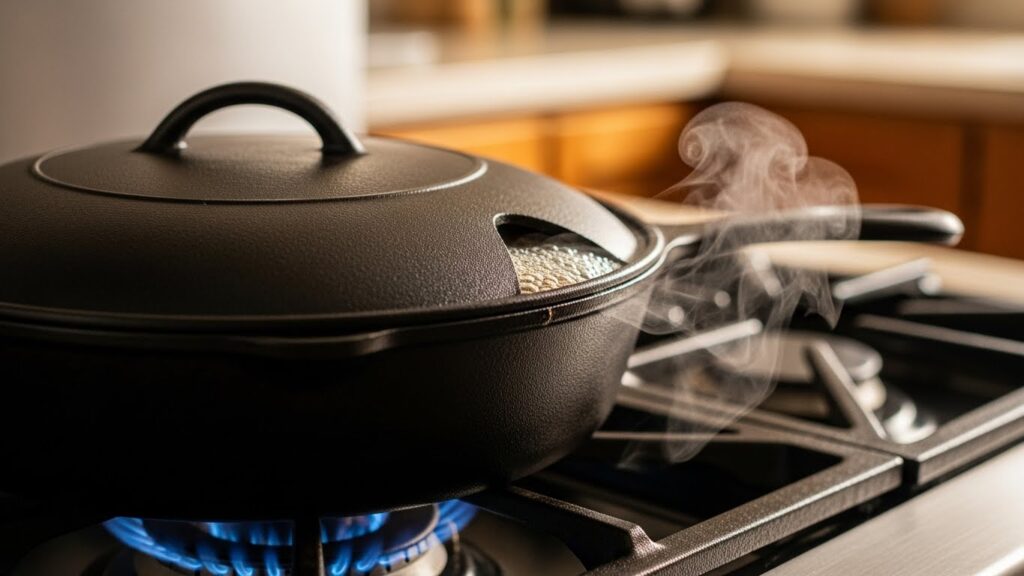
Immediately cover the skillet tightly with a lid. This is crucial—the cover traps steam necessary for proper cooking. Reduce heat to medium-low and simmer for exactly 15 minutes without lifting the lid. Lifting the lid allows steam to escape, which prevents proper cooking of the dumplings.
Step 8: Check Doneness
After 15 minutes, carefully lift the lid (watching for escaping steam) and check that dumplings are puffed and cooked through. A toothpick inserted in a dumpling should come out clean. If dumplings still seem soft and wet, cover and cook another 2-3 minutes.

Step 9: Serve Immediately
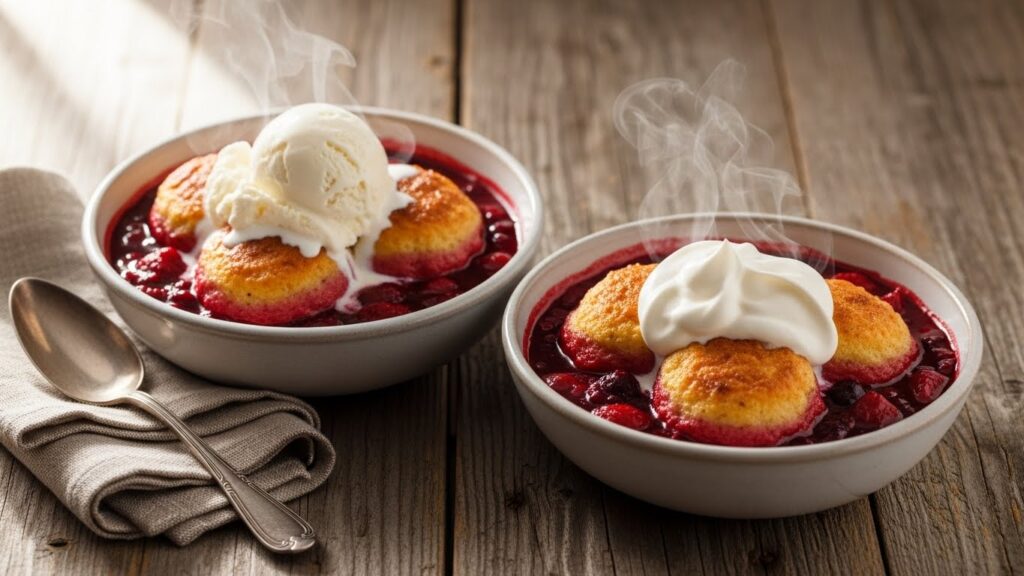
Remove from heat and allow to cool slightly, about 2-3 minutes. Serve warm in bowls, making sure each serving includes berry juice and at least one dumpling. Top with vanilla ice cream, whipped cream, or serve plain for the most authentic presentation.
Every Problem That Can Happen and How to Fix It Before It Does
Dumplings gluey in the center: Lid was lifted during steaming, or heat was too high and the outside set before steam could penetrate to the center. Keep the lid on, keep the heat gentle, and steam the full 15 minutes without interruption.
Sauce too thin: Berries weren’t simmered long enough before the dumplings went on, or too much water was added. Reduce sauce by simmering uncovered for an extra 3 to 5 minutes before adding dumplings next time. Frozen berries also release more liquid — reduce the added water from ¼ cup to 2 tablespoons when using all-frozen fruit.
Sauce too thick and scorching on the bottom: Heat is too high. Reduce to the lowest setting that maintains a gentle simmer. A diffuser plate under the pot helps in kitchens with very powerful burners.
Dumplings dense and heavy: Dough was overmixed or too much flour was added. Count strokes — 10 to 12 is the maximum. Add flour slowly if the dough seems too wet, one tablespoon at a time. AllRecipes confirms that overworked dumpling dough is the leading cause of dense, disappointing dumplings across all dumpling-based recipes.
Not enough sauce for the dumplings: The dumplings absorbed more sauce than expected during steaming. Next time, add an extra ¼ cup of water to the berry base before simmering. The sauce should always be generous enough to come halfway up the sides of each dumpling when the lid goes on.
Keeping It — Though It Rarely Survives Long Enough to Need Storing
- Serve immediately: Grunt is at its peak within the first 15 minutes of coming off the heat. After that the dumplings begin absorbing the sauce and become increasingly soggy. Plan to serve and eat in the same sitting.
- Refrigerator: Covered tightly for up to 2 days. The dumplings will have absorbed most of the sauce and become soft and pudding-like — which is actually a different, perfectly delicious texture. Reheat gently on the stovetop over low heat with a splash of water to reconstitute the sauce. Per USDA food safety guidelines, cooked fruit-based desserts should be refrigerated within 2 hours of serving.
- Freezer: Not recommended for the finished dessert — dumplings do not survive freezing and reheating with their texture intact. However, the berry base can be made ahead and frozen for up to 3 months. Thaw, reheat, and drop the dumpling dough fresh when ready to serve.
- Make-ahead tip: The dumpling dough can be mixed, covered, and refrigerated for up to 4 hours before using. The berry sauce can simmer and cool, then be reheated to a gentle bubble just before the dumplings go on. This makes grunt a genuinely practical dinner party dessert — all the work done ahead, fresh dumplings in fifteen minutes.
Not Sure What to Cook Today?
Open your fridge, pick a few ingredients… and turn them into a real recipe in seconds.
No guessing. No waste. Just simple, nostalgic meals.The Rest of the Table That Summer Was Made Of
A grunt this good belongs at the end of a summer dinner that deserved it:
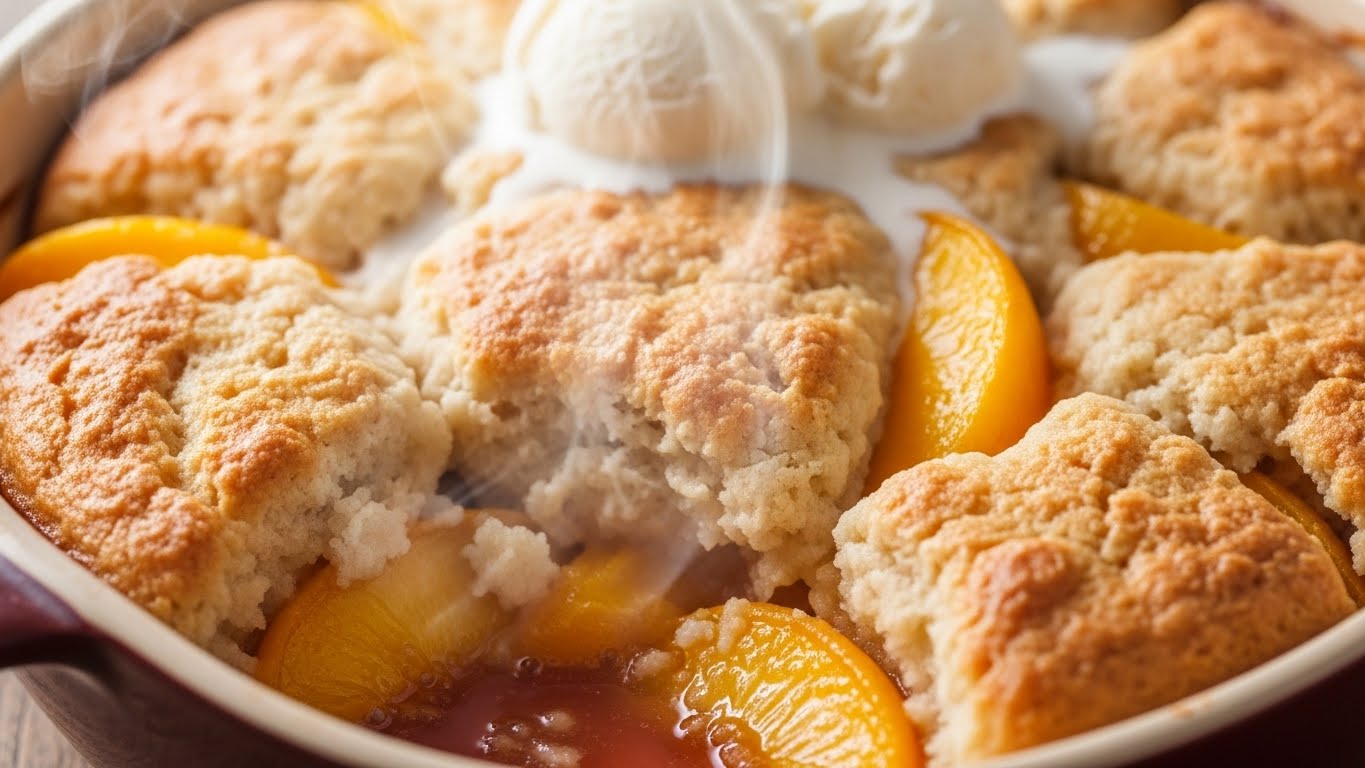
- 🫐 Grandma’s Easy Old Fashioned Southern Blackberry Cobbler Fresh or Frozen — the other berry dessert that knows exactly what it is
- 🍗 Grandma’s Easy Crispy Fried Chicken Without Buttermilk — the summer dinner this grunt was always waiting at the end of
- 🥐 Grandma’s Old Fashioned Fluffy Drop Biscuits No Kneading No Rolling — the biscuit cousin of the dumpling that tops this grunt
- 🍎 Grandma’s Old Fashioned Apple Pie Recipe From Scratch — for when summer ends and the apples arrive
- 🌀 Grandma’s Soft Homemade Cinnamon Rolls From Scratch With Cream Cheese Frosting — for the Saturday morning before the Sunday evening grunt
And when the pantry is full and the inspiration has run quiet, our completely Free Recipe Maker from Ingredients will find something worth making from whatever you have. Type it in. Get something real back. No account. No ads. No catch.
The Sound the Pot Made on That Tuesday Evening in August
The last grunt grandma ever made was on a Tuesday in August, the year she turned eighty-five. She’d been moving more slowly all summer — shorter walks, longer rests — but her hands still moved with the same economy and certainty they always had in the kitchen. Not slower. Just more deliberate.
She made it the way she always had. Blackberries and blueberries into the pot first, then the sugar and water and lemon juice. Eight minutes of low simmering while she made the dumpling dough in the old ceramic bowl without measuring anything. Raspberries in at the end. Dumplings dropped carefully — eight of them, evenly spaced. Lid on.
Then she sat down at the kitchen table, put her hands around a cup of tea, and listened.
We all did. The sound the pot made — that low, soft, steady grunt of simmering fruit beneath cooking dough — filled the kitchen the way it always had, warm and purposeful and patient. She closed her eyes for a moment and then opened them.
“It’s almost ready,” she said.
She was right. She was always right.
That is Grandma’s old fashioned stovetop mixed berry grunt recipe no oven — older than cobblers, older than crisps, older than most of the dessert vocabulary we use today. Made in a single pot on a stovetop that doesn’t need to be hot, in thirty minutes, with whatever berries the season gave you or the freezer held in reserve.
Listen for the sound. Keep the lid on. Trust the grunt.
It will tell you when it’s ready.
Published on NostalgicEats.com | Classic American Comfort Recipes Explore more at: nostalgiceats.com