Water Biscuit Sandwich: A Testament to Survival and Resourcefulness
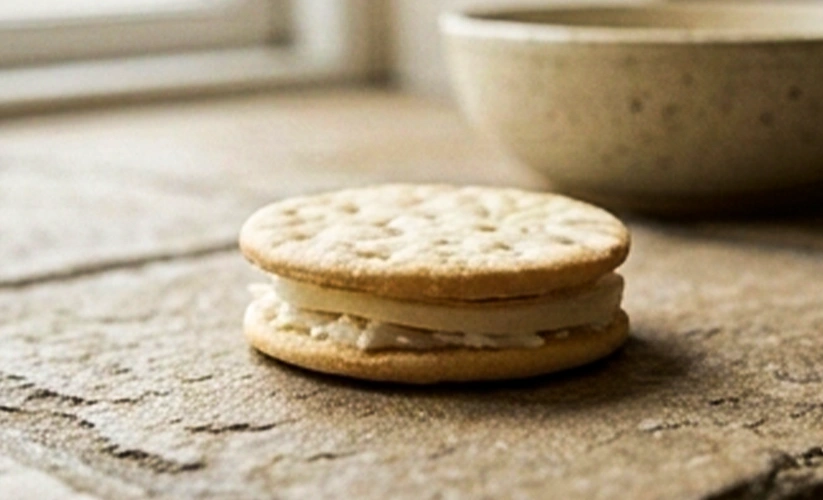
Water Biscuit Sandwich – A Testament to Survival and Resilience
This bare-bones sandwich emerged during the leanest times when even flour for proper biscuits ran short, when families faced choices between hunger and ingenuity with nothing left to lose. Resourceful cooks mixed flour, water, and a pinch of salt into a stiff dough, then baked it into hard, cracker-like biscuits that lasted for days without spoiling, creating a shelf-stable food that could sustain a family when nothing else remained. These water biscuits were split and filled with whatever was available—a smear of lard, a thin slice of onion, or simply more water to soften them into something palatable.
The result was plain but filling, keeping hunger at bay when nothing else remained in the cupboard and when families faced the genuine question of where tomorrow’s meal would come from. Families who survived on these remembered them not as delicacies but as symbols of endurance, proof that humans could persist through circumstances that seemed impossible. This sandwich stands as perhaps the starkest representation of Depression-era cooking: sustenance derived from the most minimal ingredients, stripped of anything unnecessary, focused solely on the essential goal of keeping bodies alive and families together.
Water Biscuit Sandwich: Quick Reference
Ingredients You’ll Need
For the Sandwich:
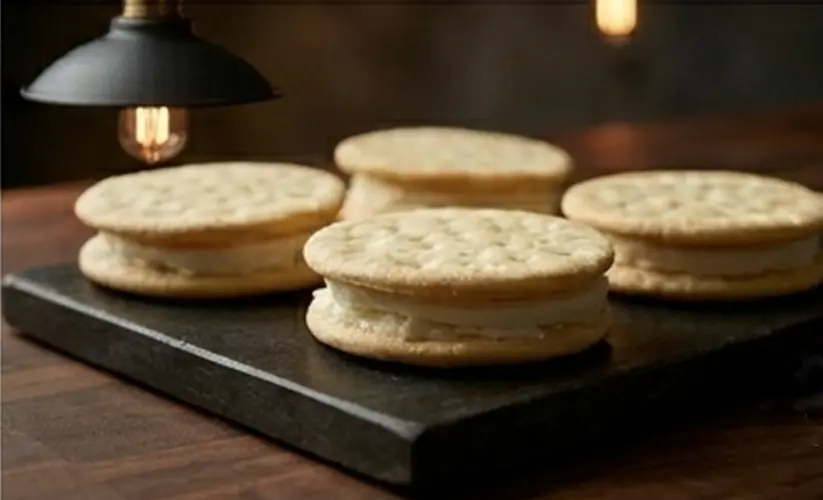
You’ll need 2 water biscuits (homemade or store-bought hardtack-style crackers), 1-2 tablespoons of lard or butter (softened), 1 thin slice of onion (optional), a pinch of salt, and water for softening (optional). Water biscuits are dense, hard crackers—quite different from soft biscuits. They’re designed to last, to travel, to sustain. If you can’t find water biscuits specifically, hardtack or ship’s biscuit serve as appropriate historical substitutes.
Optional Additions:
Some families enjoyed adding a thin slice of onion to their water biscuit sandwiches for flavor and slight moisture. Others added just a whisper of salt to highlight the lard’s flavor. A few variations included a tiny smear of mustard if it was available, though this addition represents a luxury most Depression-era families couldn’t afford. Some people softened their biscuits more substantially in water before filling, creating something closer to a soft sandwich, though this moved away from the traditional preparation designed to preserve biscuits’ shelf stability.
Understanding Water Biscuit Sandwich: History and Heritage
To understand the water biscuit sandwich is to understand not just food history but human survival itself—how ordinary people created sustenance from almost nothing when faced with genuine hunger and economic collapse.
The Origins of Hard Biscuits
Hard biscuits have ancient roots in human food history. Sailors, soldiers, and travelers needed food that could survive long journeys without refrigeration. Hard biscuits—flour, water, and salt baked into rock-hard crackers—solved this problem. They lasted for months, even years, without spoiling. They required no cooking or preparation. They provided calories and carbohydrates. By the time of the American Depression, hard biscuits had centuries of proven history as survival food.
Water biscuits specifically represented the most minimal version of this concept. Unlike cream crackers or other varieties that might include fat or additional ingredients, water biscuits contained literally just flour, water, and salt. This minimalism made them cheap to produce and shelf-stable indefinitely. Families could bake a batch and know they had food that would keep, that wouldn’t spoil, that could be rationed and stretched through hard times.
Survival as Victory
Most importantly, the water biscuit sandwich represented victory against impossible odds. It was food created by and for people facing genuine hardship, yet it kept them alive. It was proof that human ingenuity and resourcefulness could overcome even extreme deprivation. For those who survived on water biscuit sandwiches during the Depression, remembering them represented more than food memory—it represented survival itself.
How to Make Water Biscuit Sandwich
While this recipe requires no cooking, the specific steps matter, particularly regarding biscuit softening and assembly.
Step 1: Assess Your Biscuits
Examine your water biscuits. If using very hard water biscuits (particularly homemade ones or authentic hardtack), they may be nearly impossible to bite through without softening. If using store-bought water biscuits, they’re typically somewhat less hard than true hardtack. Assess whether your biscuits need softening before proceeding. Very hard biscuits require the water dip; softer ones don’t.
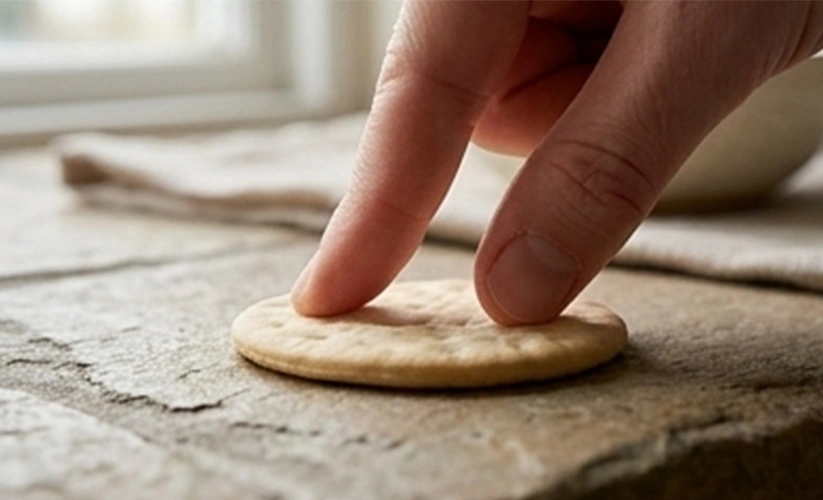
Step 2: Soften If Necessary
If using very hard water biscuits, dip them briefly in cold water for just 5-10 seconds to soften slightly. This is not a soaking—it’s a quick dip designed to make the biscuits easier to bite through while preserving their structural integrity. Too much water contact will make them fall apart and become mushy. After dipping, pat the biscuits dry with a clean towel to remove excess moisture.
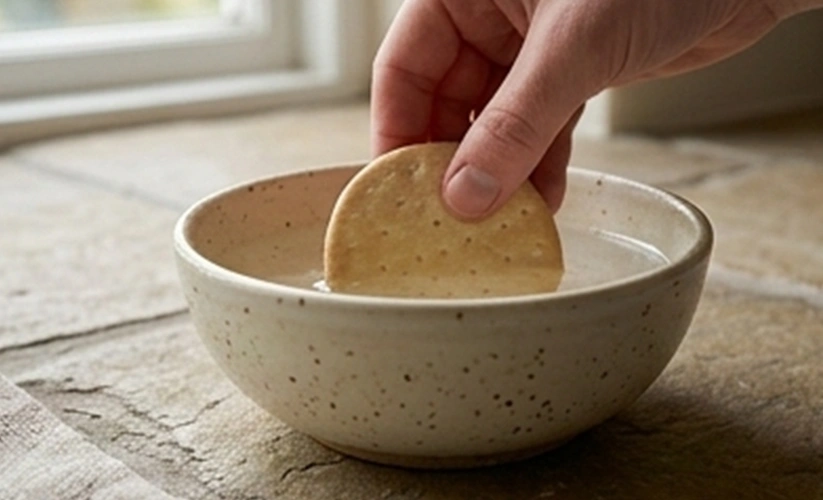
Step 3: Lay Out Your Biscuits
Lay the two water biscuits on a clean work surface. Position them as if they’re going to form a sandwich, with space between them for filling.
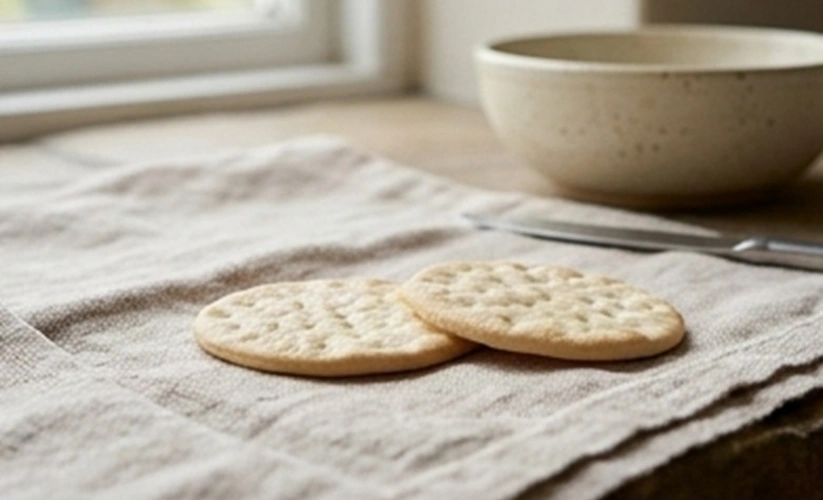
Step 4: Prepare Your Filling
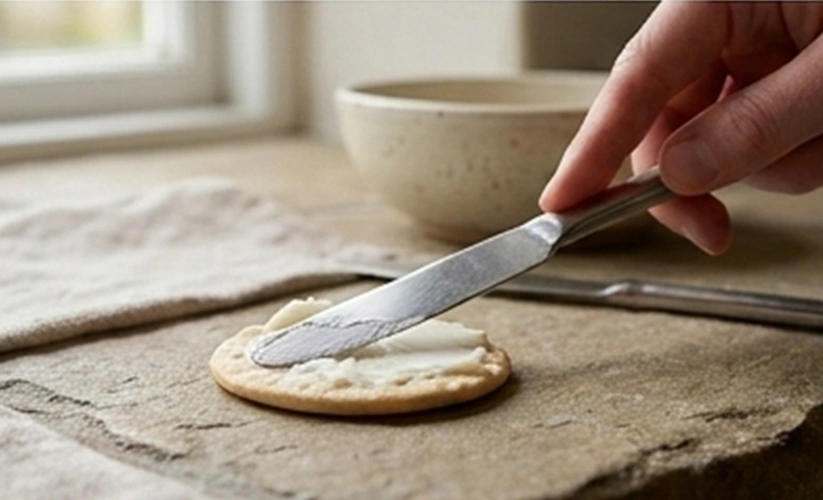
Using a butter knife, spread a thin layer of softened lard or butter on one biscuit. The layer should be thin but complete—covering the biscuit’s surface without creating excessive pooling. This isn’t generous spreading like with bacon grease sandwiches; this is restrained application designed to make limited lard stretch as far as possible while still providing flavor and nutrition.
Step 5: Add Onion (Optional)
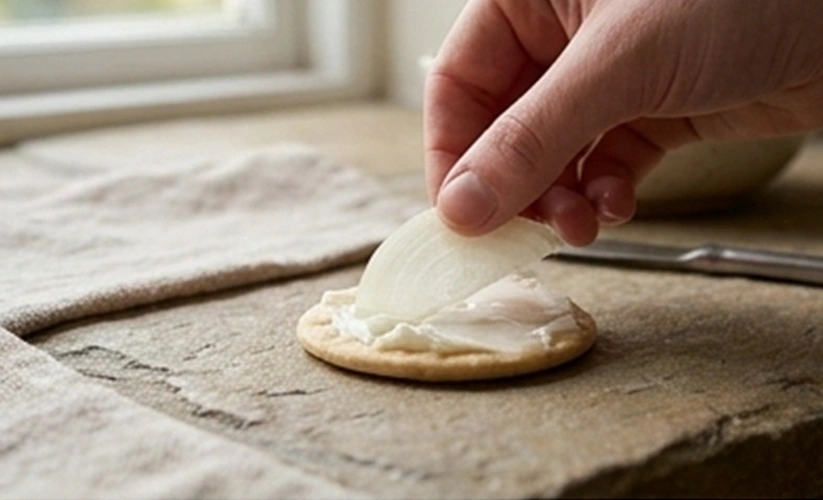
If desired, place a thin slice of onion on top of the lard. The onion should be paper-thin—not a chunk, but a delicate slice that provides flavor and slight moisture without dramatically changing the sandwich’s character. The thinness reflects both economy and practicality; thin onion slices distribute flavor throughout the sandwich without overwhelming it.
Step 6: Add Salt
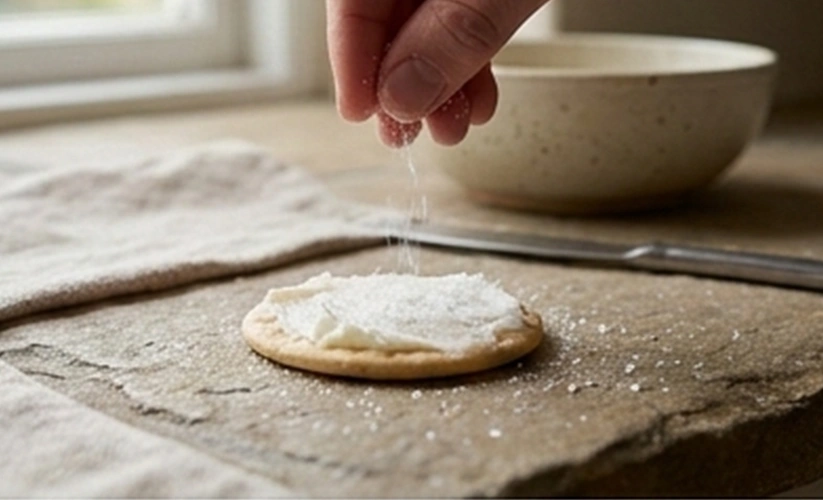
Sprinkle a pinch of salt over the surface. Salt was precious, so this was indeed just a pinch—enough to enhance flavor without waste. Salt heightens the lard’s flavor and adds interest to the otherwise plain biscuit.
Step 7: Assemble
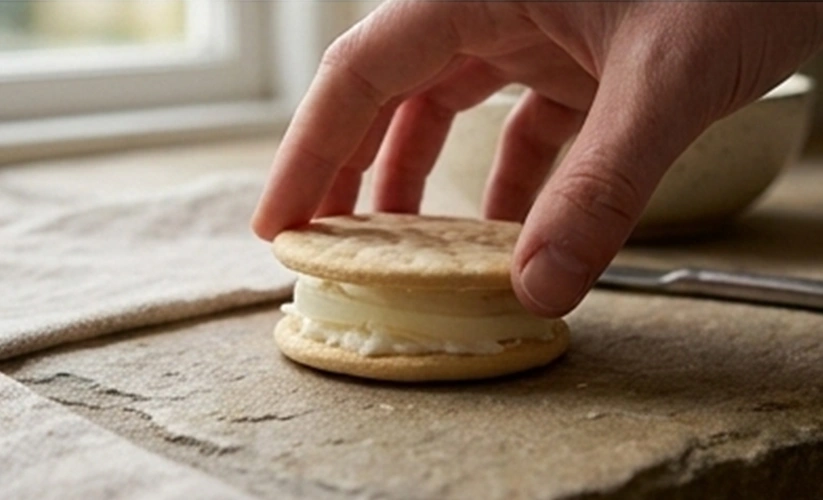
Place the second water biscuit on top to form a sandwich. The biscuit without filling should go on top of the one with filling, creating a unified unit.
Step 8: Press and Set
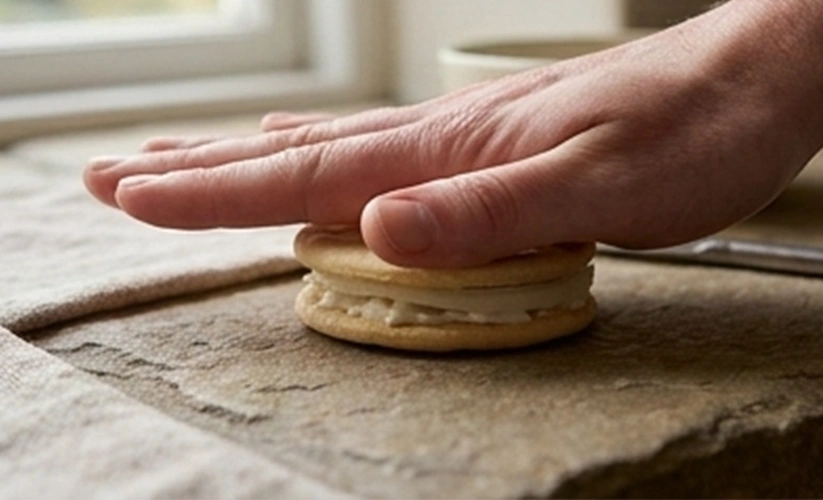
Press down gently but firmly so the biscuits hold together. Don’t crush them, but apply enough pressure to ensure they bond. Let the sandwich sit for 1-2 minutes to allow the filling to soften the biscuits slightly, making them less hard and more pleasant to bite through.
Step 9: Serve Immediately
Serve immediately. The sandwich is best eaten fresh, while any softening effect from the filling is still working and before the biscuits begin drying out further.
Pro Tips for Perfect Water Biscuit Sandwich
Don’t Over-Soften the Biscuits
This is the most critical tip for success. If you soften water biscuits too much in water, they’ll become mushy and fall apart. The goal is to soften them just enough to make them edible—enough that you can bite through without breaking teeth, but not so much that they lose their structure. A quick 5-10 second dip is usually sufficient. Pat them dry immediately after dipping to prevent continued water absorption.
Use Softened Lard or Butter
Lard that’s too hard will tear the biscuits. Lard that’s too warm will soak through excessively. Ideally, your lard or butter should be at room temperature or slightly warm—soft enough to spread smoothly without excessive effort, but structured enough to coat rather than penetrate immediately. If your lard is too hard, let it sit at room temperature for 15-20 minutes before using.
Spread Thinly
Resist the urge to spread generously. During the Depression, lard was rationed. Thin spreading reflected this reality and allowed limited lard to fill multiple sandwiches. Thin spreading also means the lard stays on the biscuit’s surface rather than soaking through immediately, preserving the filling for the entire sandwich-eating experience.
Choose Quality Lard If Possible
The quality of your lard matters. Fresh, well-rendered lard smells pleasant and carries good flavor. Rancid or poorly-rendered lard will make your sandwich unpleasant. If you’re using store-bought lard, check the ingredient list and smell before using. If using homemade lard, ensure it’s been properly rendered and stored.
Thin Onion Slices
If adding onion, slice it paper-thin. This ensures the onion distributes flavor throughout the sandwich without overwhelming it or making it structurally difficult to hold together. Very thin slices also allow the onion to integrate with the lard rather than sitting as a distinct layer.
Eat Immediately
Water biscuit sandwiches are best eaten immediately after assembly. As they sit, the biscuits continue hardening, and any softening effect from the filling diminishes. The sandwich is most palatable when freshly made, before the lard has fully set and the biscuits have begun drying out further.
Respect the History
These sandwiches represent survival during America’s darkest economic times. Making and eating them mindfully honors that history and the people who survived on them. Take a moment to appreciate what you’re eating and the resilience it represents before consuming.
Easy Variations to Try
With More Substantial Onion
While traditional preparation called for paper-thin onion slices, some people enjoy more substantial onion layers for additional flavor and nutrition. This variation represents a slight luxury beyond strict Depression-era minimalism.
With Mustard
A tiny bit of mustard—if available—could complement the lard beautifully, adding acidity and complexity. This represents an addition only available to families with slightly more resources than the bare minimum.
With Cabbage
In some regions, thin-sliced raw cabbage replaced onion, providing similar nutrition and slight flavor. Cabbage lasted longer in storage than onions, making it practical for families managing food supplies carefully.
With Cheese
A paper-thin slice of sharp cheese between the lard and the biscuit could add flavor and protein, though cheese represented a luxury most Depression-era families couldn’t afford. This variation represents a modern adaptation of the historical recipe.
Softer Biscuits
Some people prefer water biscuits softened more substantially in water before filling, creating something closer to a soft sandwich. This moves away from traditional preparation but creates a more palatable result for modern palates unaccustomed to rock-hard biscuits.
With Butter Instead of Lard
Butter could replace lard in families that had access to it. While butter was more expensive than lard, some families used it anyway. The result is slightly richer and creamier than lard-based versions.
Frequently Asked Questions
What is a water biscuit sandwich?
A water biscuit sandwich is two hard, plain crackers filled with a thin spread of lard or butter, sometimes with onion and salt. It’s a Depression-era survival food representing resourcefulness and the ability to create sustenance from minimal ingredients during America’s hardest economic times.
Why were water biscuit sandwiches popular?
Water biscuits were popular because they were cheap to make, used only basic ingredients, lasted indefinitely without spoiling, and provided genuine nutrition and calories. During the Depression, when families faced genuine food scarcity, water biscuits represented accessible survival food that could sustain families through hardship.
Did people really eat water biscuit sandwiches?
Yes, absolutely. Water biscuit sandwiches appear throughout Depression-era reminiscences, oral histories, and food journals. Rural families had eaten them for decades before the Depression. During economic collapse, they became widespread across urban and rural America as families adapted the recipe to their circumstances.
What goes in a water biscuit sandwich?
Traditionally, water biscuit sandwiches contained lard or butter spread between two water biscuits, sometimes with a thin slice of onion and a pinch of salt. Variations depended on what was available—some families added mustard, cabbage, or cheese if they could access these ingredients. The basic version required only what most impoverished families could provide.
Are water biscuits the same as hardtack?
Water biscuits and hardtack are very similar—both are hard, shelf-stable biscuits made from minimal ingredients. Hardtack is typically slightly harder and was historically used for military and naval purposes. Water biscuits are a civilian version, sometimes slightly softer but serving the same purpose of providing long-lasting food.
How long do water biscuits last?
Properly stored water biscuits last for months or even years without spoiling. They require no refrigeration, just storage in a cool, dry place in an airtight container. This shelf stability made them invaluable during the Depression and other periods of food insecurity.
Should I soften my biscuits before eating?
If your water biscuits are very hard, a quick dip in cold water makes them easier to bite through. However, don’t over-soften or they’ll fall apart. The goal is minimal softening—just enough to make the sandwich edible without losing structural integrity.
Why would anyone choose to eat this?
During the Depression, people didn’t choose water biscuit sandwiches for pleasure—they chose them for survival. These sandwiches kept families alive when alternatives didn’t exist. Today, people might eat them to understand history, honor ancestors, or experience what their relatives endured during hard times.
Is this really poverty food?
Yes, water biscuit sandwiches represent the absolute bare minimum of Depression-era eating—food created and eaten by families facing genuine hunger and economic collapse. They’re not comfort food; they’re survival food. Understanding this distinction is essential to appreciating what they represent historically.
What should I drink with this?
Water was often the only beverage available during the Depression, so water would be historically accurate. Cold milk, if available, represented a luxury. Coffee or tea, if families could afford them, provided warmth and comfort. Today, any simple beverage works—the important thing is not rushing the eating experience.
Conclusion
This classic water biscuit sandwich delivers genuine historical authenticity—a food that sustained American families through their darkest economic times. The combination of hard biscuits with minimal filling creates not pleasure but survival, not comfort but endurance. Whether you’re seeking authentic historical food experience, wanting to understand how your ancestors survived impossible circumstances, or simply craving connection to American food history, water biscuit sandwich offers direct access to that past. Ready to experience this fundamental aspect of Depression-era survival?
Gather simple ingredients and prepare this treasured sandwich. In just five minutes, you’ll have a classic that tastes like history, resilience, and survival—a direct connection to generations of Americans who faced unimaginable hardship yet persisted, creating sustenance from almost nothing and teaching us profound lessons about human resilience and resourcefulness in the face of impossible circumstances.
Related Recipes and Resources
Explore more beloved vintage comfort foods that celebrate simplicity and resilience. Don’t miss our recipe for Roast Chicken with Herb Stuffing, a special occasion dish that represents celebration and abundance in contrast to Depression-era scarcity. For something featuring the vegetables that sustained families through hard times, our Harvard Beets Recipe showcases how vintage cooks created flavor from humble root vegetables that could be stored and preserved through long winters.
For video explorations of vintage American cooking and the stories behind these beloved recipes, visit Vintage Life of USA on YouTube, where food traditions come to life through cooking demonstrations and historical context that brings these cherished recipes and the resilience they represent into your modern kitchen.