Penny Sweets vs. Penny Candy: What’s the Difference and Why Americans and British Kids Shared the Same Childhood
Penny Sweets vs. Penny Candy: What’s the Difference and Why Americans and British Kids Shared the Same Childhood
Walk into a sweet shop in Manchester, and ask for a penny bag. Head to a corner store in Minneapolis, and ask for penny candy. Different words, yes—but you’re asking for nearly the same thing. For generations, children on both sides of the Atlantic shared a remarkably similar experience — and at Nostalgic Eats, we have spent years documenting exactly why these memories run so deep
Penny sweets and penny candy are so similar that most people assume they’re literally the same product. But that’s not quite right. They’re the same experience with different names, reflecting different retail traditions, different packaging approaches, and subtly different candy philosophies. Yet the cultural role they played was nearly identical. Both were the ultimate democratic treat—accessible to every child regardless of wealth, celebrated as a rite of passage, and now remembered with profound nostalgia by adults worldwide.
This post explores the fascinating similarities and differences between British penny sweets and American penny candy, revealing how two candy traditions evolved in parallel across the Atlantic, shaped by different regulations, retail structures, and cultural values—yet converging on almost the same nostalgic magic.
Part One: Terminology and The Historical Split
Let’s start with the simplest question: why do Americans say “penny candy” and British people say “penny sweets”?
The answer reveals fundamental linguistic differences between American and British English. In British English, the word “sweets” refers to all confectionery—what Americans call “candy.” An American says “I bought candy”; a British person says “I bought sweets.” This distinction extends to cultural contexts. British children didn’t just buy “penny candy”—they bought “penny sweets,” or more commonly, a “penny mix” or “penny bag.”
The term “penny sweets” also reflects Britain’s longer historical relationship with boiled sweets (hard candies). For centuries, before chocolate became mass-produced, British confectionery was dominated by boiled sweets—sherbet lemons, aniseed balls, pear drops, barley sugars. These were the sweets that could be sold in bulk, by weight, for minimal cost. American penny candy, by contrast, developed as chocolate became affordable and available in the early 1900s, giving American cheap candy a slightly different character.
Both terms reference the same phenomenon — what Americans called old-fashioned penny candy: inexpensive, individually purchasable confections sold in small shops specifically for children with modest pocket money The shared reference to “penny” reflects the same economic reality on both sides of the Atlantic—that a single penny represented the baseline cost and purchasing unit for a child’s treat.
Part Two: The Retail Experience—Jars vs. Bags
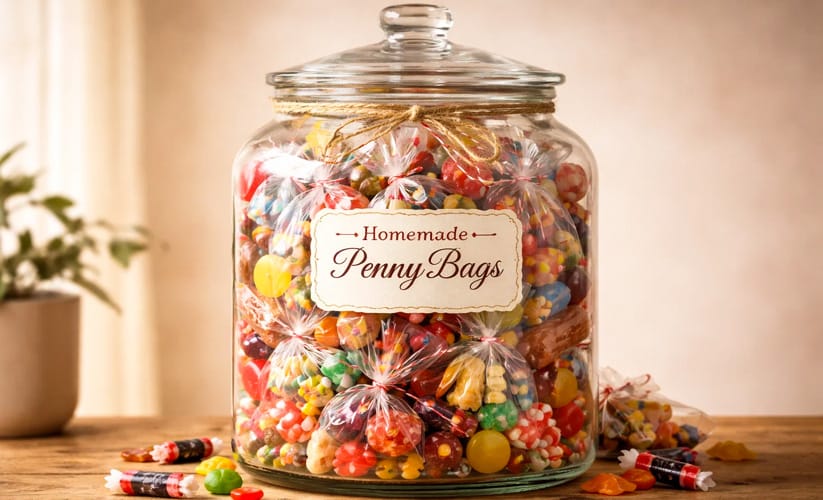
A nickel (5 cents) could get you a small bag of mixed sweets — a combination you can actually recreate at home today
The American Corner Store Experience
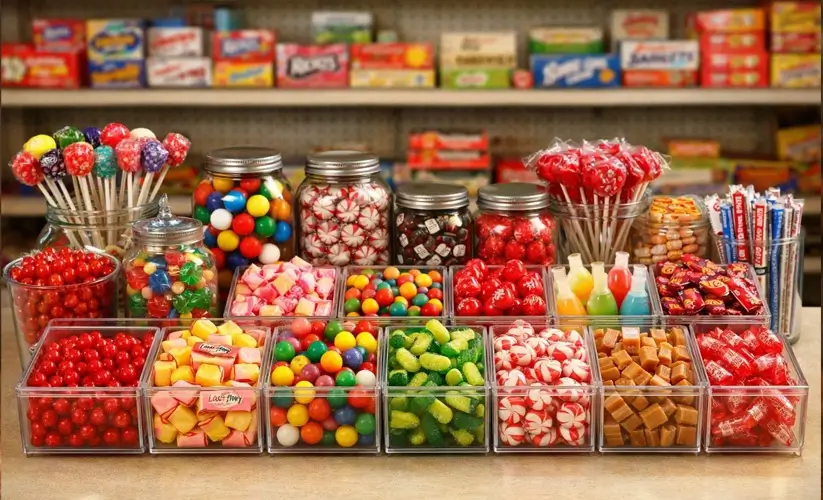
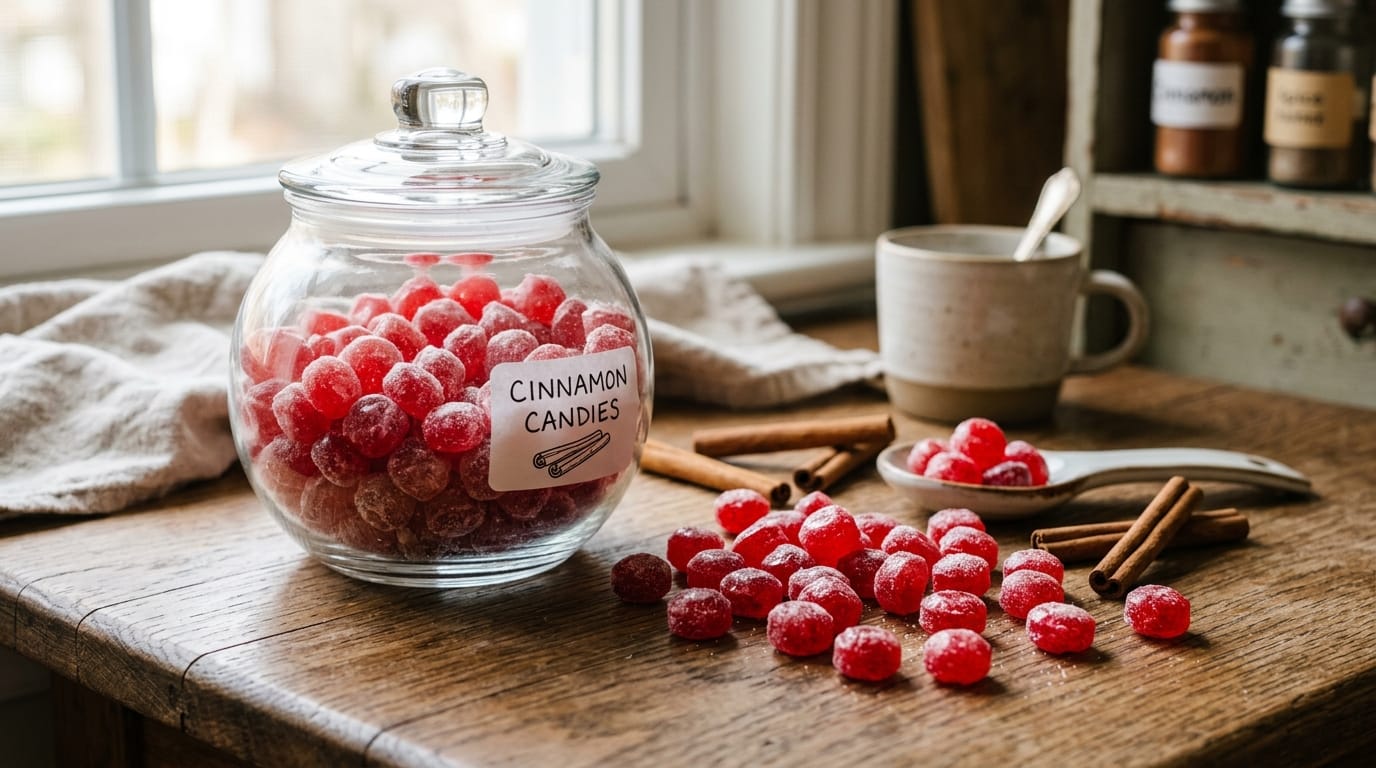
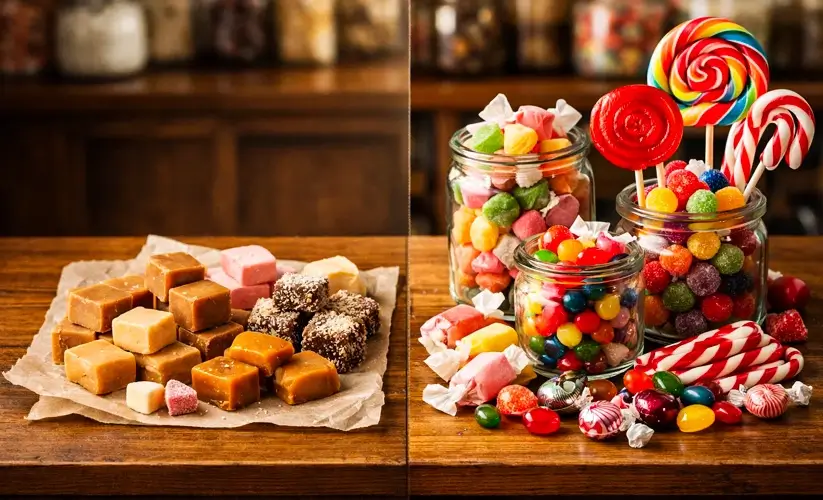
American penny candy was typically displayed in glass jars arranged on shelves or counters — a retail tradition with a surprisingly rich history of its own. A child would approach the counter, point at the jar, and the shopkeeper would dispense the desired quantity into a small bag or paper cone. The jars were visual theatre—bright colors visible through glass, creating desire and possibility. The shopkeeper might use a metal scoop to fill the bag, or hand-select pieces, creating an interactive experience.
American corner stores might have 15–25 different varieties of penny candy, with jars clearly labeled with prices. A nickel (5 cents) could get you a small bag of mixed sweets. A dime (10 cents) represented serious purchasing power. The experience was individualized and generous—American merchants tended to offer heaping portions and might throw in an extra piece.
The British Sweet Shop Experience
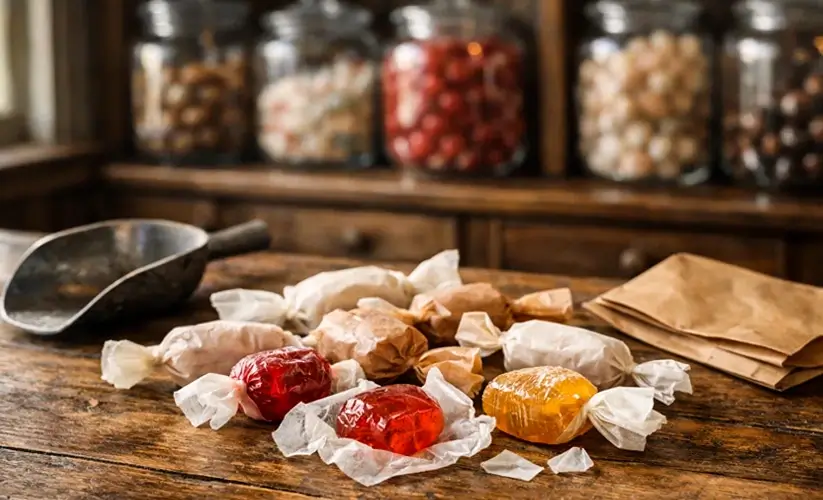
British penny sweets were often sold through a different system. Rather than self-service jars, customers typically asked for specific items or a “mix,” and the shopkeeper would rapidly assemble a white paper bag containing various sweets from loose supplies behind the counter. This required more shopkeeper involvement but created a more personalized experience. You could specify preferences: “I want flying saucers, some dolly mixture, and liquorice sticks.”
Alternatively, customers could request a “penny mix,” a pre-assembled bag of assorted sweets meant to represent maximum value for one penny (or later, one new pence). The shopkeeper had discretion in what went into the bag, creating a sense of surprise and anticipation. Would you get more boiled sweets or more jellies? Would there be a special favorite hidden in the mix?
British sweet shops also featured “Woolworths,” the American chain that revolutionized penny sweets retail in the UK starting in 1909. Woolworths introduced the self-service counter model to Britain, where customers could see and select from multiple varieties displayed in open bins or on cards. This hybrid approach—loose sweets available for selection and weighing—became the dominant model in mid-century Britain.
Part Three: The Products—What Were You Actually Buying?
Here’s where interesting cultural differences emerge.
British Penny Sweets (1950s–60s)
British penny sweets were overwhelmingly dominated by boiled sweets—hard candies that could be produced cheaply and sold by weight. Classic varieties included:
- Flying Saucers – Rice paper wafers filled with sherbet powder, creating a fizzy sensation
- Dolly Mixture – Assorted jellies, fondants, and fruit-flavored candies in pastel colors
- Aniseed Balls – Hard licorice-flavored spheres
- Sherbet Lemons – Boiled sweets with sherbet filling
- Wine Gums – Fruit-flavored gummies (though technically more expensive than penny sweets)
- Barley Sugars – Twisted hard candies in fruit flavors
- Fruit Salads – Fruit-flavored hard sweets with chewy centers
- Black Jacks – Licorice-flavored hard sweets
- Pontefract Cakes – Round licorice discs
- Pear Drops – Pear-flavored hard candies
These emphasized subtle fruit flavors, fizzy sensations, and chewy/boiled combinations. Chocolate was generally not considered penny sweet material in Britain—it was positioned as a more expensive, premium treat. A chocolate bar was a special purchase; a penny was for sweets.
American Penny Candy (1950s–60s)
American penny candy was more diverse and emphasized chocolate more heavily than its British counterpart.
- Tootsie Rolls – Chocolate taffy cylinders (introduced 1896, remain iconic)
- Necco Wafers – Disc-shaped hard candies in multiple fruit and spice flavors, often cited as the oldest continuous candy in America
- Wax Bottles – Wax containers filled with sweet liquid
- Licorice Sticks – Red and black twisted licorice
- Lollipops – Hard candy on sticks, multiple varieties
- Mary Janes – Peanut butter taffy wrapped in wax paper
- Dum Dums – Small round lollipops with varied flavors
- Stick Candy – Fruit-flavored hard candies on sticks
- Taffy – Chewy candies in multiple flavors
American penny candy included more chocolate, more diversity in formats (taffy, wax containers, stick forms), and generally bolder flavors. The emphasis was on variety and fun shapes rather than subtle sophistication.
The Flavor Philosophy Difference
This reveals an interesting cultural divide. British penny sweets favored subtlety and traditional boiled-sweet sophistication. Aniseed balls, sherbet lemons, barley sugars—these had been around since the 1800s. They were “classics” even when sold as penny items.
American penny candy emphasized novelty, variety, and bold flavors — and if you want to recreate those bold flavors at home, it is more achievable than you might think Tootsie Rolls were chocolate (still unusual in cheap confectionery). Wax bottles were novelty items. The emphasis was on fun and surprise—different shapes, different formats, different experiences.
This likely reflects broader cultural differences. Britain had a longer confectionery tradition and positioned sweets as a refined category. America’s penny candy tradition was newer, more experimental, and positioned as fun entertainment as much as flavor delivery.
Part Four: The Retail Institutions
Both penny sweets and penny candy relied on specific retail institutions that gave them cultural weight.
British Sweet Shops and Woolworths
The British sweet shop was a dedicated institution—a small storefront devoted primarily to sweets, often run by a single owner or small family. These existed in nearly every neighborhood, often as neighborhood anchors.
More significantly, Woolworths (an American company that adapted brilliantly to British retail culture) introduced the penny sweets concept to mainstream British shopping in 1909. Woolworths created dedicated penny sweets sections with open displays, allowing self-service browsing. By the mid-20th century, a visit to Woolworths was the penny sweets destination. The chain normalized bulk sweet purchasing and created the “penny mix” culture.
Woolworths’ UK presence meant penny sweets became mainstream and accessible to millions. When Woolworths finally closed its UK stores in 2009, it was a cultural milestone—the end of an era. However, independent sweet shops have since experienced a revival, keeping the tradition alive.
American Corner Stores and Drugstores
American penny candy thrived in corner stores, general stores, and drugstores — a retail world that felt entirely different from the British sweet shop These were multi-purpose retail destinations—not sweet-specific, but featuring prominent candy sections. The soda fountain/drugstore combination was particularly important. An American child might visit the drugstore for an ice cream soda and purchase penny candy to accompany it.
Unlike British sweet shops (which were dedicated), American corner stores sold everything—milk, bread, newspapers, cigarettes, candy. The candy section was prominent but not the entire purpose. This reflected American retail’s emphasis on convenience and one-stop shopping.
Part Five: The Economic Reality—Inflation and Price Evolution
Both penny sweets and penny candy faced the same fundamental challenge: inflation.
The 1950s–60s: True Penny Economics
In the 1950s, both British and American systems worked roughly as advertised. A British farthing (¼ penny) could purchase a single sweet. A penny got you a small mix or several pieces. An American penny could buy a specific item, and nickels and dimes represented serious purchasing power.
The 1970s–80s: Inflation Strikes Both
When inflation hit both economies in the 1970s, penny sweets and penny candy experienced identical pressures. Sugar prices quadrupled. Manufacturing costs rose. By the mid-1970s, what once cost a penny now cost 2–5p in Britain and 3–10 cents in America.
The terms “penny sweets” and “penny candy” became increasingly meaningless. A “penny mix” in 1975 Britain actually cost 5–10 pence. An American “penny candy” cost a nickel or dime. The terminology persisted long after the economics became inaccurate, a testament to how deeply these traditions were embedded in cultural memory.
Modern Era: Nostalgic Repositioning
Today, both penny sweets (in Britain) and penny candy (in America/online) are positioned as nostalgic premium products. A “retro penny sweet” costs 20–50p in the UK. American “vintage penny candy” found in specialty shops costs 25–50 cents. The terms remain, but the economics have completely transformed.
Part Six: Shared Childhood, Different Languages
Here’s what’s remarkable: despite different terminology, retail structures, product mixes, and institutions, the childhood experience was nearly identical.
A British child in 1960s Manchester and an American child in 1960s Minneapolis both:
- Received pocket money on a weekly or occasional basis
- Anticipated a trip to the sweet/candy shop as a special event
- Had to make careful purchasing decisions with limited funds
- Exercised genuine choice and autonomy
- Built relationships with shopkeepers who knew them
- Experienced the anticipation of opening a bag of mixed sweets
- Shared candies with friends, traded varieties
- Associated these sweets with specific moments (after school, weekend outings, rewards)
- Remembered specific favorites and ritual preferences
The experience was democratic, accessible, community-building, and formative. Whether you called it penny sweets or penny candy was almost irrelevant—the magic was the same.
Part Seven: Why They Disappeared Together
It is striking that penny sweets and penny candy declined in parallel, despite operating through entirely different retail channels
Both faced identical pressures:
- Inflation made the per-penny economics unsustainable – By the 1990s, true penny purchases weren’t viable in either country
- Retail consolidation eliminated the neighborhood shops – Supermarkets replaced sweet shops in Britain; supermarkets replaced corner stores in America
- Modern retail preferred pre-packaged branded goods – Both Tesco and Walmart preferred branded candy boxes to loose sweets/jars
- Labor costs made bulk management uneconomical – Weighing and bagging sweets became too labor-intensive
- Consumer expectations shifted – Modern shoppers wanted clear branding, ingredient labels, and expiration dates rather than mysterious loose sweets
The decline happened slightly earlier in America (1990s) than Britain (2000s), but the trajectory was identical.
Part Eight: The Modern Revival—Different Paths
Interestingly, the nostalgic revival has taken somewhat different forms in each country.
Britain: The Independent Sweet Shop Renaissance
British penny sweets never completely disappeared. When Woolworths closed in 2009, it seemed like the end. Instead, independent sweet shops experienced a revival. Today, Britain has more dedicated sweet shops than it did 10 years ago, many focusing on vintage/nostalgic penny sweets. The cultural tradition was strong enough to survive the decline of major retailers.
Pick-and-mix sections in modern retailers also revived the penny sweets experience without the penny economics. Customers can select from multiple varieties and pay by weight, recreating the experience even if prices are higher.
America: The Specialty/Online Market
American penny candy didn’t experience the same independent retail revival. Instead, it’s positioned as a nostalgic/retro product available through specialty retailers, online shops, and occasionally movie theaters. The experience is more curated and less embedded in daily retail. An American nostalgic for penny candy must actively seek it out; a British person can often find penny sweets in their local high street.
Comparison Chart: Penny Sweets vs. Penny Candy
| Aspect | British Penny Sweets | American Penny Candy |
| Term | Penny sweets, penny bag, penny mix | Penny candy |
| Retail Display | Paper bags (loose), Woolworths bins, counter-served | Glass jars, self-service |
| 1950s–60s Price | Farthing to 1 penny | 1 penny to 5 cents |
| Primary Products | Boiled sweets, licorice, jellies (flying saucers, dolly mixture, sherbet lemons) | Chocolate, taffy, licorice, wax bottles, lollipops (Tootsie Rolls, Dum Dums) |
| Flavor Profile | Subtle, sophisticated, traditional | Bold, varied, experimental |
| Key Retailer | Woolworths, independent sweet shops | Corner stores, drugstores |
| Peak Era | 1950s–70s | 1950s–70s |
| Decline Period | 1990s–2000s | 1980s–1990s |
| Modern Status | Independent shops thriving, still culturally embedded | Specialty/online, nostalgic positioning |
FAQ Section
Q: What is the difference between penny sweets and penny candy?
A: “Penny sweets” is the British term; “penny candy” is the American term. Both refer to affordable, small confections sold individually or by weight in neighborhood shops. The main difference is cultural and linguistic. British penny sweets emphasize boiled sweets (hard candies), while American penny candy included more chocolate. Both represented the same childhood experience: affordable, accessible treats that required careful purchasing decisions with limited pocket money.
Q: What was a penny bag of sweets in the UK?
A: A penny bag was a white paper bag filled with an assorted mix of penny sweets for one penny (or later, one new pence). British children could request a “penny mix,” and the shopkeeper would rapidly fill a bag with various sweets—flying saucers, dolly mixture, sherbet lemons, licorice—creating a personalized assortment. It was the ultimate childhood treat, representing maximum variety for minimal cost.
Q: What popular sweets were sold as penny sweets in the 1950s–60s?
A: Flying Saucers (sherbet-filled rice paper wafers), Dolly Mixture (assorted jellies and fondants), Aniseed Balls, Sherbet Lemons, Wine Gums, Barley Sugars, Fruit Salads, Black Jacks, Pear Drops, Toffees, and Liquorice Allsorts. These were overwhelmingly boiled sweets and hard candies rather than chocolate.
Q: What was the equivalent of penny sweets in America?
A: American penny candy—items like Tootsie Rolls, Necco Wafers, Wax Bottles, Licorice Sticks, Lollipops, and Mary Janes—served the same cultural role. Both represented affordable, democratically accessible treats available in neighborhood shops where children could exercise purchasing autonomy.
Q: Do penny sweets still exist in the UK?
A: Yes, penny sweets remain popular in the UK. While Woolworths closed in 2009, independent sweet shops have experienced a revival. Modern penny sweets cost significantly more (10p–50p per sweet) than the original penny, but the cultural tradition remains strong in British retail and memory.
Conclusion: The Transatlantic Magic
Penny sweets and penny candy weren’t identical products—but they were identical experiences. Two different retail systems, two different product mixes, two different cultural contexts, yet converging on nearly the same childhood magic: a small coin, a neighborhood shop, the freedom to choose, and the joy of affordable accessibility.
For British children, the memory centers on flying saucers, sherbet lemons, and the white paper bag. For American children, it’s Tootsie Rolls, wax bottles, and the glass jar. But the feeling is the same in both cases: anticipation, autonomy, and the small but real democracy of being able to afford joy.
The decline of penny sweets and penny candy happened for identical economic reasons on both sides of the Atlantic. And the nostalgic revival, while taking different forms, reflects the same deep human need to reconnect with accessible joy and neighborhood community.
Perhaps the most remarkable thing about penny sweets and penny candy isn’t their difference—it’s how much they reveal about how similar childhoods were across the Atlantic, despite separation by language, retail systems, and ocean. For generations of British and American children, the experience was nearly indistinguishable. The candy changed depending on which side of the Atlantic you inhabited, but the magic remained the same. If you want to watch real vintage candy footage that brings these memories back to life, this collection is worth every minute