Classic Midwest Hotdish Casserole Recipe Old-Fashioned
Why Minnesotans Get Mad When You Call Hotdish a Casserole
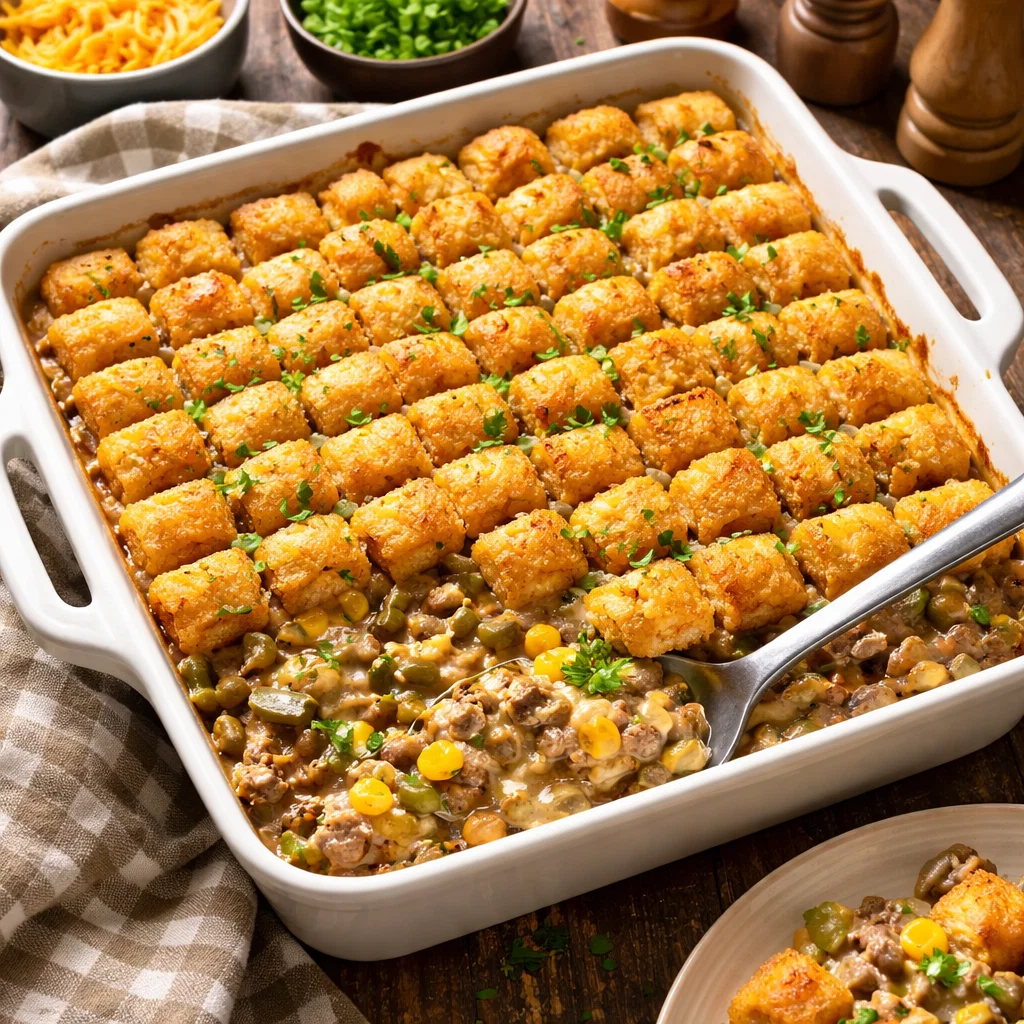
I made the mistake of calling tater tot hotdish a ‘casserole’ at a Minnesota church potluck — the kind of deeply rooted vintage American food tradition that outsiders don’t fully appreciate until they live it, and three ladies immediately corrected me with surprising intensity. I thought hotdish was just Minnesota slang for casserole—I was completely wrong.
One of the church ladies, Dorothy, explained the actual difference. A hotdish follows a specific formula: cream soup base, protein, vegetable, starch, and crispy topping. Every hotdish contains these five elements in specific proportions. A casserole is just anything baked in a casserole dish—it has no rules, no structure, no formula.
Green bean casserole? That’s a side dish, not a hotdish. Lasagna? That’s layered, not mixed together like hotdish requires. Chicken pot pie? That has pastry, not the required crispy topping like tater tots or cornflakes.
The distinction matters to Midwesterners because hotdish represents a specific type of one-dish meal developed during the Depression when families needed filling, economical dinners that could feed crowds. Understanding this formula means you can create infinite variations while respecting the tradition — explore more classics in our casseroles and one-pan meals collection.
This classic recipe shows you the original Minnesota tater tot hotdish that defined the category—and explains exactly why it’s not just another casserole.
Quick Recipe Reference
Ingredients You’ll Need
Main Hotdish Components:
Protein:
- 1½ pounds ground beef (80/20)
Cream Base:
- 2 cans (10.5 oz each) cream of mushroom soup
- ½ cup whole milk
Vegetables:
- 1 medium onion, diced
- 1 can (14.5 oz) French-cut green beans, drained
- 1 cup frozen corn
Starch:
- 1 bag (32 oz) frozen tater tots
Seasonings:
- 1 teaspoon garlic powder
- 1 teaspoon salt
- ½ teaspoon black pepper
- ½ teaspoon paprika
Topping:
- 2 cups shredded cheddar cheese
Optional Additions:
- 1 can cream of chicken soup (instead of mushroom)
- 1 cup frozen peas
- ½ cup diced celery
- 1 teaspoon Worcestershire sauce
- ½ cup sour cream (for creaminess)
Understanding the Hotdish Formula
Every authentic hotdish follows the same five-part structure that separates it from random casseroles. Understanding this formula lets you create endless variations while maintaining hotdish integrity.
Component 1 – Cream Base: This is non-negotiable. Hotdish requires cream of something soup—mushroom, chicken, or celery. This condensed soup creates the binding sauce that holds everything together. Casseroles might use tomato sauce, cheese sauce, or nothing at all.
Component 2 – Protein: Ground beef is traditional, but chicken, turkey, sausage, or even tuna work. The protein must be fully cooked and integrated into the mixture, not layered like lasagna.
Component 3 – Vegetable: At least one vegetable is mandatory. Corn, green beans, peas, or mixed vegetables are most common — or try the buttery combination from these buttered peas and carrots for a classic Midwest touch. The vegetable adds color, nutrition, and texture contrast.
Component 4 – Starch: Potatoes (tater tots), pasta, or rice provide bulk and carbohydrates. The starch makes hotdish filling enough to be a complete meal rather than a side dish.
Component 5 – Crispy Topping: Tater tots, cornflakes, French fried onions, or potato chips create textural contrast. This crunchy top layer distinguishes hotdish from soup or stew.
Without all five components in the correct proportions, you don’t have hotdish—you just have a casserole or a one-pot meal.
Why Hotdish Gets Watery (And How to Prevent It)
The most common hotdish complaint is excess liquid pooling at the bottom, making everything soupy instead of cohesive. This happens because people don’t account for moisture released during baking.
Frozen vegetables contain ice crystals that melt into water. Ground beef releases fat and liquid — the same reason this old-fashioned beef vegetable soup also relies on careful liquid management to get the consistency just right. All this moisture needs somewhere to go, and if you don’t manage it properly, you get watery hotdish.
The solution is threefold. First, always drain canned vegetables thoroughly and pat frozen vegetables with paper towels. Second, brown and drain ground beef before adding it—don’t bake raw meat in the hotdish. Third, use less milk than you think you need. The ½ cup called for in this recipe is perfect; more than that creates soup.
Some cooks add a thickening agent insurance policy. Stirring 2 tablespoons of instant potato flakes or cornstarch into the cream soup mixture absorbs excess liquid during baking. This guarantees thick, cohesive hotdish every time.
The tater tot topping also helps. As tater tots bake, they form a barrier that prevents excessive evaporation while allowing just enough steam to escape. Don’t cover hotdish with foil—trapped steam creates condensation that drips back down and makes everything watery.
How to Make Classic Midwest Hotdish
Step 1: Preheat and Prepare Pan
Preheat your oven to 375°F. Grease a 9×13-inch baking dish with butter or cooking spray. This size accommodates the full recipe perfectly—smaller pans cause overflow, larger pans make hotdish too shallow.
Step 2: Brown the Ground Beef
In a large skillet over medium-high heat, cook ground beef with diced onions for 8-10 minutes, breaking it up with a wooden spoon until completely browned. Drain excess fat, leaving about 1 tablespoon for flavor.
Add garlic powder, salt, pepper, and paprika to the meat. Stir for 1 minute to let seasonings bloom. This step prevents bland, flavorless meat that plagues many hotdishes.
Step 3: Mix the Cream Base
In a large bowl, whisk together cream of mushroom soup and milk until smooth. The milk thins the soup just enough to coat all ingredients without being watery.
Some recipes skip the milk and use soup straight from the can, but this creates gloppy texture instead of creamy cohesion. The milk is worth it.
Step 4: Combine Main Ingredients
Add the cooked ground beef, drained green beans, and frozen corn to the cream soup mixture. Stir everything together until evenly combined. Every spoonful should contain protein, vegetables, and creamy sauce.
Taste at this point and adjust seasoning. The mixture should taste slightly over-seasoned because flavors will mellow during baking.
Step 5: Spread in Pan
Pour the mixture into the prepared 9×13-inch pan. Use a spatula to spread it evenly into all corners. The layer should be about 1½ inches deep—thick enough to stay moist but thin enough to heat through completely.
Step 6: Add Tater Tot Layer
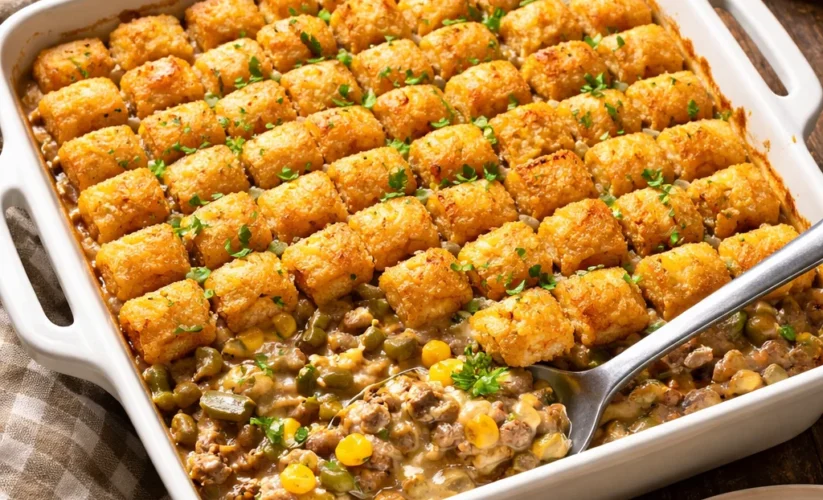
Arrange frozen tater tots in a single layer on top, covering the entire surface. Place them close together but not overlapping. You’ll use about three-quarters of the 32-ounce bag. Save the rest for another batch or snacking.
Don’t thaw the tater tots first. Frozen tots bake up crispier and hold their shape better than thawed ones.
Step 7: Bake Uncovered
Place in the preheated oven and bake uncovered for 40 minutes. The tater tots will start turning golden and the edges will begin bubbling. The uncovered baking allows tater tots to crisp while preventing excess moisture buildup.
Step 8: Add Cheese Topping
After 40 minutes, remove the pan from the oven. Sprinkle shredded cheddar cheese evenly over the tater tots. Return to the oven and bake for an additional 10 minutes until the cheese melts completely and turns slightly golden.
The cheese is technically optional in traditional hotdish, but modern Minnesota cooks consider it essential. It adds richness and creates appealing golden-brown color.
Step 9: Rest Before Serving
Remove from the oven and let the hotdish rest for 10 minutes before serving. This resting period allows the cream mixture to thicken slightly as it cools, making serving easier and preventing hot filling from spilling everywhere.
Cut into squares and serve with a spatula. Each serving should include tater tots, cheese, and a good scoop of the creamy filling underneath.
Pro Tips for Perfect Hotdish
Always Brown Meat First: Never add raw ground beef directly to hotdish. Raw meat releases too much liquid during baking and never develops proper flavor. Browned meat tastes better and prevents watery hotdish.
Drain All Vegetables Thoroughly: Canned vegetables contain packing liquid that dilutes cream base. Drain them completely and even press gently in a strainer to remove excess moisture.
Use Cream of Mushroom, Not Cream of Chicken: Traditional Minnesota hotdish uses cream of mushroom soup. The earthy mushroom flavor complements beef better than chicken soup does. However, either works fine.
Don’t Skip the Onion: Raw onions added directly to hotdish taste harsh. Always sauté them with the ground beef for sweet, mellow onion flavor throughout.
Arrange Tater Tots Carefully: A single even layer crisps better than randomly dumped tots. Take 2 minutes to arrange them neatly—it makes a difference.
Make It a Day Ahead: Assemble hotdish completely, cover tightly, and refrigerate overnight. Bake straight from the fridge, adding 10-15 minutes to cooking time. Flavors improve with the overnight rest.
Double for Church Suppers: This recipe doubles perfectly. Use a full-size sheet pan and increase baking time by 10 minutes for larger batches.
Easy Variations to Try
Chicken Hotdish: Replace ground beef with 3 cups cooked, diced chicken breast — the same comforting chicken flavor you’ll find in this classic grandma’s chicken noodle soup. Use cream of chicken soup instead of mushroom
Cheeseburger Hotdish: Add 1 cup diced pickles to the meat mixture and use American cheese instead of cheddar for classic cheeseburger flavor.
Taco Hotdish: Season beef with taco seasoning instead of basic spices. Add black beans and top with crushed Doritos instead of tater tots.
Tuna Hotdish: Replace beef with 2 cans drained tuna and use frozen peas instead of green beans — if you love this flavor profile check out the classic tuna noodle casserole that inspired it.
Breakfast Hotdish: Use cooked sausage, scrambled eggs, and hash browns instead of tater tots for a breakfast version served at church potlucks.
Vegetarian Hotdish: Skip the meat entirely and double the vegetables. Add a can of drained black beans for protein.
Why Tater Tots Are Essential to Hotdish
Tater tots weren’t invented until 1953, but they quickly became synonymous with Minnesota hotdish. Before tater tots, hotdish used crushed cornflakes or potato chips as the crispy topping.
Tater tots work perfectly because they’re already seasoned, they crisp up beautifully in the oven, and they add substantial potato element that makes hotdish more filling. Each tot provides individual crispy-creamy contrast rather than just a uniform crunchy layer.
The Ore-Ida company that invented tater tots was trying to use up leftover potato scraps from making frozen french fries. They shredded the scraps, formed them into cylinders, and froze them. The result became a Midwest staple.
Some Midwestern families refuse to make hotdish with anything except tater tots. Using crushed crackers or onions is acceptable but not authentic. Tater tots represent the pinnacle of hotdish evolution.
Serving Hotdish at Midwest Gatherings
Hotdish is the ultimate potluck food because it travels well, feeds crowds economically, and appeals across age groups — browse more crowd-pleasing recipes in our potluck and covered dish favorites collection. Church basement suppers in Minnesota always feature at least three different hotdishes.
Serve hotdish with simple sides that don’t compete. A basic green salad, ham loaf with brown sugar mustard glaze, and maybe Jello salad complete the church supper spread. The hotdish itself provides protein, vegetables, and starch—it’s already a complete meal.
Most Minnesotans eat hotdish year-round, but it’s especially popular during cold months — just like these Sunday dinners that fill the table when the temperature drops. Friday nights during winter often mean hotdish night in Midwest homes.
Leftover hotdish reheats beautifully. Cover a portion with a damp paper towel and microwave for 2-3 minutes. The tater tots won’t be as crispy, but the flavor remains excellent.
Frequently Asked Questions
What’s the difference between hotdish and casserole?
Hotdish follows a specific formula: cream soup base, protein, vegetable, starch, and crispy topping. Casserole is a general term for anything baked in a casserole dish with no required structure or ingredients.
Why is my hotdish watery?
You didn’t drain vegetables thoroughly, added too much milk, or didn’t brown the ground beef first. Always drain canned vegetables, use only ½ cup milk, and cook meat completely before assembling.
Can I make hotdish without tater tots?
Yes, but it won’t be traditional Minnesota hotdish. Use crushed cornflakes, French fried onions, or potato chips instead. However, purists insist tater tots are essential.
Do you have to use cream of mushroom soup?
Traditional hotdish uses cream of mushroom, but cream of chicken or cream of celery work fine. The condensed soup is essential—regular soup is too thin.
Can I freeze hotdish?
Yes, assemble completely, cool, wrap tightly, and freeze up to 3 months. Bake from frozen at 350°F for 75-90 minutes until heated through and bubbly.
Is hotdish only a Minnesota thing?
Primarily, yes. North Dakota, South Dakota, Wisconsin, and Iowa also claim hotdish culture, but Minnesota is the undisputed hotdish capital. Other regions call similar dishes casseroles.
Conclusion
This classic Midwest hotdish casserole recipe represents more than just an easy dinner—it’s a cultural touchstone that defines Upper Midwest comfort food. Understanding the five-part hotdish formula explains why Minnesotans bristle when you call it casserole; hotdish follows rules and structure that random casseroles don’t. The combination of cream soup base, seasoned ground beef, vegetables, and crispy tater tots creates the ultimate one-dish meal that has fed church suppers, potlucks, and family dinners for seventy years. By browning meat properly, draining vegetables thoroughly, and using precise proportions, you prevent the watery consistency that plagues amateur attempts. Whether you’re a Midwesterner missing home or a curious outsider wanting to understand this regional phenomenon, mastering authentic hotdish connects you to a tradition of practical, economical cooking that fed families through hard times and good times alike — the same spirit that runs through every recipe in our meat and poultry mains collection. Ready to make real Minnesota hotdish? Brown that beef, arrange those tater tots, and discover why this humble dish inspires fierce regional pride and endless debate about what truly qualifies as hotdish versus mere casserole.