Old-Fashioned Skillet Mac and Cheese Stovetop Recipe
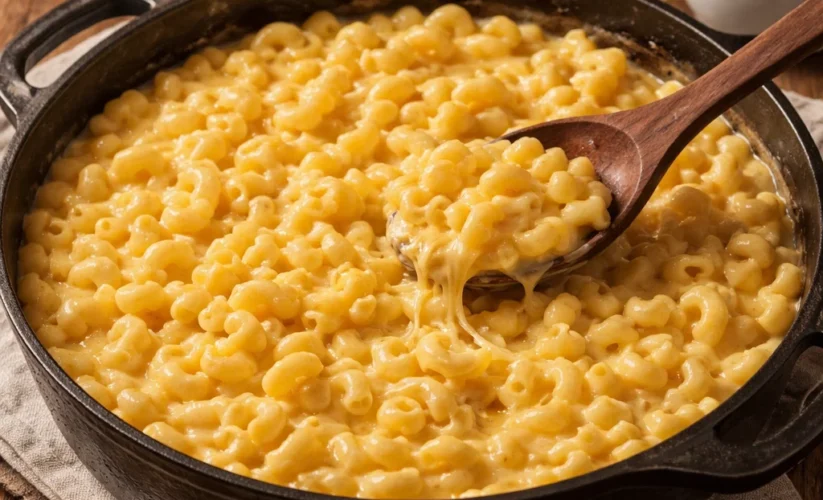
Why Your Mac and Cheese Always Turns Grainy (Heat Mistake)
I made grainy, separated mac and cheese for years before I understood what caused it. The cheese sauce would start out smooth and creamy, then suddenly break into greasy clumps floating in watery liquid. I thought I was using the wrong cheese or not enough flour.
My grandmother watched me make it once and immediately spotted the problem — the kind of instinctive kitchen knowledge that older generations carried without ever writing it down “Your heat’s too high,” she said. “Cheese breaks when it gets too hot. You need gentle heat and evaporated milk, not regular milk.”
This was a revelation. Cheese contains proteins that seize up and separate from fat when heated above 160-170°F. Regular milk provides no protection against this, so if your burner runs even slightly too hot, the sauce breaks instantly into that awful grainy texture.
Evaporated milk changes everything. The proteins in evaporated milk have been altered during the evaporation process, making them more stable at higher temperatures. These modified proteins surround and protect the cheese proteins, preventing them from clumping together even if the heat gets a bit too high.
Grandma’s old-fashioned skillet method using evaporated milk creates the creamiest, smoothest mac and cheese without the risk of grainy separation. Once you understand this technique, you’ll never go back to boxed mix or baked casserole versions — though if casseroles are your thing, discover why grandma always made 6 casseroles that fed the whole family.
Quick Recipe Reference
Ingredients You’ll Need
Main Ingredients:
- 1 pound elbow macaroni
- 1 can (12 oz) evaporated milk
- 4 tablespoons butter
- 1 teaspoon salt
- ½ teaspoon black pepper
- ½ teaspoon garlic powder
- ¼ teaspoon mustard powder (secret ingredient)
- 3 cups shredded sharp cheddar cheese
- 1 cup shredded Monterey Jack cheese (optional, adds creaminess)
Optional Additions:
- ½ cup whole milk (if sauce is too thick)
- 1 tablespoon cream cheese (extra creaminess)
- ¼ teaspoon cayenne pepper (for heat)
- ¼ cup grated Parmesan (for depth)
- 2 tablespoons breadcrumbs (for topping)
Equipment Needed:
- Large skillet or sauté pan (at least 12-inch)
- Large pot for boiling pasta
- Wooden spoon
- Colander
- Cheese grater (if using block cheese)
Understanding Why Cheese Sauce Breaks
Cheese is an emulsion—fat globules suspended in water with protein acting as the glue holding everything together. When you heat cheese too high or too fast, the proteins tighten up and squeeze out the fat and water, creating separation. The fat pools on top as grease while the proteins clump into grainy bits.
Several factors cause cheese sauce to break. High heat is the primary culprit—anything above 170-180°F risks separation. Pre-shredded cheese often breaks more easily because it contains anti-caking agents — the same reason block cheese works better in this mayonnaise cake recipe where unexpected ingredients create surprisingly smooth results(usually cellulose powder) that interfere with smooth melting. Adding cheese to boiling liquid instead of barely simmering liquid causes instant separation.
Evaporated milk prevents breaking through multiple mechanisms. First, its proteins have been denatured (altered) during the evaporation process, making them more heat-stable. Second, these modified proteins create a protective coating around cheese proteins, preventing them from clumping together. Third, evaporated milk has a thicker consistency than regular milk, which helps create a more stable emulsion.
The no-roux method works because evaporated milk provides natural thickness and stability without needing flour. Traditional roux-based cheese sauces require precise flour-to-liquid ratios and constant whisking. Evaporated milk simplifies everything while producing superior texture.
The Evaporated Milk Secret
Evaporated milk is regular milk with 60% of the water removed through gentle heating under vacuum. This concentration process changes the milk proteins in ways that benefit cheese sauce dramatically.
During evaporation, the proteins partially denature and form new bonds. These altered proteins remain suspended in liquid even at higher temperatures, unlike fresh milk proteins that curdle easily. This heat stability is why evaporated milk appears in so many vintage recipes—home cooks discovered it prevents cooking disasters.
The thicker consistency of evaporated milk means you need less total liquid to achieve creamy sauce. Less liquid means higher cheese-to-liquid ratio, which translates to more intense cheese flavor and better coating on pasta.
Evaporated milk also contains lactose that has been concentrated during evaporation. This concentrated sugar adds subtle sweetness that balances sharp cheddar’s tang, creating more complex flavor than regular milk provides.
Some cooks try substituting heavy cream, but cream doesn’t provide the same protective proteins that evaporated milk offers. Cream makes sauce richer but doesn’t prevent breaking like evaporated milk does. For foolproof smooth sauce, evaporated milk is superior.
How to Make Skillet Mac and Cheese
Step 1: Cook the Pasta
Bring a large pot of salted water to rolling boil. Add elbow macaroni and cook for 7-8 minutes until just shy of al dente (slightly firmer than you’d normally eat it). The pasta will continue cooking in the cheese sauce.
Drain in a colander but don’t rinse—the starch clinging to pasta helps thicken the cheese sauce. Set aside while you make the sauce.
Step 2: Melt Butter and Season
In a large skillet over medium-low heat (not medium or medium-high—this is crucial), melt the butter completely. Once melted and bubbling gently, add salt, black pepper, garlic powder, and mustard powder.
Stir for 30 seconds to bloom the spices. The mustard powder is the secret ingredient that enhances cheese flavor without tasting like mustard.
Step 3: Add Evaporated Milk
Pour the entire can of evaporated milk into the melted butter. Stir constantly with a wooden spoon. Heat until the mixture is steaming and tiny bubbles appear around the edges—not boiling, just barely simmering.
This should take 3-4 minutes. If your pan gets too hot and starts boiling hard, remove it from heat immediately and let it cool for 30 seconds before returning to lower heat.
Step 4: Add Cheese Gradually
Remove the skillet from heat completely. This is important—add cheese off heat to prevent overheating. Add the shredded cheese in three batches, stirring each batch until completely melted and smooth before adding the next.
The cheese will melt from the residual heat of the milk. If it stops melting, return to very low heat for 30 seconds at a time, stirring constantly.
After all cheese is incorporated, you should have thick, smooth, glossy sauce. If it seems too thick, add whole milk 2 tablespoons at a time until desired consistency.
Step 5: Combine with Pasta
Add the drained macaroni to the cheese sauce. Fold gently with a wooden spoon or rubber spatula to coat every piece of pasta. The pasta will absorb some sauce, so don’t be alarmed if it seems saucier than you expect at first.
Let it sit off heat for 2-3 minutes. The sauce will thicken slightly as it cools and the pasta absorbs sauce.
Step 6: Adjust and Serve
Taste and adjust seasoning. You might want more salt, pepper, or even a splash more milk if it’s too thick. The mac and cheese should be creamy and coat the spoon but not be soupy.
Serve immediately for best texture alongside a crisp cucumber and onion salad to balance the richness. If you must wait, keep it covered over very low heat, stirring occasionally. Add splashes of milk if it thickens too much.
Pro Tips for Perfect Stovetop Mac and Cheese
Use Block Cheese, Not Pre-Shredded: Pre-shredded cheese contains anti-caking agents that prevent smooth melting. Grating your own cheese takes 2 extra minutes but makes enormous difference.
Keep Heat Low: The number one cause of grainy mac and cheese is too-high heat. Low and slow ensures smooth, creamy sauce. If you’re impatient, you’ll ruin it.
Add Cheese Off Heat: This cannot be stressed enough. Remove the pan from the burner before adding cheese, letting residual heat melt it gently.
Don’t Overcook Pasta: Slightly undercooked pasta finishes cooking in the sauce and absorbs flavor better than fully cooked pasta.
Use Sharp Cheddar: Use Sharp Cheddar: Mild cheddar tastes bland in mac and cheese — the same bold flavor principle behind this old-fashioned beef barley soup where deep flavor comes from not skimping on ingredients.
Add Mustard Powder: Just ¼ teaspoon enhances cheese flavor significantly. It doesn’t make mac and cheese taste like mustard—it makes cheese taste more intensely cheesy.
Loosen with Pasta Water, Not Milk: If sauce gets too thick after sitting, add reserved pasta cooking water instead of more milk. The starchy water integrates better.
Easy Variations to Try
Three-Cheese Mac: Use equal parts sharp cheddar, Gruyère, and white cheddar for sophisticated flavor.
Buffalo Chicken Mac: Stir in 1 cup diced cooked chicken and 3 tablespoons buffalo sauce. Top with blue cheese crumbles.
Bacon Mac and Cheese: Bacon Mac and Cheese: Add 6 strips cooked, crumbled bacon and use bacon fat instead of 2 tablespoons of the butter — serve it on a thick slice of potato bread for the ultimate comfort meal.
Jalapeño Popper Mac: Add diced jalapeños and substitute cream cheese for 1 cup of the cheddar. Top with panko breadcrumbs.
Lobster Mac and Cheese: Fold in 1 pound cooked lobster meat during final step. Use Gruyère instead of Monterey Jack.
Truffle Mac: Add 1 teaspoon truffle oil when combining pasta and sauce. Top with Parmesan.
Why This Method Beats Baked Mac and Cheese
Baked mac and cheese requires making a roux, which adds complexity and time. You also need to bake it for 30-45 minutes, heating your kitchen and extending cook time significantly.
Stovetop mac and cheese is ready in 20 minutes start to finish. Perfect for busy weeknights when you need dinner fast but don’t want to sacrifice quality.
The texture differs too. Baked mac develops a crust on top, which some love, but the interior often dries out. Stovetop mac stays creamy throughout with no dry edges.
You can’t easily adjust baked mac once it’s in the oven. Stovetop mac lets you taste and modify as you go—more cheese, more milk, more seasoning, whatever you need.
That said, both versions have their place. Baked mac works great for making ahead and feeding crowds at potlucks — pair it with recipes from our easy salads and sides collection for a complete spread. Stovetop mac wins for everyday home cooking when you want it now.
Storing and Reheating Stovetop Mac and Cheese
Leftover mac and cheese refrigerates for 3-4 days in an airtight container. The sauce will thicken and even separate slightly as it cools—this is normal.
To reheat, add 2-3 tablespoons milk per serving. Heat in a saucepan over low heat, stirring constantly until smooth and hot. Microwave works in a pinch—use 50% power and stir every 30 seconds, adding milk as needed.
You can freeze mac and cheese for up to 2 months, though texture suffers slightly. Thaw overnight in refrigerator, then reheat gently with extra milk to restore creaminess.
For meal prep, make the cheese sauce ahead and refrigerate separately from cooked pasta. When ready to eat, reheat sauce, cook fresh pasta, and combine. This produces better texture than reheating the combined dish.
Frequently Asked Questions
Why is my mac and cheese grainy?
Your heat was too high, causing cheese proteins to seize and separate from fat. Always use low heat and add cheese off the burner. Evaporated milk helps prevent graininess better than regular milk.
Why did my cheese sauce break?
The sauce got too hot. Cheese breaks when heated above 170-180°F. Use low heat, stir constantly, and add cheese off the burner. Evaporated milk’s stabilized proteins help prevent breaking.
What if my mac and cheese is too thick?
Add milk or reserved pasta water 2 tablespoons at a time, stirring over low heat until desired consistency. Sauce naturally thickens as it cools and pasta absorbs moisture.
Can I use regular milk instead of evaporated milk?
Yes, but the sauce breaks more easily. If using regular milk, increase to 2 cups and be extra vigilant about keeping heat low. Evaporated milk provides insurance against mistakes.
What’s the best cheese for mac and cheese?
Sharp cheddar provides classic flavor. For extra creaminess, mix in Monterey Jack, Gruyère, or fontina. Avoid pre-shredded cheese—anti-caking agents prevent smooth melting.
Can I make this ahead for a party?
Absolutely — and while you’re at it, check out this church ladies fruit punch bowl that also preps ahead beautifully for crowds.
Conclusion
This old-fashioned skillet mac and cheese proves that understanding the science behind cheese sauce—specifically why it breaks and how evaporated milk prevents it—transforms frustrating failures into consistent success. The grainy, separated sauce that plagues so many homemade attempts happens because regular milk provides no protection when heat gets too high, allowing cheese proteins to seize up instantly. Evaporated milk’s heat-stable proteins create a protective shield that prevents breaking even if your temperature control isn’t perfect, making this recipe nearly foolproof. By skipping the traditional roux and using evaporated milk’s natural thickness instead, you eliminate an entire step while creating smoother, creamier sauce that coats pasta perfectly. Whether you’re cooking for picky kids who only eat mac and cheese — and finish the meal with these crowd-pleasing old-fashioned root beer floats they’ll love just as much, wanting quick comfort food after a long day, or finally trying to master stovetop mac that doesn’t turn grainy, this technique delivers creamy excellence in just twenty minutes. Ready to make mac and cheese that stays silky smooth? Keep your heat low, use evaporated milk instead of regular milk, and discover why this simple ingredient swap creates the creamiest, most foolproof mac and cheese you’ve ever made without needing complicated roux or risky high-heat stirring.