Easy White Sauce Recipe — The Three-Ingredient Skill That Changes How You Cook Forever
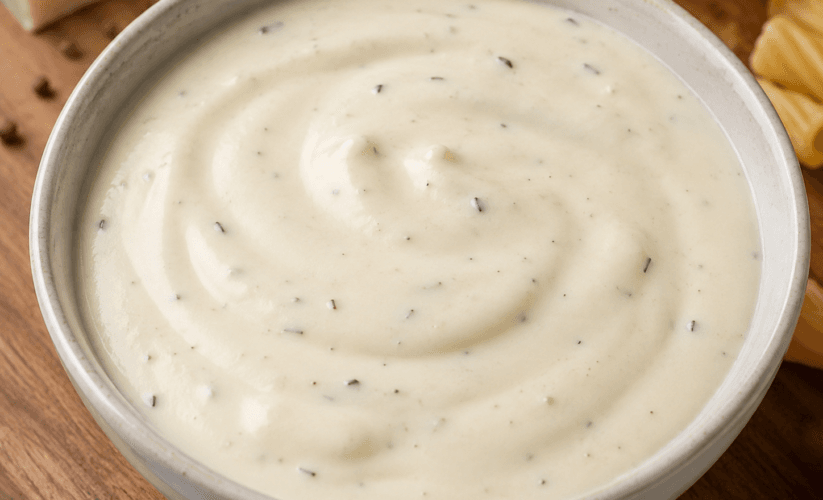
Easy White Sauce Recipe — The Three-Ingredient Skill That Changes How You Cook Forever
Grandma never called it béchamel.
She called it white sauce. She made it in a small saucepan with a wooden spoon she had owned since before any of us were born, and she made it the same way every single time — butter first, then flour, then milk, slow and steady, never walking away from the stove until it was done. It took ten minutes. It was never lumpy. And it went on everything from mac and cheese to casseroles to creamed vegetables to the inside of pot pies that disappeared before the pan hit the table.
This easy white sauce recipe is that sauce — the one French chefs call béchamel and classify as a “mother sauce,” meaning it is the foundation from which dozens of other classic sauces are built. Grandma didn’t care about the French classification. She cared that it worked, every time, with three ingredients she always had on hand.
It still works. Here is how to make it, why it behaves the way it does, and how to fix it when it doesn’t cooperate.
Welcome to Nostalgic Eats — where the fundamental skills are treated with the same respect as the recipes that depend on them.
Not Sure What to Cook Today?
Open your fridge, pick a few ingredients… and turn them into a real recipe in seconds.
No guessing. No waste. Just simple, nostalgic meals.The White Sauce Grandma Made Every Week — And Why Culinary Schools Still Teach the Same Thing
Here is something most recipe blogs won’t say out loud: the easy white sauce recipe grandma made from memory in a saucepan on a Wednesday is structurally identical to the béchamel that students spend their first week of culinary school learning to perfect.
Same three ingredients. Same technique. Same physics.
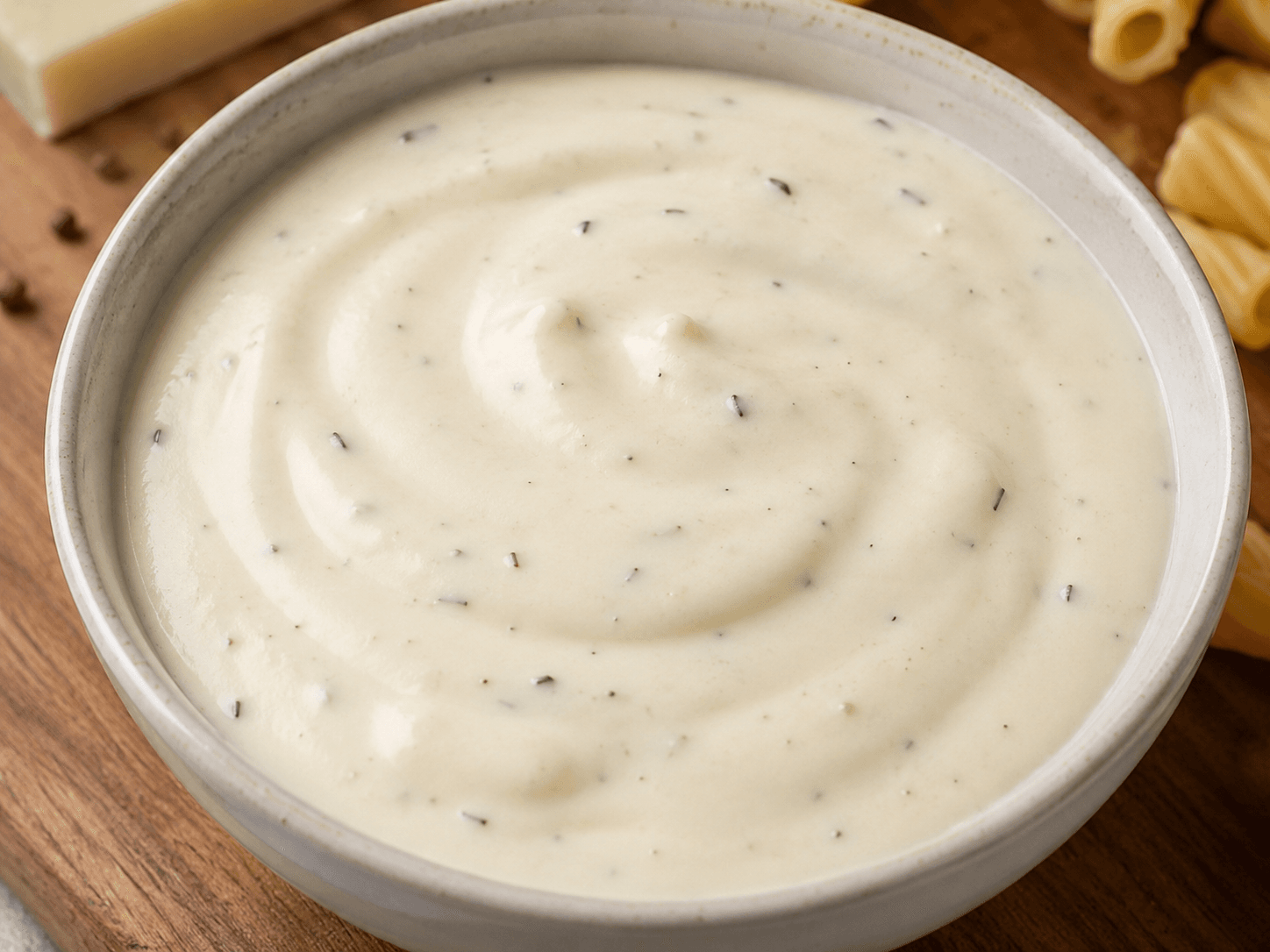
Butter melted over low heat. Flour stirred in and cooked briefly to eliminate the raw starch taste — this stage is called a roux. Warm milk added slowly while whisking, the starch granules swelling and thickening the liquid into a smooth, glossy, pourable sauce that coats the back of a spoon and holds its shape without breaking.
Serious Eats documents the chemistry precisely: when flour is cooked in butter, the starch granules are coated in fat, which prevents them from clumping when liquid is added. That fat coating allows each starch granule to hydrate individually and swell uniformly — producing a smooth sauce rather than a lumpy one. Grandma didn’t know the phrase “fat-coated starch granule.” She just knew that if you cooked the butter and flour together for a full two minutes before adding the milk, the sauce came out smooth every time.
She was performing culinary school in a home kitchen. She just called it Tuesday.
💡 Grandma’s Rule: “Cook the flour until it smells like biscuits. Not raw. Not brown. Biscuits.” She meant the roux — that 2-minute window where the flour loses its raw, chalky smell and takes on a faint, warm, toasty note. That smell is the starch cooking. When you smell it, you are ready to add the milk.
Three Ingredients, One Ratio, Infinite Variations
The foundation of every easy white sauce recipe is a single ratio that has not changed in three hundred years of French cooking:
Equal parts butter and flour. Then milk — the amount determines the thickness.
This ratio is not a suggestion. It is the structure of the Easy White Sauce Recipe. Change the butter-to-flour ratio and the sauce either breaks (too much butter) or pastes (too much flour). The milk is the variable — and understanding how to adjust it gives you three different sauces from the same base.
The Three Easy White Sauce Recipe Thicknesses — One Recipe, Three Outcomes:
| Thickness | Butter | Flour | Milk | Best Use |
| Thin | 1 tbsp | 1 tbsp | 1 cup | Soup base, cream soups |
| Medium | 2 tbsp | 2 tbsp | 1 cup | Pasta, casseroles, gratins |
| Thick | 3 tbsp | 3 tbsp | 1 cup | Pot pie filling, croquettes |
This blog uses the medium ratio — the most versatile version, the one grandma made most often, and the one that works across the widest range of dishes.
Ingredients for Medium White Sauce (Serves 4–6 as a component):
- 2 tablespoons unsalted butter — real butter, not margarine, not spray
- 2 tablespoons all-purpose flour
- 1 cup whole milk, warmed — cold milk added to a hot roux is the single most common cause of lumpy white Easy White Sauce Recipe
- ¼ teaspoon fine sea salt
- ¼ teaspoon white pepper — grandma used black pepper in Easy White Sauce Recipe; white pepper keeps the sauce visually clean
- Pinch of freshly grated nutmeg — barely detectable, completely transformative
📌 On warming the milk: Warm milk does not shock the roux the way cold milk does. Cold milk hitting a hot roux causes the surface starch to seize and clump before the whisk can distribute it. Thirty seconds in the microwave or two minutes in a small saucepan over low heat is all it takes. King Arthur Baking confirms that warm milk is the single most reliable upgrade for any roux-based sauce — it is not optional if you want a smooth result consistently.
📌 On the nutmeg: A pinch — literally a pinch from two fingers — of freshly grated nutmeg in white sauce is a technique that dates to classical French cooking. The Kitchn explains it as a flavor bridge: nutmeg contains aromatic compounds that interact with both dairy fat and wheat starch, amplifying the richness of both without adding a flavor anyone can specifically identify. People taste the sauce and say it tastes “more like something.” The nutmeg is why.
Not Sure What to Cook Today?
Open your fridge, pick a few ingredients… and turn them into a real recipe in seconds.
No guessing. No waste. Just simple, nostalgic meals.How to Make This Easy White Sauce Recipe — Six Steps That Take Ten Minutes Total
Step 1 — Warm the Milk Before Anything Else
Pour the milk into a small saucepan or microwave-safe measuring cup and warm it over low heat or in the microwave for 30 to 45 seconds — just until it is warm to the touch, not boiling. Set it beside the stove within easy reach. You will need it quickly once the roux is ready.
This step takes 60 seconds and prevents 90% of lumpy sauce problems. Do it every time.
Step 2 — Melt the Butter Over Medium-Low Heat
In a medium heavy-bottomed saucepan, melt the butter over medium-low heat. Watch it — you want it fully melted and gently foaming, not browning. The moment the butter starts showing any color, the heat is too high. Back it off.
The butter should look pale, clear, and active — bubbling softly with the sound of water cooking off. This is the correct starting point for a roux.
Step 3 — Add the Flour and Cook the Roux for a Full Two Minutes
Add the flour all at once to the melted butter. Switch to a wooden spoon or a flat-edged silicone spatula and stir constantly — not gently, not occasionally, constantly — pressing the mixture across the bottom of the pan.
Cook for exactly two minutes. Not one. Not ninety seconds. Two full minutes over medium-low heat.
During this time the mixture will look thick and paste-like, and it will go through two stages: first raw and chalky-smelling, then gradually toasty and warm-smelling — that biscuit smell grandma always described. The roux is ready when it smells toasty and looks smooth, slightly dry at the edges, and pale gold in color.
Rushing past this step is where lumpy, floury-tasting white sauce comes from. Bon Appétit specifically identifies undercooked roux as the most common cause of white Easy White Sauce Recipe that tastes of raw flour even after the milk is added — because the starch granules were not fully coated in fat before the liquid was introduced.
Step 4 — Add Warm Milk in a Steady Stream, Whisking Without Stopping
Switch to a whisk. Pour the warm milk in a slow, steady stream — not all at once — while whisking constantly with the other hand. The first few pours will immediately thicken into a very stiff paste. Keep whisking and keep pouring. The sauce will loosen as more milk is incorporated.
Add all the milk over about 60 seconds of continuous whisking. By the time the last pour is in, the sauce should be smooth, thin, and lump-free. Any lumps visible at this stage will cook out with continued heat and whisking — do not panic.
If lumps persist after 2 minutes of cooking: remove the pan from heat, strain the sauce through a fine mesh strainer, and return it to the pan. No one needs to know.
Step 5 — Cook Until Thickened, Season, Finish With Nutmeg
Return to medium heat and stir continuously with the whisk for 3 to 5 minutes as the Easy White Sauce Recipe thickens. It is ready when it coats the back of a spoon and a line drawn through the coating holds its shape for 3 seconds without flowing back.
Add salt, white pepper, and the pinch of nutmeg. Taste. The sauce should be creamy, subtly savory, and slightly rich — not floury, not bland, not too salty. Adjust seasoning if needed.
Remove from heat. Use immediately or press a sheet of plastic wrap directly onto the surface of the Easy White Sauce Recipe to prevent a skin from forming.
Step 6 — Build Something With It
An easy white sauce recipe is never the end point. It is always the beginning of something else. Here is what grandma built with hers every week:
- Mac and cheese: Toss with cooked pasta and sharp cheddar, bake at 375°F for 20 minutes
- Creamed vegetables: Fold in steamed broccoli, peas, or green beans and serve over toast
- Pot pie filling: Add cooked chicken, diced carrots, and peas; thicken to the thick ratio and bake under a biscuit crust
- Lasagna béchamel: Use the thin ratio between pasta layers in place of ricotta
- Scalloped potatoes: Layer sliced raw potatoes with medium white sauce and cheese, bake at 375°F for 1 hour
Seven Ways to Customize This Easy White Sauce Recipe
The medium Easy White Sauce Recipe base is a blank canvas. These additions cost thirty seconds each and produce completely different sauces:
Mornay Sauce: Stir ½ cup grated Gruyère and ¼ cup Parmesan into the finished white sauce off heat until melted. The classic cheese sauce for gratins and croque monsieur. Pour it over our Cheesy Potato Casserole for a French-Midwestern crossover that nobody at the table will object to.
Mustard Cream Sauce: Add 1 tablespoon Dijon mustard and 1 teaspoon white wine vinegar to the finished sauce. Serve over pork chops, baked chicken, or alongside Meatloaf with Brown Sugar Glaze for a sauce that makes Monday’s meatloaf feel like a restaurant-level plate.
Garlic White Sauce: Sauté 3 minced garlic cloves in the butter for 60 seconds before adding the flour. The garlic infuses the fat and carries through the entire Easy White Sauce Recipe — powerful, aromatic, and perfect over pasta or roasted vegetables.
Herb Cream Sauce: Stir 2 tablespoons of chopped fresh thyme, tarragon, or chives into the finished sauce. Serve over poached chicken or alongside Classic White Bread thick-sliced and toasted.
Smoky Paprika White Sauce: Add 1 teaspoon smoked paprika and ½ teaspoon cayenne to the roux stage before the milk goes in. Serve over our Grandma’s Easy Crispy Fried Chicken Without Buttermilk as a warm dipping sauce or drizzle.
Onion White Sauce: Dice half a yellow onion finely and cook it in the butter until completely soft and translucent before adding the flour. Strain the finished sauce or leave it chunky. Either way — extraordinary over biscuits. Try it with Grandma’s Old Fashioned Fluffy Drop Biscuits.
Dairy-Free White Sauce: Replace butter with olive oil or vegan butter. Replace milk with full-fat oat milk or unsweetened almond milk — the starch mechanics work identically with any liquid. The flavor profile shifts but the technique does not change at all.
Troubleshooting — When the Sauce Fights Back
Lumpy sauce: Either the roux was not cooked long enough, the milk was too cold, or it was added too fast. Strain through a fine mesh strainer immediately and return to heat — most lumps are resolved within 2 minutes of continued whisking over medium heat.
Not Sure What to Cook Today?
Open your fridge, pick a few ingredients… and turn them into a real recipe in seconds.
No guessing. No waste. Just simple, nostalgic meals.Sauce tastes floury: The roux was undercooked. Next time, cook it a full two minutes until you smell that toasty biscuit note. If the sauce is already made, continue simmering over low heat for 5 more minutes — prolonged heat breaks down residual raw starch.
Sauce too thick: Add warm milk one tablespoon at a time, whisking after each addition, until you reach the consistency you need. White sauce thickens as it cools — always make it slightly thinner than the target consistency if it is going to sit before serving.
Sauce too thin: Return to medium heat and whisk continuously — the sauce will continue thickening as the starch granules absorb more liquid and swell further. If it still won’t thicken, make a small second roux (1 tsp butter + 1 tsp flour, cooked 1 minute) and whisk it into the thin sauce.
Sauce formed a skin: Means it was left uncovered while cooling. Press plastic wrap directly onto the surface — not over the pan, directly onto the sauce — the moment it comes off the heat. No air gap, no skin. AllRecipes confirms this plastic-wrap-on-surface method as the standard professional technique for holding any béchamel-based sauce.
Sauce broke or turned grainy: Heat was too high and the dairy proteins curdled. Cannot be fixed by whisking — strain and start again. Always use medium-low to medium heat. White sauce does not tolerate high heat at any stage.
Frequently Asked Questions
What is white sauce made of? This easy white sauce recipe uses just three foundational ingredients: butter, all-purpose flour, and milk. These three combine through a roux technique to produce a smooth, creamy, versatile sauce called béchamel in classical French cooking. Salt, white pepper, and nutmeg are the standard seasonings.
Is white sauce the same as béchamel? Yes — white sauce and béchamel are the same sauce with two different names. “White sauce” is the everyday American home-kitchen name. “Béchamel” is the classical French culinary name. The technique, ingredients, and ratio are identical. French chefs classify béchamel as one of the five French mother sauces — the foundational preparations from which hundreds of derived sauces are built.
Can I make Easy White Sauce Recipe without butter? Yes. Substitute olive oil or any neutral cooking oil at a 1:1 ratio for the butter. The roux technique works identically — oil coats the flour starch granules just as effectively as butter. The flavor will be slightly less rich, but the sauce will be smooth, properly thickened, and completely functional.
Why is my white sauce always lumpy? The three causes — in order of how often they occur: cold milk added to a hot roux, roux not cooked long enough before the milk went in, and milk added too fast without continuous whisking. Fix: warm the milk first, cook the roux two full minutes, add the milk slowly in a steady stream while whisking without stopping.
How long does homemade white sauce keep? Refrigerated with plastic wrap pressed directly onto the surface, up to 4 days. Reheat slowly over low heat with a splash of warm milk, whisking continuously as it returns to temperature. Do not microwave without stirring every 30 seconds — uneven heat creates hot spots that curdle the dairy. Per USDA guidelines, dairy-based sauces should be refrigerated within 2 hours of cooking.
Can white sauce be frozen? Technically yes — freeze in an airtight container for up to 2 months. However, dairy-based sauces often separate on thawing because the fat and liquid fractions freeze at different rates. Easy White Sauce Recipe overnight in the refrigerator and reheat slowly while whisking — the sauce usually comes back together with patient stirring, but fresh-made is always better.
Conclusion — The Skill That Lives Beneath Every reat Dish
The easy white sauce recipe is not a dish. It is a skill — one of the oldest and most transferable skills in the history of home cooking. Once you can make a smooth, properly seasoned white sauce in ten minutes without thinking about it, a door opens. Mac and cheese from scratch. Pot pies that actually taste like something. Gratins that make people ask what the sauce is. Casseroles where the filling holds together because the binder was built correctly.
Grandma never called it béchamel. She never needed to. She just made it — butter, flour, milk, wooden spoon — the same way every time, and used it to make the dishes around it better than they would have been without it.
That is what this easy white sauce recipe does. It does not call attention to itself. It makes everything else on the plate more worth eating.
Make it once. Make it twice. By the third time, your hands will know the ratio without the recipe. After that, it is yours — the same way it was hers.
Use our Free Recipe Maker from Ingredients to discover exactly which dishes in our collection use white sauce as a base — type in what you have and let the tool build your next meal around this newly mastered skill.
Published on NostalgicEats.com | Classic American Comfort Recipes Explore more at: nostalgiceats.com