The Honest Guide to Cutting Your Grocery Bill Without Eating Boring Food

Let’s be upfront about something most articles about how to cut your grocery bill won’t tell you.v
A lot of budget cooking advice is quietly terrible. It tells you to eat plain boiled lentils every day, buy everything in bulk (even if you live alone), and give up the foods you actually enjoy. Follow it for a week and you feel punished. Follow it for two and you’re back to overspending just to feel something.
That’s not what this is.
This guide is built on a different idea: the goal isn’t to spend as little as possible — it’s to stop spending money on food that never gets eaten. Do that one thing seriously and most households can cut their grocery bill by 30 to 50 percent without changing a single recipe they love.
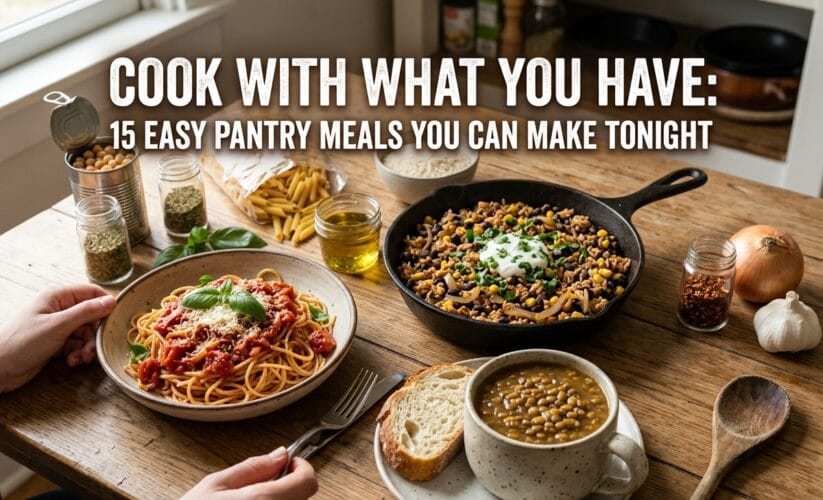
If you’re also struggling with what to actually cook on those budget nights, our guide on what to make for dinner when you have nothing is the perfect companion to this one — real meals from near-empty kitchens, zero stress.
Here’s how to start saving
Not Sure What to Cook Today?
Open your fridge, pick a few ingredients… and turn them into a real recipe in seconds.
No guessing. No waste. Just simple, nostalgic meals.The Real Reason Your Grocery Bill Is High (It’s Probably Not What You Think)
Most people assume they overspend on groceries because they buy premium products, shop at expensive stores, or don’t stick to a list. Sometimes that’s true. But the deeper and far more common reason is this:
You’re buying food you don’t use.
Research from the USDA Economic Research Service consistently shows that the average American household wastes around a third of the food it purchases. Think about that number. If your family spends $600 a month on groceries, roughly $200 of that is going straight into the bin — not because you’re buying caviar, but because the salad leaves went limp, the bread went stale, the leftovers sat in the fridge for a week, and the ambitious Tuesday meal plan quietly fell apart by Wednesday.
The single highest-leverage thing you can do to cut your grocery bill isn’t to switch supermarkets or clip coupons. It’s to stop throwing food away.
Everything else in this guide builds on that foundation. And if you want a real-world picture of what smart, zero-waste home cooking looks like in practice, the Vintage Life USA YouTube channel is a beautiful rabbit hole — generations of American home cooks who made every penny and every ingredient count, and made it look effortless.
Before You Change What You Buy, Change How You Shop
The 10-Minute Fridge Audit (Do This Before Every Shop)
Most people write a shopping list based on what they feel like eating that week. A better starting point is what you already have.
Before your next shop, spend ten minutes doing a proper fridge and cupboard audit:
Pull everything out of the vegetable drawer. What needs to be eaten in the next three days? That becomes the base of your next few meals — not an afterthought.
Check your pantry for opened items. Half a bag of red lentils, a tin of coconut milk, some dried pasta with fifty grams left. These are the building blocks of meals you haven’t planned yet. Add them to a note on your phone. You can also run them through our random food generator to instantly surface what you can make — it’s faster than Googling and pulls from a genuine recipe database.
Look in the freezer honestly. Most freezers contain forgotten proteins and bread that could become dinner tonight if someone remembered they were there.
Now write your shopping list — but write it around the gaps, not from scratch. What do you need to complete meals using what you already have?
This one habit alone typically cuts grocery spend by 15 to 20 percent in the first month.
Stop Buying Ingredients — Start Buying Meals
Here’s a subtle but important reframe: every item you put in your trolley should have a specific job.
That bag of spinach isn’t “healthy” — it’s Thursday’s frittata and Friday’s pasta. That tin of chickpeas isn’t a vague health gesture — it’s Tuesday’s curry. When every ingredient is mentally assigned to a meal before you buy it, almost nothing gets wasted.
This is called intentional shopping, and it’s the opposite of aspirational shopping — where you buy things because they feel like the kind of person you want to be, not the person who actually cooks at home on a Wednesday night.
The Vintage Life USA channel captures this mindset perfectly. Those old-school American cooks didn’t buy “healthy” or “interesting” — they bought purposefully and cooked completely. That’s the shift.
The Budget Meal Framework: How to Build Cheap, Satisfying Dinners
You don’t need a fancy budget meal plan template. You need a mental model that lets you build a satisfying meal from whatever is cheapest and most available. Here it is:
Cheap base + affordable protein + any vegetable + bold seasoning = a great dinner
That’s it. Let’s break down each piece.
Cheap Bases That Go the Distance
The most economical meal foundations, ranked roughly by cost per serving:
- Dried lentils — among the cheapest proteins and carbohydrates combined, cook in 20 minutes, absorb any flavor
- Rice — endlessly versatile, stores indefinitely, works with almost every cuisine
- Pasta — fast, filling, pairs with virtually any sauce you can build from pantry ingredients
- Potatoes — incredibly cheap per kilo, satisfying, work as main or side. Our country fried potatoes recipe turns this humble ingredient into a genuinely craveable meal with minimal effort
- Oats — usually thought of as breakfast but work brilliantly in savory applications too
- Canned beans — slightly pricier than dried but still extremely cheap per serving and ready instantly
- Homemade bread — baking your own is far cheaper than buying and lasts longer too. Our classic white bread recipe uses just four ingredients and costs a fraction of store-bought
Not Sure What to Cook Today?
Open your fridge, pick a few ingredients… and turn them into a real recipe in seconds.
No guessing. No waste. Just simple, nostalgic meals.Affordable Proteins That Aren’t Bland
Budget protein gets a bad reputation because people default to plain chicken breast and unseasoned eggs. But affordable protein done well is genuinely delicious.
Eggs cooked slowly in butter, or poached into a spiced tomato sauce, or baked into a vegetable frittata — these are restaurant-quality meals for pennies. Our eggs in a nest recipe is one of the simplest and most satisfying egg dinners you can make, and it uses almost nothing.
Canned fish — sardines on toast with chili and lemon, tuna stirred through pasta with capers and olives, mackerel on rice with soy and ginger. Canned fish is one of the most underrated budget ingredients in the kitchen. Our tuna noodle casserole is the definitive proof: pantry ingredients, thirty minutes, deeply comforting result.
Dried or canned legumes — chickpeas roasted until crispy, white beans mashed with garlic and olive oil, black beans seasoned hard with cumin and lime. These are not sad food. They’re the foundation of entire culinary traditions. The Mexican casserole recipe on this site is a brilliant example — beans, spices, cheese, done.
Chicken thighs instead of breasts — almost always cheaper, considerably more flavorful, and far harder to overcook. Our homemade stovetop chili con carne is another protein-stretching classic that feeds four people on very little.
The Seasoning Multiplier
This is where budget cooking either succeeds or fails. A bowl of plain rice and beans tastes like a punishment. The same bowl with garlic, cumin, a squeeze of lime, and a drizzle of hot sauce tastes like something you’d order in a restaurant.
The pantry investments that pay for themselves fastest: a good olive oil, whole cumin and coriander, smoked paprika, soy sauce, fish sauce (a small bottle lasts months and adds incredible depth), dried chili, a decent vinegar, and fresh garlic. These items cost relatively little and transform cheap ingredients into genuinely exciting food.
According to America’s Test Kitchen, building a layered spice base — blooming dry spices in a little fat before adding liquid — is the single most reliable technique for making budget ingredients taste expensive. It costs nothing extra and takes thirty seconds.
7 High-Flavor Budget Meals Under $2 Per Serving
These are not “budget meals.” These are just meals — that happen to be cheap.
Spiced Red Lentil Dal Red lentils, canned tomatoes, garlic, ginger, cumin, turmeric, and butter. Serve with rice or flatbread. One of the most nourishing, delicious bowls of food that exists — and one of the cheapest. Browse our full recipe archive for more lentil and legume-based ideas that hit this same standard.
White Bean and Garlic Pasta Pasta, canned white beans, garlic, olive oil, lemon, and Parmesan if you have it. Ready in 15 minutes. Creamy, filling, genuinely restaurant-worthy. Pair it with our classic cornbread recipe on the side and you have a full meal that costs almost nothing.
Sardine Toast With Chili and Lemon Tinned sardines, good bread, chili flakes, lemon juice, a little parsley. Sounds simple. Tastes like something you’d pay twelve dollars for at a café. Make your own bread with our sourdough recipe and the cost-per-serving drops even further.
Potato and Egg Curry Diced potato, eggs, canned tomatoes, onion, garlic, curry powder. One pan, thirty minutes, deeply satisfying. The country fried potatoes recipe uses the same hero ingredient in a completely different direction — great for batch cooking potatoes two ways in one session.
Midwest Hotdish Casserole This is old-school American budget cooking at its finest. Our classic Midwest hotdish casserole pulls together pantry staples into a bubbling, deeply satisfying one-dish meal. It feeds a family of four and costs almost nothing. This is exactly the kind of recipe the Vintage Life USA channel celebrates — honest, filling, from-the-pantry American cooking that never went out of style.
Soy-Glazed Fried Rice Leftover rice, egg, soy sauce, sesame oil, garlic, any vegetable. The classic pantry rescue meal — and it genuinely tastes good every single time. Never throw away leftover rice again.
BBQ Meatballs From the Slow Cooker If you have a slow cooker and basic ground meat, our BBQ meatballs recipe is one of the most cost-effective crowd-feeding meals you can make. Slow cooker cooking in general is a major budget tool — low-cost cuts of meat become fork-tender over hours without any effort.
Not sure what else you can make with what’s in your kitchen? Our random food generator gives you instant ideas based on whatever ingredients you have on hand — no recipe knowledge required.
The Waste Audit: Finding the Hidden Money in Your Kitchen
Want to know exactly where your food budget is leaking? Run a two-week waste audit.
Every time you throw food away — even a small amount — write it down. What was it? Why did it go bad? Was it an unused ingredient from a recipe you only half-made? Leftovers you intended to eat but forgot? Produce that wilted before you got to it?
After two weeks, patterns become very clear. Most households discover two or three specific failure points:
The vegetable drawer problem — fresh produce gets pushed to the back and forgotten. Solution: keep a small container at eye level in the fridge specifically for produce that needs to be used within three days. Our guide on how to cook with what you have covers this in detail with a five-component system for turning leftover produce into a proper meal every time.
The ambitious ingredient problem — buying specialist ingredients for one recipe and having no plan for the rest. Solution: only buy something unusual if you have at least two recipes it works in.
The leftover problem — cooking more than you’ll eat with no plan for the rest. Solution: always cook leftover rice and grains into the next day’s fried rice or grain bowl. Always freeze leftover soup rather than refrigerating it. Our grandma’s chicken noodle soup freezes perfectly and is one of the best ways to use up a leftover chicken carcass or those last few sad vegetables.
According to ReFED, a nonprofit focused on food waste reduction, the average American family can save over $1,800 per year simply by reducing their household food waste — without changing a single shopping or cooking habit beyond awareness. That’s the power of the waste audit.
Not Sure What to Cook Today?
Open your fridge, pick a few ingredients… and turn them into a real recipe in seconds.
No guessing. No waste. Just simple, nostalgic meals.Meal Planning Without the Sunday Dread
Meal planning has a reputation for being time-consuming, rigid, and slightly joyless. That reputation is mostly earned by people who plan too rigidly.
The approach that actually works is loose planning, not tight planning.
Instead of scheduling “Monday: chicken curry, Tuesday: pasta bake, Wednesday: stir fry,” try this:
Pick two or three “anchor meals” for the week — things you definitely want to eat. Buy ingredients for those. Then identify what vegetables and proteins you need to use up, and have one or two flexible “use it up” slots in the week where dinner is built from whatever needs eating.
This approach captures most of the financial benefit of meal planning (buying with purpose, reducing waste) without the rigidity that makes people abandon it after two weeks. If you want a fast way to fill in those flexible “use it up” nights, our random food generator is genuinely useful — it surfaces meal ideas from ingredients you already have rather than asking you to invent from scratch.
For dessert planning on a budget, the random dessert generator works on the same principle — classic, affordable desserts that don’t require a special trip to the shops. Our wacky cake is a prime example: a Depression-era recipe that uses no eggs, no butter, and no milk, yet produces a genuinely delicious chocolate cake. Budget dessert doesn’t mean no dessert.
You can also explore all our recipes by type using the browse categories page — it’s the fastest way to find meal ideas grouped by cuisine, course, or cooking method when you’re planning the week.
Frequently Asked Questions About Cutting Your Grocery Bill
How much can I realistically save by cooking at home more?
The gap between home-cooked food and takeout or restaurant meals is enormous. A meal that costs $12–$20 at a restaurant typically costs $2–$4 to make at home. If a household of two switches from eating out four times a week to once a week, the savings over a year can easily reach $3,000–$5,000. Even more modest changes — cooking one extra meal at home per week, reducing food waste by half — add up to hundreds of dollars annually. Our full collection of cheap supper ideas gives you sixty proven options to choose from.
What are the cheapest healthy meals I can make at home?
Lentil-based dishes (dal, lentil soup, lentil stew), bean-based meals (bean tacos, bean pasta, shakshuka), egg dishes (frittata, egg fried rice, eggs in a nest), and vegetable-forward soups are consistently the cheapest and most nutritious meals you can make. They’re also genuinely delicious when seasoned well — the key variable that separates good budget cooking from sad budget cooking. Our recipe archive has dozens of recipes built on exactly these principles.
Is it cheaper to buy in bulk?
Sometimes, but not always. Buying in bulk only saves money if you actually use the item before it expires. For pantry staples with long shelf lives — dried lentils, rice, pasta, canned tomatoes, olive oil — bulk buying makes clear financial sense. For fresh produce, dairy, or anything perishable, bulk buying often leads to more waste, not less. The USDA’s FoodKeeper App is a free, reliable resource for checking exactly how long any ingredient stays safe in your fridge, freezer, or pantry — worth bookmarking.
How do I stop overbuying at the supermarket?
Shop with a list built from a real audit of what you have, not from scratch. Eat before you shop — hunger significantly increases impulse buying. Avoid the middle aisles where processed and premium items live. And give yourself a specific cash budget if overspending is a persistent problem; the physical constraint of cash is more effective than a mental note to “spend less.”
Can I eat well on $50 a week?
Yes — for one person, comfortably. The key is leaning on the cheapest, most versatile ingredients: lentils, rice, eggs, canned beans, seasonal vegetables, canned tomatoes, and a small amount of cheese or canned fish for flavor. Meal planning loosely, avoiding food waste, and cooking most meals at home from scratch makes $50 a week very workable and genuinely enjoyable. Our baking soda substitutes guide is a small but useful example of the kind of swap-savvy thinking that stretches a tight budget — knowing what you can substitute means fewer emergency trips to the shops.
What’s the fastest way to reduce food waste?
Move anything that needs eating in the next three days to the front of the fridge — visibility is the single biggest driver of whether something gets used. Freeze things before they go bad rather than waiting until they have. Adopt a weekly “use it up” dinner where you cook from whatever is left before the next shop. And use our random food generator on those nights — it’s purpose-built for exactly that moment when you have random things left and need a real meal idea fast.
The Bottom Line
Cutting your grocery bill isn’t really about coupons, supermarket loyalty cards, or switching to cheaper brands. Those things help at the margins. The real money is in the gap between what you buy and what you actually eat.
Close that gap — with better shopping habits, intentional planning, and meals that use every ingredient you bring home — and the savings follow automatically. Not as a punishment. Not as a sacrifice. Just as the natural result of cooking with more awareness than you did before.
The meals are better too. That’s the part nobody tells you. When you start building dinners from what you have rather than buying whatever looks good, you get more creative, more confident, and more satisfied with what ends up on the table.
It turns out that cooking on a budget and cooking well are not opposites. Done right, they’re exactly the same thing — and generations of American home cooks, from Depression-era grandmothers to the community kitchens the Vintage Life USA channel celebrates, have known that all along.
Ready to put this into practice tonight? Use our random food generator to discover what you can make with exactly what’s already in your kitchen. Explore our full recipe collection or browse by category to plan your budget meals for the week.
“`html “`