15 Easy 3-Ingredient Desserts with Sweetened Condensed Milk
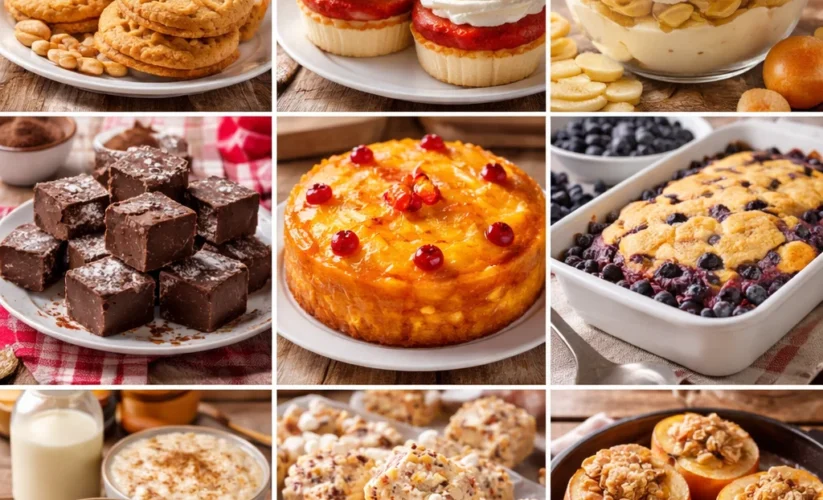
30 CHEAP 3-Ingredient Desserts American Seniors Made When Money Was Tight
Grandma always kept a can of sweetened condensed milk in the pantry. She said it was her secret weapon — because with just 2 or 3 more ingredients, you could have a dessert on the table in under 30 minutes. These old-fashioned 3-ingredient desserts with sweetened condensed milk are the kind of recipes that never go out of style. No baking required for most of them. No fancy equipment. Just simple, sweet, made-from-scratch comfort.
I discovered a handwritten note tucked inside my grandmother’s 1935 recipe tin that read: “Three ingredients maximum. If it needs more, we can’t afford it.” Below this rule were thirty dessert recipes proving that 3 ingredient desserts with sweetened condensed milk and other basic pantry staples could create genuine satisfaction during America’s hardest economic times. What shocked me wasn’t just that these desserts were cheap—I expected poverty food to be inexpensive—but that so many qualified as 3 ingredient desserts with sweetened condensed milk no bake, meaning they required no oven, no fuel costs, and minimal effort from exhausted Depression-era home cooks.
The question “how can dessert use only three ingredients?” doesn’t seem possible to modern bakers accustomed to recipes listing ten or twelve components. But Depression-era seniors understood something we’ve forgotten: limitation breeds creativity rather than killing it. When you can’t afford eggs, you whip egg whites into meringues. When you can’t afford fruit, you soak crackers in syrup to mimic apples. When you can’t afford fancy ingredients, you master 3 ingredient desserts with sweetened condensed milk no bake techniques that create magic from almost nothing.
These thirty desserts emerged from 1930-1960 when economic collapse, wartime rationing, and postwar frugality made traditional elaborate desserts impossible for average families. Butter was rationed, eggs were expensive, fresh fruit was seasonal luxury, and chocolate was unavailable during wartime shipping restrictions. So American seniors—those who lived through the Depression and learned to make something from nothing—invented entirely new desserts using only three carefully chosen ingredients that created genuine pleasure despite costing pennies.
Many of these 3 ingredient desserts with sweetened condensed milk relied on one miraculous ingredient: sweetened condensed milk. This shelf-stable product provided sweetness, richness, dairy, and liquid simultaneously in one can, reducing ingredient counts dramatically while creating desserts that tasted expensive despite poverty origins. Other recipes used eggs, sugar, and butter in clever combinations, or relied on chemistry and technique to transform water, flour, and sugar into convincing desserts that satisfied sweet cravings when abundance was impossible.
Quick Reference
Understanding 3 Ingredient Desserts With Sweetened Condensed Milk No Bake Magic
Why Sweetened Condensed Milk Dominated
3 ingredient desserts with sweetened condensed milk became an entire category because this single ingredient provided sweetness, richness, dairy, and liquid simultaneously. One can replaced sugar, cream, and milk in recipes, reducing ingredient counts dramatically while creating desserts that tasted like they required much more effort.
Sweetened condensed milk kept indefinitely without refrigeration—crucial when many homes lacked reliable iceboxes during the 1930s-40s. Families could buy a case of cans when prices dropped and store them for months, always having dessert capability on hand regardless of seasonal availability or fresh ingredient spoilage.
The magic of 3 ingredient desserts with sweetened condensed milk no bake recipes was that condensed milk was already cooked during processing. It could be eaten safely straight from the can, enabling desserts that required no heating, no fuel costs, and no waiting for ovens to heat—crucial advantages when fuel was expensive and summer kitchens were unbearably hot.
The No-Bake Revolution
3 ingredient desserts with sweetened condensed milk no bake emerged because acid made condensed milk thicken into pudding through chemical reaction alone. Mix condensed milk with lemon juice and it thickens without cooking through acid coagulation—the same chemistry that makes cheese. Mix it with cocoa powder and you have chocolate sauce. Mix it with vanilla and freeze it for ice cream. Each manipulation created different desserts from identical base ingredient.
This no-bake advantage mattered tremendously during hot summers when heating kitchens was torture, during fuel shortages when every penny of utility costs counted, and for working families who needed quick desserts without elaborate preparation. Similar no-bake techniques appear in no-bake chocolate oat cookies.
Economic Efficiency
One can of sweetened condensed milk cost fifteen cents during the Depression but made enough dessert for eight servings—less than two cents per person. This was cheaper than any other dessert option except maybe snow ice cream where snow was free. The lack of spoilage meant zero waste—fresh cream soured within days without refrigeration, but condensed milk lasted months or years sealed.
Depression Era Classics
1. Baked Custard – Three Ingredient Elegance
Baked Custard (Eggs, Milk, Sugar) became the most common Depression-era dessert because it transformed three staples into something elegant. Two eggs, two cups of milk, and one-third cup sugar baked into six servings of creamy custard that tasted like restaurant-quality dessert despite costing pennies.
The genius was in the technique. Baking custard in a water bath at low temperature prevented curdling while creating silky texture. This turned ordinary ingredients into impressive dessert that satisfied sweet cravings when nothing else was available.
Seniors made this weekly because eggs and milk were affordable even during hard times. The custard stretched expensive eggs to feed entire families, making protein accessible when meat was unaffordable. Similar economical thinking appears in vintage recipes like corn pudding that maximized affordable ingredients.
2. Meringue Cookies – Sweet Air
Meringue Cookies (Egg Whites, Sugar, Vanilla) represented peak Depression-era ingenuity—creating dessert from what most people discarded. After using egg yolks for custard or mayonnaise, thrifty bakers saved the whites for meringues instead of throwing them away.
Whipping egg whites with sugar created volume through incorporating air, turning two tablespoons of egg white into a full cup of meringue. One egg white made six cookies that dissolved on the tongue like sweetened clouds. Baking them low and slow dried them into crispy treats that kept for weeks.
The vanilla was technically optional but traditional—a few drops transformed plain sugar cookies into something that felt special and festive despite minimal ingredients.
3. Snow Ice Cream – Ultimate No-Bake
Snow Ice Cream (Fresh Snow, Condensed Milk, Vanilla) became legendary among American children as the ultimate example of 3 ingredient desserts with sweetened condensed milk no bake recipes. Collect fresh clean snow in a bowl, stir in sweetened condensed milk and vanilla, eat immediately.
No cooking, no refrigeration, no equipment beyond a bowl and spoon. The snow provided texture and cold, the condensed milk provided sweetness and richness, the vanilla provided flavor. This was pure magic to children during the Depression—turning free snow into special treat that tasted better than anything money could buy.
Mothers made this on snow days when children were home from school and bored. One can of condensed milk made enough snow ice cream for six children, costing fifteen cents total while providing entertainment and dessert simultaneously.
4. Baked Apples with Cinnamon – Orchard Simple
Baked Apples with Cinnamon (Apples, Sugar, Cinnamon) transformed fall’s abundant apples into dessert. Core apples, fill the cavity with sugar mixed with cinnamon, bake at 350°F for forty minutes until tender.
This recipe emerged from farm families with apple trees who had more apples than they could eat fresh. Baking concentrated the sweetness while the sugar and cinnamon created caramel-like sauce in the center that pooled at the bottom when you cut into the apple.
Each apple became individual serving, perfect for church potlucks or family dinners. The dessert required no mixing bowls, no measuring beyond eyeballing sugar amounts, no cleanup beyond the baking dish. Similar rustic simplicity characterizes classic apple pie traditions.
5. 3-Ingredient Butter Cookies – Melt-in-Mouth
3-Ingredient Butter Cookies (Flour, Butter, Powdered Sugar) created tender shortbread-style cookies from pantry staples. One cup butter, half cup powdered sugar, two cups flour mixed into dough, rolled thin, cut into shapes, baked at 325°F for twelve minutes.
The high butter ratio created cookies that dissolved on the tongue rather than requiring chewing. This made them perfect for elderly people with dental problems, children who loved delicate cookies, and anyone who appreciated pure buttery richness without competing flavors.
These appeared at every church social and holiday gathering throughout the 1950s-60s. Bakers shaped them into crescents, circles, or pressed them with fork tines for simple decoration that looked more elaborate than the minimal effort required.
6. Divinity Candy – Cloud Confection
Divinity Candy (Egg Whites, Corn Syrup, Sugar) was Southern church lady specialty that seemed miraculous. Boil corn syrup and sugar to hard-ball stage (260°F), pour into beaten egg whites while whipping continuously, drop by spoonfuls onto waxed paper.
The technique created billowy white candy that dissolved instantly in the mouth, tasting like sweetened clouds. The corn syrup prevented crystallization while the egg whites provided structure through protein coagulation during the hot syrup addition.
This candy appeared at Christmas and Easter throughout the South, often studded with pecans when families could afford them. Making it required a candy thermometer and strong arm for whipping, but the three ingredients cost under fifty cents for two dozen pieces. The same Southern heritage shows in recipes like sweet potato pie.
7. Boiled Cookies – Original No-Bake
Boiled Cookies (Sugar, Butter, Oats) represented the original no-bake cookie before that term existed, qualifying as early example of 3 ingredient desserts with sweetened condensed milk no bake philosophy using different ingredients. Boil sugar and butter together for one minute, remove from heat, stir in oats, drop by spoonfuls onto waxed paper, let set.
These became emergency desserts when the oven was broken or the kitchen was too hot for baking during summer. The boiling sugar syrup bound the oats together as it cooled, creating chewy cookies without any baking required.
Farm families made these during harvest when everyone was too busy and hot to bake properly. One batch took five minutes start to finish, cost under thirty cents, made two dozen cookies that satisfied sweet cravings instantly.
8. Fried Sweet Dough – Carnival Simple
Fried Sweet Dough (Flour, Sugar, Water) created something resembling doughnuts without eggs, milk, butter, or yeast. Mix flour with sugar and water into stiff dough, pull off pieces, fry in hot oil until puffy and golden, drain and sprinkle with additional sugar.
These weren’t fancy, but they satisfied sweet cravings when there was nothing else. The frying created crispy exterior while steam puffed the interior, creating air pockets that made them light despite the heavy dough composition.
Mexican families called these sopaipillas and served them with honey. Italian families called them zeppole and dusted them with powdered sugar. Every immigrant community had a version because fried dough was universal poverty food that transcended cultures. Similar fried treats appear in Irish soda bread traditions.
9. Caramel Popcorn – Three-Ingredient Crunch
Caramel Popcorn (Popcorn, Brown Sugar, Butter) transformed cheap popcorn into special treat. Pop corn on stovetop, boil brown sugar and butter into caramel for three minutes, pour over popcorn, stir to coat, spread on pan to cool.
This became Depression-era movie theater candy—cheaper than commercial versions but just as satisfying. The brown sugar created deeper flavor than white sugar would, and the butter added richness that made the coating cling to every kernel perfectly.
Farm families grew popcorn specifically for this purpose, making it nearly free dessert. One batch used two tablespoons of butter and half cup of brown sugar to coat eight cups of popped corn, feeding six people for under fifteen cents total.
10. Milk Taffy Candy – Pull for Fun
Milk Taffy Candy (Corn Syrup, Butter, Milk) became family activity as much as dessert. Boil corn syrup, butter, and milk to soft-ball stage (235°F), cool until handleable, pull and stretch until light-colored and firm, cut into pieces with scissors.
The pulling incorporated air while stretching the sugar molecules, creating chewy texture completely different from unpulled candy. Children loved pulling taffy, making this dessert double as entertainment during long winter evenings when there was no television or other distractions.
One batch required one cup corn syrup, two tablespoons butter, half cup milk—about thirty cents worth of ingredients that made two dozen pieces of candy plus an hour of family entertainment pulling it together.
Wartime & Rationing Era Innovations
11. War Cake – Three-Ingredient Victory
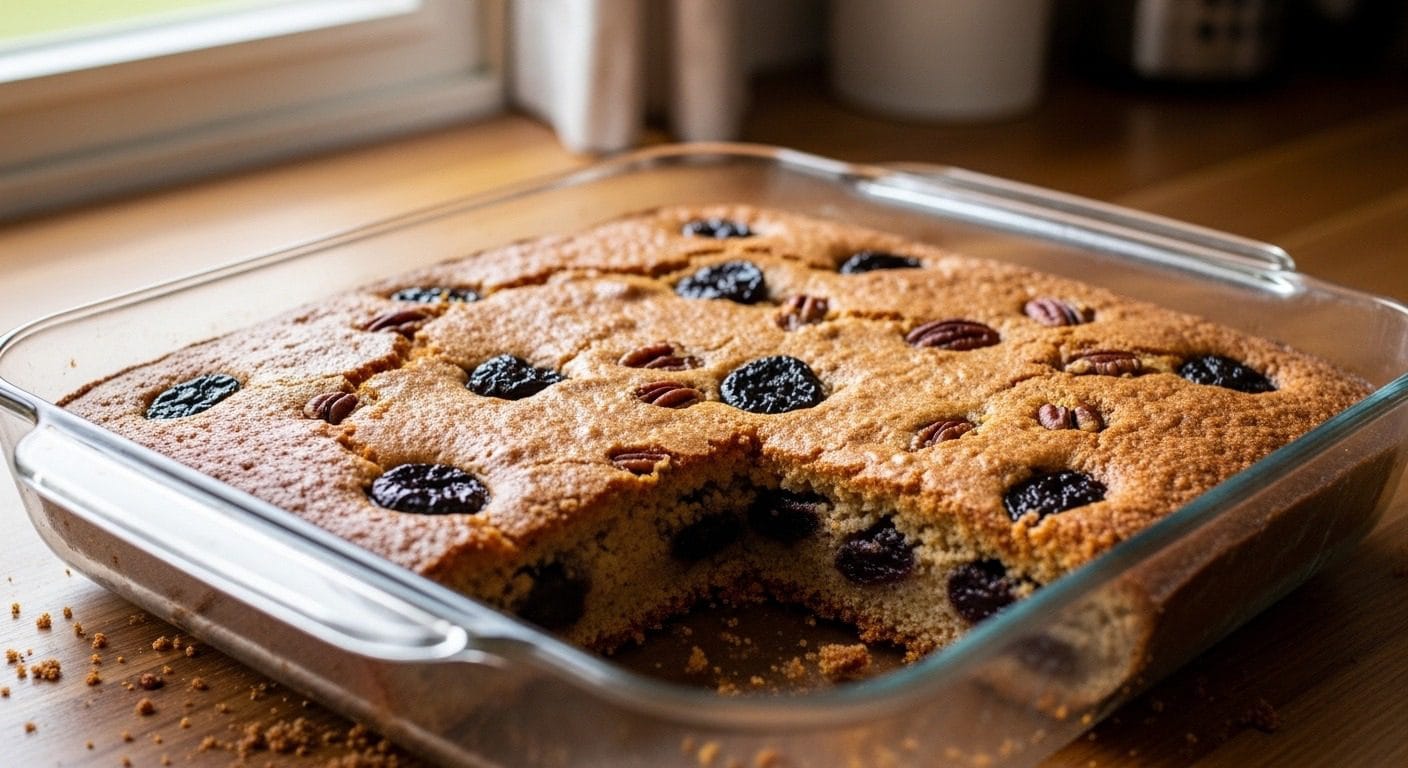
War Cake (Flour, Brown Sugar, Raisins) emerged during WWII when eggs, butter, and white sugar were rationed. Mix flour with brown sugar and raisins, add water to form batter, bake into dense spice cake without any eggs or butter.
The raisins provided moisture and sweetness that butter normally would. The brown sugar contained molasses that added richness and deeper flavor. The flour provided structure without eggs through gluten development from vigorous mixing.
This wasn’t great cake by peacetime standards, but it was real cake during wartime when that mattered tremendously. Women served it proudly at church socials and community events, demonstrating patriotic sacrifice while still providing dessert.
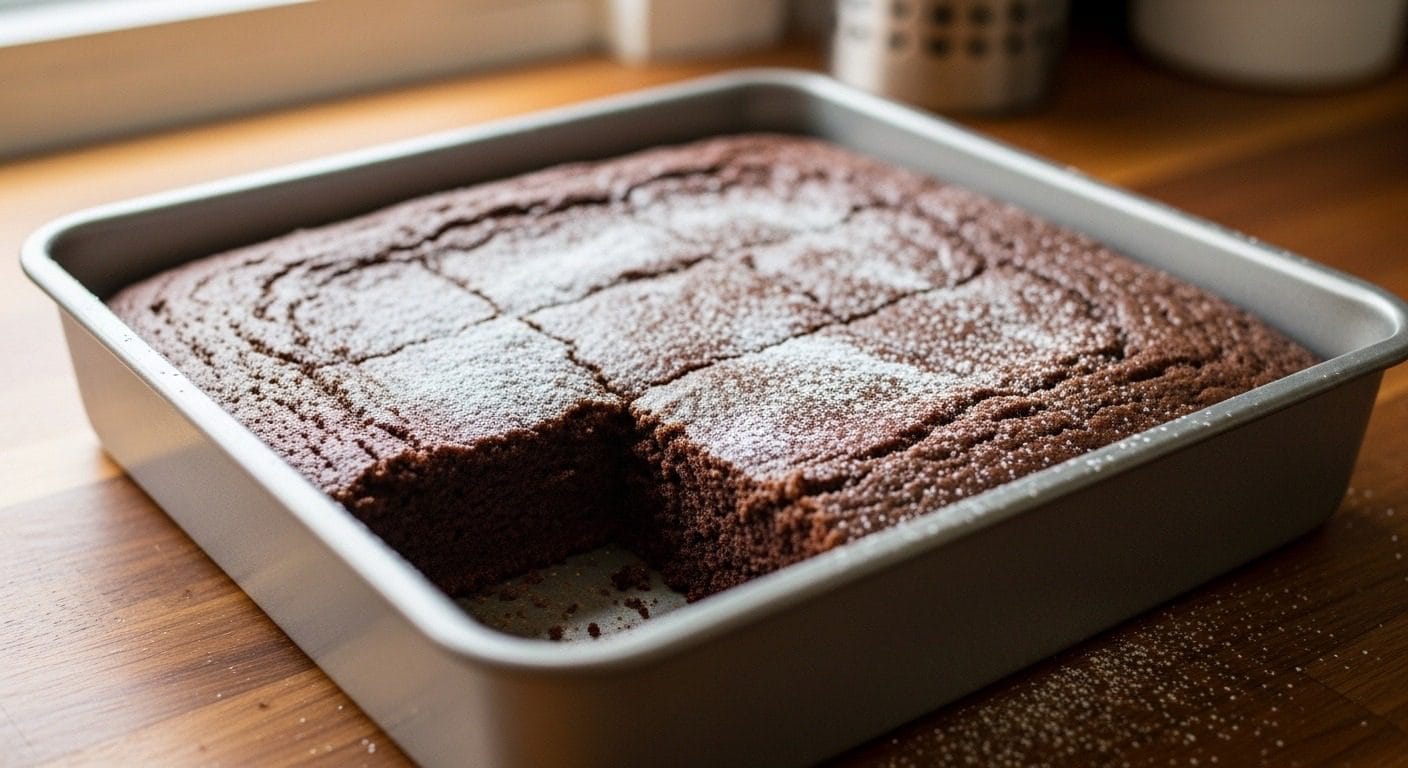
12. Eggless Brownies – Vinegar Chemistry
Eggless Brownies (Flour, Cocoa, Vinegar) used vinegar’s acidity to create lift and tenderness that eggs normally provided. Mix flour with cocoa powder and sugar, add vinegar and water, bake immediately while the acid creates bubbles through reaction with baking soda.
The vinegar reacted with baking soda (counted as part of flour measurement) to produce carbon dioxide that leavened the brownies. This chemical reaction replaced eggs’ leavening function while the cocoa provided chocolate flavor without expensive chocolate bars that were rationed or unavailable.
These brownies were denser and fudgier than modern versions made with eggs, but they satisfied chocolate cravings during rationing when real chocolate was nearly impossible to obtain for average families.
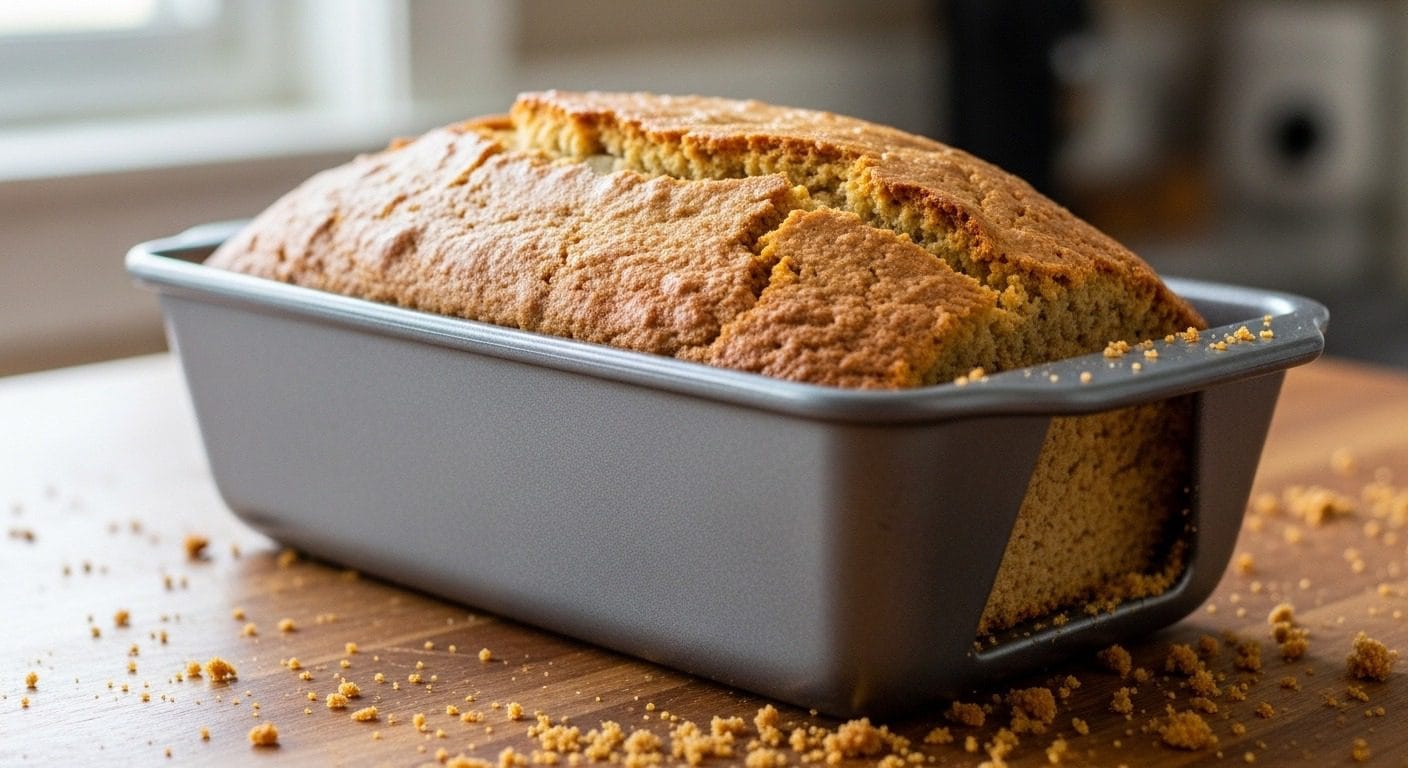
13. Depression Coffee Cake – Morning Simple
Depression Coffee Cake (Flour, Sugar, Coffee) used leftover morning coffee as the liquid ingredient instead of milk. Mix flour with sugar, add cold leftover coffee to form batter, bake into simple breakfast cake at 350°F for thirty minutes.
The coffee provided liquid and subtle flavor without requiring expensive milk. The sugar sweetened while helping create golden crust during baking. The flour provided structure through gluten formation. Together they created passable coffee cake for Sunday breakfast when butter and eggs weren’t available.
This wasn’t elaborate streusel-topped coffee cake with multiple layers—it was basic sweet bread you ate alongside coffee to make breakfast feel more substantial and special than just bread and coffee alone.
14. Cracker Pie – Mock Dessert
Cracker Pie Crust Dessert (Crackers, Butter, Sugar) crushed saltine crackers mixed with melted butter and sugar, pressed into pie pan, baked until golden at 350°F for fifteen minutes. This created “pie” without any filling—just sweetened crust.
The crackers provided starch and crunch. The butter bound everything together and added richness. The sugar caramelized during baking, creating sweet crust that could be eaten alone or topped with fruit if any was available.
This was Depression-era “pie” when actual pie with filling was impossible—just the crust, but the crust was honestly the best part anyway. Children loved it because it tasted like sweet crackers, which was essentially exactly what it was.
15. Cornmeal Johnnycakes – Southern Sweet
Cornmeal Johnnycakes with Syrup (Cornmeal, Milk, Molasses) were Southern pancake-style cakes made on a griddle. Mix cornmeal with milk to form batter, fry into cakes on hot griddle for three minutes per side, drizzle with molasses for serving.
These functioned as breakfast or dessert depending on context. Eaten hot with molasses drizzled over them, they satisfied sweet cravings adequately. The cornmeal was cheaper than wheat flour throughout the South, and molasses cost less than refined white sugar.
Farm families grew corn and made their own molasses from sorghum, so these johnnycakes cost almost nothing to produce when using homegrown ingredients. The same cornmeal tradition continues in classic cornbread recipes.
16. Hobo Cookies – No-Bake Travel
Hobo Cookies (Oats, Molasses, Raisins) referenced Depression-era wandering workers who carried shelf-stable ingredients. Mix oats with molasses and raisins, form into balls with hands, no baking required—ready to eat immediately.
The molasses acted as binder while providing intense sweetness. The oats provided texture and substance. The raisins added concentrated fruit sweetness and chewiness. Together they created no-bake cookies that traveled well in pockets or bags without refrigeration.
These weren’t fancy, but they were portable energy food that doubled as dessert. The name acknowledged their hobo heritage without shame—during the Depression, many respectable people became wandering workers seeking employment wherever they could find it.
17. Shoo-Fly Pie Filling – Pennsylvania Dutch
Shoo-Fly Pie Filling (Molasses, Brown Sugar, Flour) was Pennsylvania Dutch specialty that became popular nationwide during hard times. Mix molasses with brown sugar and flour, pour into pie crust, bake at 375°F until set.
The name came from needing to shoo flies away from the intensely sweet molasses filling while it cooled. The three ingredients created powerful sweetness that satisfied sugar cravings using cheap molasses instead of expensive refined sugar.
This pie divided into two camps—wet-bottom and dry-bottom depending on flour-to-molasses ratio. Both versions used only three ingredients in the filling, though they required separate pie crust made from different ingredients. More details appear in shoofly pie recipes.
18. Baked Rice Pudding – Comfort Classic
Baked Rice Pudding (Rice, Evaporated Milk, Sugar) exemplified 3 ingredient desserts with sweetened condensed milk principles using evaporated milk instead of condensed. Mix cooked rice with evaporated milk and sugar, bake slowly at 300°F for ninety minutes until creamy.
This pudding appeared at church suppers throughout the 1940s-50s because it used shelf-stable evaporated milk that every household kept on hand for coffee and cooking. The rice stretched the expensive milk, creating enough dessert for crowds from minimal ingredients.
The slow baking created creamy texture as rice released starch into the milk gradually. The sugar caramelized slightly on top during extended baking, creating sweet crust that contrasted with creamy interior.
19. Fried Apple Pies – Handheld Sweet
Fried Apple Pies (Biscuit Dough, Apples, Sugar) created portable desserts using basic biscuit dough. Roll dough thin, fill with cooked sugared apples, fold into half-moons, fry in hot oil until golden on both sides.
These appeared at country stores and roadside stands throughout the South as cheap handheld desserts. The frying created crispy crust that contained the sweet apple filling, making them completely portable unlike regular pies that required plates and forks.
The biscuit dough was simpler than traditional pie dough, requiring no chilling or special handling. One batch of dough and one apple made a dozen hand pies that cost under fifty cents total.
20. Egg White Candy – Snowball Confection
Egg White Candy (Beaten Egg Whites, Powdered Sugar, Nuts) created light fluffy candy from leftover egg whites after using yolks for other purposes. Beat whites until stiff peaks form, fold in powdered sugar and chopped nuts if available, drop by spoonfuls onto waxed paper, let dry overnight.
This candy required no cooking whatsoever—just beating and drying time. The egg whites provided structure through protein foam, the powdered sugar provided sweetness, the nuts added flavor and texture contrast when families could afford them.
These appeared at Christmas throughout the 1940s-50s, often shaped into balls and rolled in additional powdered sugar to look like festive snowballs for holiday tables.
Church Social & 1950s-60s Favorites
21. Angel Food Cake – Heavenly Three
Angel Food Cake (Egg Whites, Sugar, Flour) represented the pinnacle of three-ingredient baking despite requiring a dozen egg whites. Beat egg whites until stiff, fold in sugar and flour alternately, bake in tube pan at 350°F for forty minutes.
This wasn’t poverty food—it was celebration cake that happened to use only three ingredients. The egg whites provided all structure and leavening through massive air incorporation. The result was cloud-like cake that seemed to defy gravity with its lightness.
Church ladies made these for weddings, anniversaries, and special occasions throughout the 1950s-60s. One cake required twelve egg whites, which meant using the yolks for custard or mayonnaise to avoid waste—nothing was thrown away during this era.
22. Ice Box Cookies – Make-Ahead Magic
Ice Box Cookies (Flour, Brown Sugar, Butter) were 1950s convenience breakthrough. Mix dough, form into log, refrigerate until firm, slice thin, bake at 350°F for ten minutes.
The make-ahead aspect revolutionized home baking for busy families. Women could prepare dough days in advance, then slice and bake fresh cookies whenever needed without mixing anything. The brown sugar provided rich molasses flavor while the high butter content created crispy edges and tender centers.
These became church social staples because bakers could make multiple logs, freeze them, and have cookie dough ready for months whenever needed. Similar make-ahead thinking appears in dinner rolls that could be prepared in advance.
23. Skillet Cornbread Cake – Southern Sweet
Skillet Cornbread Cake (Cornmeal, Sugar, Buttermilk) was Southern dessert cornbread sweeter than regular cornbread but not quite cake. Mix cornmeal with generous sugar and buttermilk, pour into hot buttered cast iron skillet, bake at 425°F for twenty minutes until golden.
This was something in between cornbread and cake that Southerners ate with butter melting on top for dessert. The buttermilk’s acidity reacted with the cornmeal’s natural alkalinity, creating tender crumb with tangy undertones that balanced the sweetness.
The cast iron skillet created distinctively crispy crust on the bottom and edges while keeping the interior moist and tender—a texture impossible to achieve in regular baking pans.
24. Funeral Pie – Raisin Tradition
Funeral Pie (Raisins, Sugar, Vinegar) got its morbid name from appearing at Pennsylvania Dutch funeral gatherings where it needed to keep well without refrigeration. Simmer raisins with sugar and vinegar until thick, pour into pie crust, bake at 350°F until set.
The vinegar brightened the raisins’ sweetness while helping create gel-like consistency through pectin interaction. This pie kept well at room temperature for days—essential for multi-day funeral gatherings when refrigeration was limited or nonexistent.
The three-ingredient filling cost almost nothing since raisins were dried fruit that kept indefinitely in the pantry. One cup of raisins made filling for two pies that fed twelve people for under thirty cents total.
25. Haystack Cookies – Crunchy No-Bake
Haystack Cookies (Chow Mein Noodles, Butterscotch Chips, Peanuts) represented 1960s creativity with convenience ingredients, qualifying as modern version of 3 ingredient desserts with sweetened condensed milk no bake using different components. Melt butterscotch chips, stir in crunchy noodles and peanuts, drop by spoonfuls onto waxed paper, let set.
These became youth group favorites because teenagers could make them without adult supervision or oven access. No baking, no cooking beyond melting chips in double boiler, instant gratification when the chocolate hardened.
The crunchy chow mein noodles provided unexpected textural interest while the butterscotch and peanuts provided sweet-salty flavor combination that everyone loved. They looked impressive piled high resembling haystacks. Similar no-bake treats include no-bake chocolate cookies.
26. Penuche Fudge – Brown Sugar Rich
Penuche Fudge (Brown Sugar, Butter, Cream) was Mexican-inspired fudge made with brown sugar instead of white for deeper molasses flavor. Boil ingredients together to soft-ball stage (235°F), beat vigorously until thick and creamy, pour into buttered pan, cut into squares when firm.
The brown sugar created distinctive caramel flavor completely different from regular chocolate fudge. The butter added crucial richness while the cream provided moisture that kept the fudge from being grainy and crystalline.
This fudge appeared at Christmas throughout the Southwest during the 1940s-50s and became popular nationwide as regional recipes spread through women’s magazines and church cookbooks.
27. Scripture Cake – Biblical Baking
Scripture Cake (Flour, Honey, Figs) referenced Bible verses for each ingredient—a Sunday School teaching tool disguised as dessert. Mix flour with honey as sweetener and chopped figs for fruit, bake at 325°F into dense fruit cake.
The honey provided sweetness and moisture without refined sugar—sweeteners mentioned in biblical times. The figs added chewy texture and concentrated natural sweetness. The flour provided structure for this simple interpretation of ancient fruit cake.
Church ladies made these for Sunday School parties, requiring children to look up Bible verses listing each ingredient as educational activity. Similar honey-sweetened treats appear in honey cake recipes.
28. Ambrosia Salad – Southern Classic
Ambrosia Salad Dessert (Oranges, Coconut, Marshmallows) was Southern church social institution served as dessert salad. Segment oranges, mix with shredded coconut and mini marshmallows, chill for two hours, serve cold.
This qualified as 3 ingredient desserts with sweetened condensed milk no bake when some versions added condensed milk for extra creaminess, though the basic version needed only three ingredients. The oranges provided bright citrus acidity, the coconut added tropical flavor and texture, the marshmallows added sweetness and soft pillowy texture.
Every church potluck throughout the South featured multiple versions of ambrosia from different families. The dish required no cooking, stayed fresh for days refrigerated, and pleased every age group from children to elderly.
29. Lemon Fluff – Citrus Cloud
Lemon Fluff (Lemon Juice, Condensed Milk, Graham Crackers) exemplified perfect 3 ingredient desserts with sweetened condensed milk and 3 ingredient desserts with sweetened condensed milk no bake principles simultaneously. Mix fresh lemon juice with sweetened condensed milk until thick through acid coagulation, layer with crushed graham crackers in dish, chill for four hours until set.
The acid in lemon juice thickened the condensed milk through protein coagulation—identical chemistry to making cheese but creating dessert instead. No cooking required, just chemical reaction. The graham crackers provided crunchy crust and texture contrast to the creamy lemon filling.
This became 1950s-60s standard at church socials because it looked impressive, tasted fresh and light, required zero baking, and cost under a dollar to make enough for twelve people.
30. Hoosier Sugar Cream Pie – Indiana Treasure
Hoosier Sugar Cream Pie (Cream, Sugar, Nutmeg) was Indiana state specialty that remained intensely regional. Mix heavy cream with sugar and nutmeg, pour into unbaked pie shell, bake at 350°F for forty-five minutes until set and golden.
This pie contained no eggs, no flour, no thickeners—just three ingredients that magically set during baking as proteins in the cream coagulated from heat. The nutmeg provided the only flavoring beyond pure sweet cream, creating elegant simplicity.
Hoosier farm families made this weekly because cream was abundant from dairy cows even during Depression. The rich cream flavor needed no embellishment beyond nutmeg’s warmth and subtle spice notes.
You can explore more Depression-era cooking traditions on the Vintage Life of USA YouTube channel documenting historical American foodways and survival cooking techniques.
Why Three Ingredients Became The Maximum
Economic Necessity
During the Depression, unemployment reached 25% and most families had almost no cash income. Every ingredient cost money that wasn’t available. Three-ingredient desserts weren’t minimalist lifestyle choices—they were survival strategies born from genuine poverty.
Grandmothers calculated ingredient costs to the penny. If a recipe required five ingredients at ten cents each, that fifty-cent dessert was completely unaffordable. But three ingredients at ten cents each meant thirty cents total—still expensive but possible for special occasions like birthdays or holidays.
Pantry Limitations
Depression-era pantries held dramatically fewer items than modern ones. Most families kept only flour, sugar, eggs, butter, milk, salt, and vanilla—seven ingredients total for all cooking and baking combined.
Creating desserts from only three of those seven ingredients meant you could make treats without shopping trips that required transportation many families couldn’t afford. This same limited-pantry cooking influenced depression-era main dishes across all categories.
Skill Accessibility
Three-ingredient recipes required minimal technique, making them accessible to novice bakers with no training. When you’re working with only three components, there’s dramatically less that can go wrong during preparation.
Complex recipes with eight or ten ingredients required experience to balance flavors and textures properly. Simple recipes allowed mistakes without ruining final results—if meringues didn’t stiffen perfectly, they were still edible sweet treats.
3 Ingredient Desserts With Sweetened Condensed Milk: The Game Changer
Why Condensed Milk Dominated Depression Baking
3 ingredient desserts with sweetened condensed milk became an entire category because this miraculous ingredient provided sweetness, richness, dairy, and liquid simultaneously. One can replaced sugar, cream, and milk in recipes, reducing ingredient counts dramatically while creating desserts that tasted expensive.
Sweetened condensed milk kept indefinitely without refrigeration—absolutely crucial when many homes lacked reliable iceboxes during 1930s-40s. Families could buy a case when prices dropped and store cans for months or even years, always having dessert capability regardless of fresh ingredient availability.
The No-Bake Advantage
Many 3 ingredient desserts with sweetened condensed milk no bake emerged because condensed milk was already cooked during canning process. It could be consumed safely straight from the can, enabling desserts that required zero heating or fuel expenditure.
Mix condensed milk with lemon juice and acid makes it thicken into pudding through protein coagulation—no cooking needed. Mix with cocoa powder for instant chocolate sauce. Mix with vanilla and freeze for ice cream base. Each manipulation created entirely different desserts from identical starting ingredient.
Economic Efficiency
One can cost fifteen cents but made eight servings—less than two cents per serving. This was dramatically cheaper than any dessert alternative except snow ice cream where snow was literally free.
The complete lack of spoilage meant zero waste—fresh cream soured within days without refrigeration, but condensed milk lasted indefinitely sealed. This economic advantage made it absolutely central to poverty cooking throughout Depression-era America.
Modern Applications
Allergen-Friendly Options
Many three-ingredient desserts naturally accommodate modern food allergies. Meringues contain no gluten or dairy. Snow ice cream can use coconut milk instead of dairy. Baked apples are naturally vegan with sugar substitute.
This accidental allergy-friendliness makes vintage recipes newly valuable for people navigating dietary restrictions who find modern recipes exclude them with twelve-ingredient lists containing multiple allergens.
Minimalist Lifestyle Appeal
Modern minimalism movements embrace limited-ingredient cooking philosophically rather than economically. These tested historical formulas provide proven techniques that minimalists can adopt without risky experimentation.
The recipes demonstrate conclusively that satisfaction doesn’t require abundance—three thoughtfully chosen ingredients create genuine pleasure when combined skillfully.
Emergency Dessert Solutions
When surprise guests arrive or school bake sales are forgotten, three-ingredient desserts save situations. Most use pantry staples already on hand and take under thirty minutes total time.
Boiled cookies take five minutes. Baked custard takes ten minutes to mix plus forty to bake. Butter cookies take twenty minutes total. Each provides respectable homemade dessert without shopping trips or elaborate preparation.
Frequently Asked Questions
What are 3 ingredient desserts with sweetened condensed milk?
These are simple desserts using sweetened condensed milk as one of three total ingredients. Examples include snow ice cream (condensed milk, snow, vanilla), lemon fluff (condensed milk, lemon juice, graham crackers), and various puddings where the condensed milk provides sweetness, richness, and liquid simultaneously.
How do you make 3 ingredient desserts with sweetened condensed milk no bake?
Mix condensed milk with acidic ingredient like lemon juice—the acid makes it thicken without cooking. Layer with graham crackers or cookies. Chill for several hours. The chemical reaction between acid and milk proteins creates thick custard-like texture without any baking required.
Are three-ingredient desserts actually good?
Yes, genuinely good. The limitation forced bakers to master technique rather than relying on multiple ingredients. Simple recipes often showcase individual ingredient quality better than complex ones where flavors compete for attention.
Why vanilla doesn’t count as fourth ingredient?
In vintage recipe terminology, extracts and salt were classified as “seasonings” rather than ingredients, allowing three-ingredient claims while still using flavor enhancers. Modern recipes follow different counting conventions.
Can I substitute ingredients in three-ingredient recipes?
Some substitutions work, others don’t. These recipes succeed because three specific ingredients balance perfectly through tested ratios. Changing one often requires adjusting others or results don’t turn out properly.
Will these recipes work with modern ingredients?
Absolutely. The chemistry and techniques work identically with modern ingredients. Some vintage ingredient names changed but the actual products remain essentially the same for baking purposes.
Conclusion
These thirty cheap three-ingredient desserts that American seniors made when money was tight prove that genuine satisfaction requires neither abundance nor complexity, demonstrating that 3 ingredient desserts with sweetened condensed milk and 3 ingredient desserts with sweetened condensed milk no bake recipes represent practical wisdom worth preserving because they transform minimal carefully chosen components into real pleasure through
Understanding chemistry and technique rather than relying on expensive specialty ingredients that most people can’t afford during economic hardship, showing that limitation breeds creativity as Depression-era bakers created meringues from egg whites, snow ice cream from free winter precipitation, and countless variations using pantry staples that delivered genuine sweetness when money for traditional elaborate desserts simply didn’t exist for millions of American families surviving the worst economic crisis in our nation’s history.