Homemade Cinnamon Candy: Old-Fashioned Recipe & 5 Variations
Homemade Cinnamon Candy: Old-Fashioned Recipe & 5 Variations
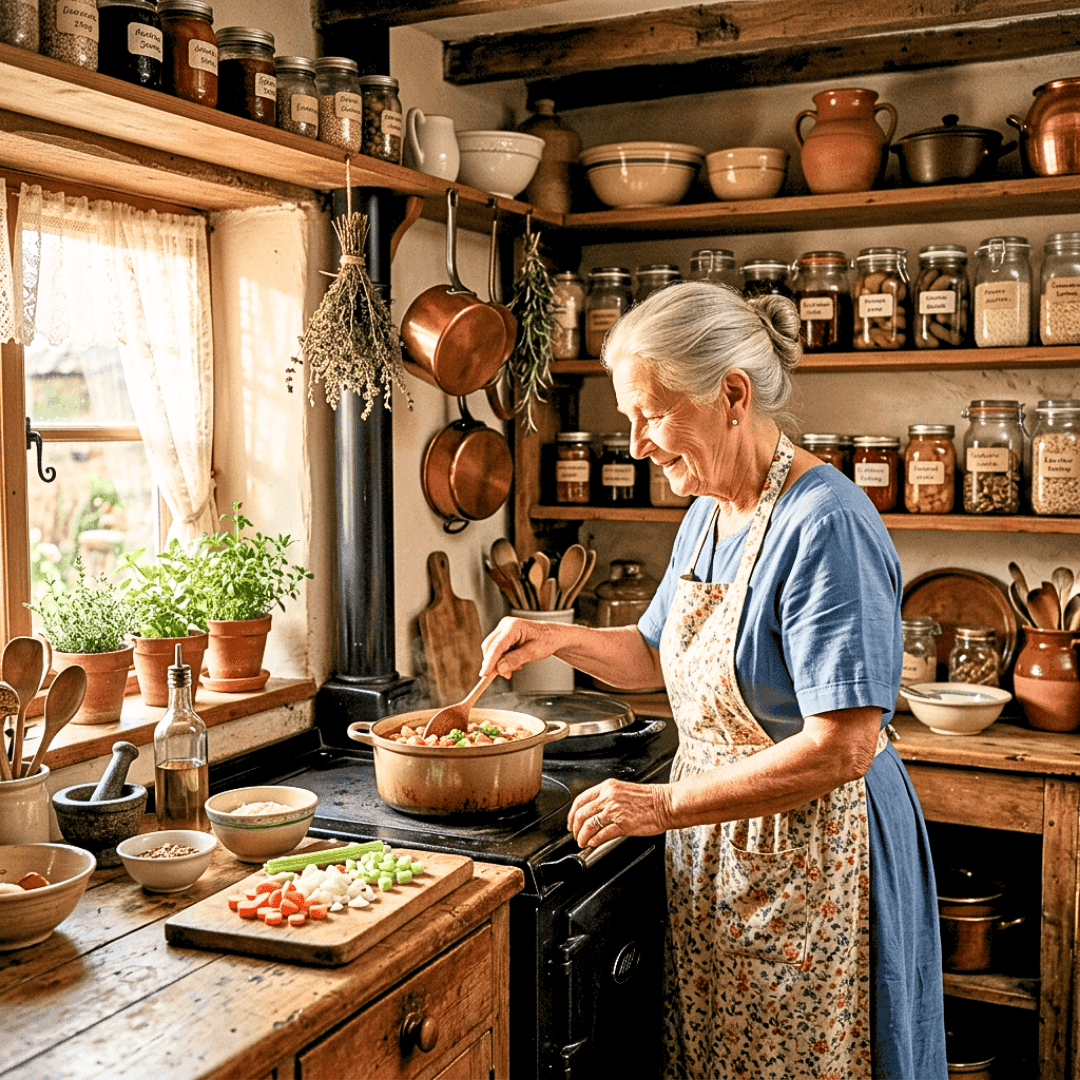
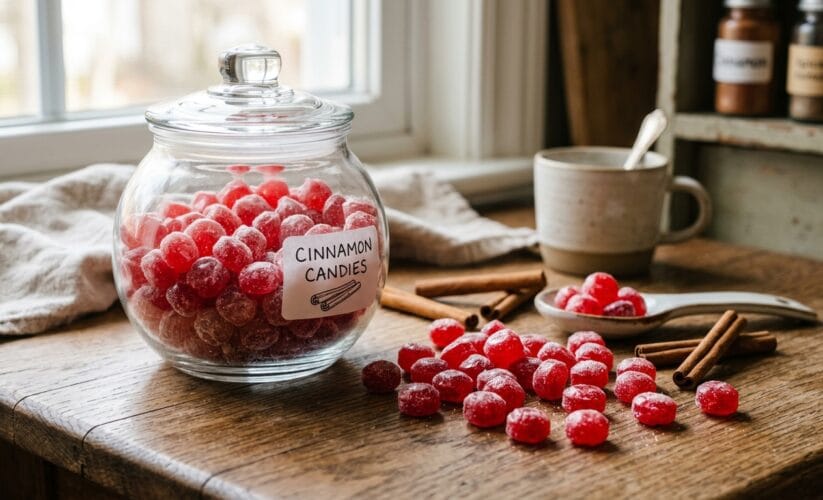
Few things in American candy-making carry the kind of immediate, sensory nostalgia that cinnamon candy does. The moment you crack open a jar of that deep red, glass-like candy, the sharp, warming rush of cinnamon fills the room before you even take a piece. It is the smell of country general stores and holiday tins and grandmother’s kitchen during December — a smell that stops people in their tracks and sends them straight back to childhood.
Cinnamon candy has been a staple of American homemade confection for well over a century. It is the kind of candy that people gave as gifts before gift cards existed, packaged in mason jars with a ribbon tied around the lid, loaded into Christmas tins alongside fudge and peanut brittle, and set out in glass dishes at holiday gatherings where children and grandparents both reached for it equally. Learning to make cinnamon candy at home is one of those kitchen skills that feels like a small act of cultural preservation — and the finished result tastes so much better than anything sold in a plastic bag that once you make it once, you will make it every single year.
This guide covers the complete history of cinnamon candy, a fully tested recipe with step-by-step instructions, five variations worth exploring, and every tip you need to succeed on your first batch.
The History of Cinnamon Candy in America
Cinnamon candy did not begin as a brand. It began as a home kitchen project. Hard candy made from boiled sugar syrup flavored with spice oils was a common pantry-crafted treat across American households from the mid-1800s onward. Cinnamon oil — derived from cassia bark, the same species responsible for the cinnamon in your spice cabinet — was available at apothecaries and later at general stores in small glass vials, purchased specifically for candy-making.
The distinctively red, fire-hot cinnamon candy most Americans know as “Red Hots” was formalized commercially by the Ferrara Candy Company in the 1930s, but the home recipe existed long before that. Church cookbooks, community recipe collections, and handwritten family recipe cards from the early twentieth century are full of cinnamon candy recipes using the same four core ingredients that still work perfectly today: sugar, corn syrup, water, and cinnamon oil.
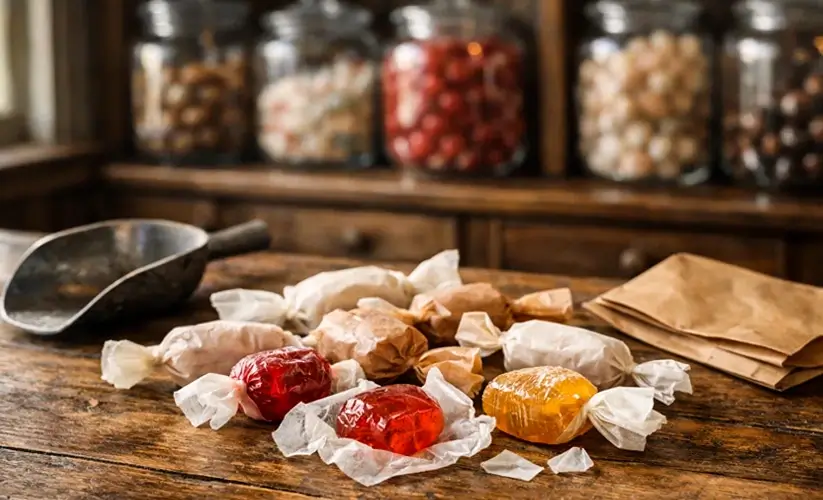
The candy thrived for decades as part of the old-fashioned penny candy tradition that shaped American childhood from the 1880s through the 1960s. For a full history of that tradition — and the dozens of specific candies that have all but disappeared from American culture — the Old-Fashioned Penny Candy collection at Nostalgic Eats documents these treats in remarkable detail. And if you have ever wondered what specifically happened to the corner store candy culture that once defined American childhood, the Nostalgic Eats article on whatever happened to penny candy tells that story with the kind of specificity and warmth it deserves.
What Makes Cinnamon Candy Different From Other Hard Candy
Most hard candy is flavored with fruit extracts or essential oils — cherry, grape, lemon, peppermint. Cinnamon candy is different because the compound responsible for its flavor, cinnamaldehyde, produces a genuine warming sensation on the tongue and throat that no other common candy flavor replicates. This is what people describe as the “heat” in cinnamon candy — it is not sweetness, not sourness, but a warm, slightly spicy sensation that lingers for minutes after the candy dissolves.
According to the U.S. National Library of Medicine, cinnamaldehyde activates the same thermal receptors in the mouth that respond to actual heat, which is why a piece of cinnamon candy can feel warming without actually raising your temperature. This property is what makes cinnamon candy uniquely satisfying and what keeps people reaching for another piece even when they know they should stop.
This is also why cinnamon oil — not extract, not ground cinnamon — is essential in any proper cinnamon candy recipe. Cinnamon extract is too mild and will mostly cook off before the candy hardens. Ground cinnamon gives a gritty texture and muddy color. Only cinnamon oil — the pure, concentrated essential oil available in the baking section of craft stores and online — delivers the intensity and heat that define genuine cinnamon candy.
The Classic Homemade Cinnamon Candy Recipe
This recipe produces approximately two pounds of brilliant red, intensely flavored cinnamon candy — enough to fill two mason jars for gifting, with plenty to keep for yourself.
Ingredients
- 2 cups granulated white sugar
- 2/3 cup light corn syrup
- 3/4 cup water
- 1 teaspoon cinnamon oil (food-grade — available at craft stores or online)
- Red food coloring — 10 to 15 drops, or to desired depth of color
- Powdered sugar — for dusting finished candy
Equipment You Will Need
- Candy thermometer — not optional for this recipe
- Heavy-bottomed medium saucepan
- 15x10x1 inch rimmed baking sheet (jelly roll pan)
- Parchment paper
- Wooden spoon or heat-safe silicone spatula
- Kitchen mallet or heavy knife for breaking
- Airtight glass jars or containers for storage
Not Sure What to Cook Today?
Open your fridge, pick a few ingredients… and turn them into a real recipe in seconds.
No guessing. No waste. Just simple, nostalgic meals.Step-by-Step Method
Step 1 — Prepare the Pan Grease the baking sheet generously with butter or cooking spray. Line with parchment paper and grease the parchment paper as well, all the way to the edges. Any gap between the pan and the paper where molten candy can seep will harden into a mess. Set the prepared pan aside on a flat, heat-safe surface close to your stove. Have your cinnamon oil, food coloring, and a long-handled wooden spoon ready before you begin heating the sugar.
Step 2 — Combine and Heat Add the sugar, corn syrup, and water to the heavy saucepan. Stir until combined. Place over medium heat, stirring occasionally until the mixture comes to a boil. Once boiling, cover the pan for exactly three minutes — the steam dissolves any sugar crystals clinging to the sides, which prevents the finished cinnamon candy from becoming grainy.
Step 3 — Cook to Hard Crack Uncover the pan and clip your candy thermometer to the side with the bulb submerged in the syrup but not touching the bottom. Increase heat to medium-high and cook without stirring until the thermometer reads 300°F — the hard crack stage. This takes approximately 25 to 35 minutes and requires patience. Do not rush it by turning the heat too high. The mixture will foam, bubble, and slowly turn from cloudy to perfectly clear as the water evaporates.
Step 4 — Add Cinnamon Oil — With Caution This is the most important moment in the entire cinnamon candy process. When the thermometer reaches exactly 300°F, remove the pan from heat immediately. Step back, lean away from the pan, and open windows or turn on an exhaust fan. Pour in the cinnamon oil and the food coloring. The oil hits the molten sugar and immediately releases a powerful surge of concentrated cinnamon fumes that can be overwhelming if inhaled directly. Stir quickly but carefully from a distance until fully incorporated — about 15 seconds.
Step 5 — Pour and Cool Pour the candy mixture onto the prepared baking sheet in one steady motion. It will spread naturally — do not try to guide it too much. Let it cool completely at room temperature for a minimum of four hours. Do not refrigerate — cold temperatures can cause condensation that makes the candy sticky.
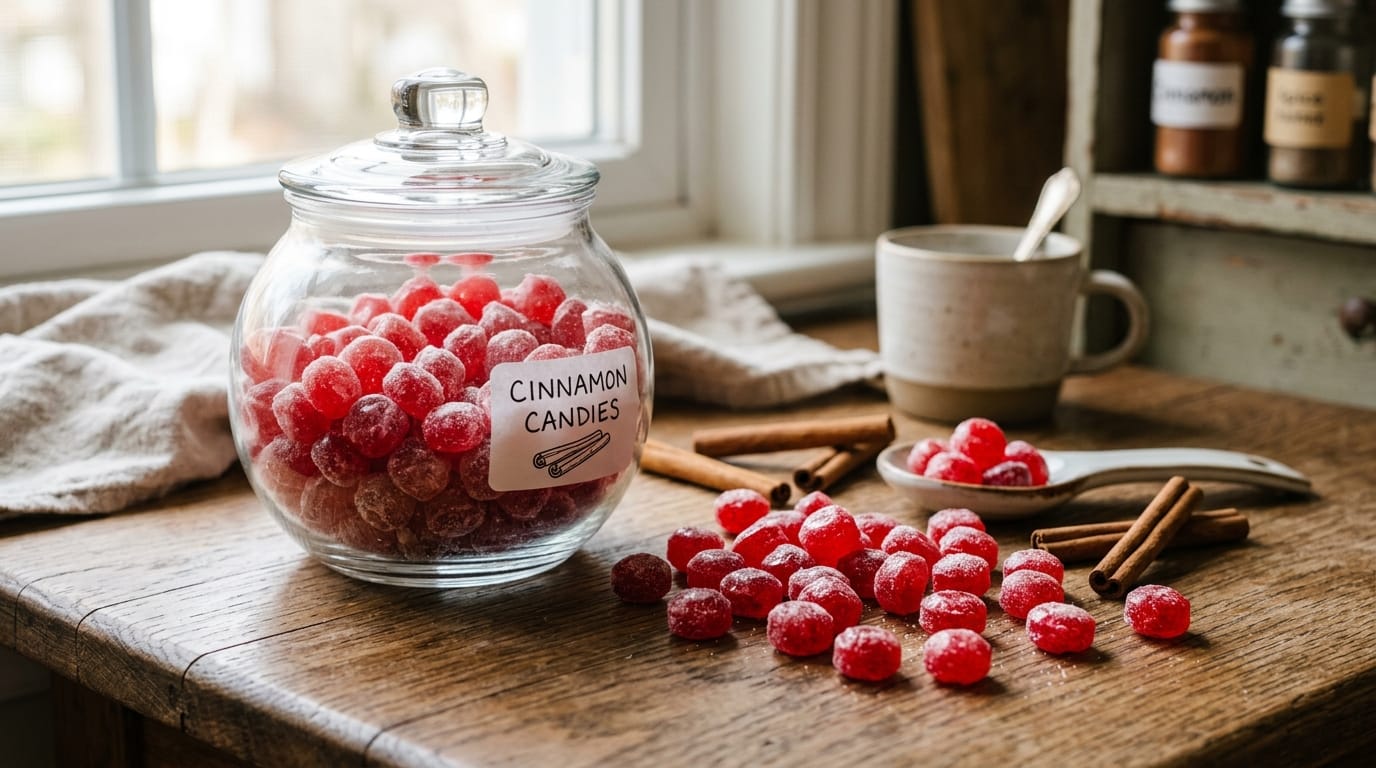
Step 6 — Break and Dust Once fully hardened, dust the surface generously with powdered sugar. Flip the candy sheet onto a large cutting board, peel away the parchment, and use a sharp knife tip or kitchen mallet to break it into irregular pieces of whatever size you prefer. Transfer to a bowl, add more powdered sugar, toss to coat all surfaces, and store in an airtight glass container at room temperature for up to one month.
5 Cinnamon Candy Variations Worth Making
1. Extra-Hot Cinnamon Candy
For those who want genuine fire, increase the cinnamon oil to one and a half or even two teaspoons. Ventilation becomes even more important at this level. The result is a cinnamon candy that produces genuine warmth in the throat — not painful, but unmistakably bold and exactly what old-time red hot candy fans expect.
2. Cinnamon Apple Candy
Replace two tablespoons of the water with pure apple juice concentrate. Add one teaspoon of cinnamon oil and a few drops of orange food coloring instead of red. The result is a cinnamon candy with a fruity, apple-orchard warmth that works beautifully as an autumn treat — perfect alongside the Pies & Cobblers collection at Nostalgic Eats for a complete harvest dessert table.
3. Cinnamon Honey Candy
Replace half a cup of the corn syrup with an equal measure of pure, mild honey. The honey adds a floral, warm undertone beneath the cinnamon heat and produces a cinnamon candy with slightly more amber color and a more complex flavor profile. Use clover honey — strongly flavored honeys like buckwheat will overpower the cinnamon.
4. Cinnamon Candy Lollipops
Pour the finished cinnamon candy mixture into silicone lollipop molds instead of the baking sheet. Insert lollipop sticks and let harden completely. These make extraordinary edible gifts for children and adults alike and take less time to harden than the sheet method since the portions are smaller. Wrap each finished lollipop in clear cellophane and tie with a ribbon.
5. Cinnamon Candy Bark
After pouring the cinnamon candy onto the prepared sheet, immediately scatter a thin layer of crushed peppermint candy, mini white chocolate chips, or finely chopped pecans across the surface before it hardens. The contrast between the spicy cinnamon candy base and the sweet or nutty topping produces something genuinely sophisticated. This variation makes a particularly beautiful holiday gift alongside other handmade sweets.
Packaging and Gift Ideas for Homemade Cinnamon Candy
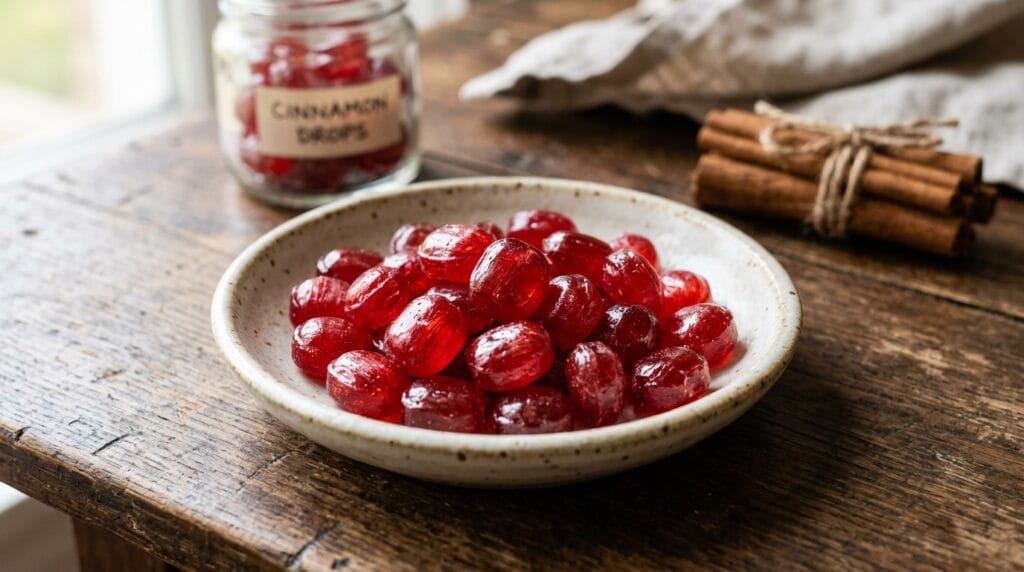
Cinnamon candy is one of the most giftable homemade treats in American culinary tradition, and part of what has kept it alive through generations is how beautifully it presents. Bright red pieces of candy dusted in white powdered sugar look like festive jewels in a glass jar. Here are the best ways to package and present homemade cinnamon candy:
Glass Mason Jars: Fill half-pint or pint mason jars with cinnamon candy pieces, top with a parchment paper circle held by the lid ring, and tie a ribbon around the neck. This is the most classic and beloved presentation for this candy.
Not Sure What to Cook Today?
Open your fridge, pick a few ingredients… and turn them into a real recipe in seconds.
No guessing. No waste. Just simple, nostalgic meals.Vintage Tins: Cinnamon candy alongside old-fashioned homemade brownies and a selection of classic baked desserts makes a genuinely wonderful holiday gift tin in the tradition of American home baking.
Holiday Cookie Tins: Pair cinnamon candy pieces with cookies and bars from the Nostalgic Eats collection for a layered gift tin that covers every sweet craving. The contrast of textures — crisp hard candy alongside soft cookies — is part of what makes these tins so satisfying.
Budget Gift Idea: If you are making holiday gifts for a large group on a tight budget, homemade cinnamon candy is one of the most economical options available. A single batch costs approximately three to four dollars in ingredients and fills two to three gift jars. For more budget-conscious homemade food gifts, the 3-ingredient desserts collection at Nostalgic Eats and the dump and bake church potluck desserts archive are both filled with inexpensive, crowd-pleasing options that pair beautifully with cinnamon candy in a holiday tin.
Troubleshooting Common Cinnamon Candy Problems
Candy Did Not Harden Properly
The mixture did not reach 300°F. This is almost always the cause of soft, sticky cinnamon candy. A candy thermometer is not optional in this recipe — the difference between 275°F (soft crack) and 300°F (hard crack) is the difference between taffy and hard candy. If you do not have a thermometer, purchase one before attempting this recipe.
Candy Turned Grainy or Crystallized
Sugar crystallization happens when undissolved sugar crystals on the side of the pan fall back into the syrup during cooking. The three-minute covered boil at the beginning prevents this by washing the crystals down with steam. If crystallization still occurs, it can also be triggered by stirring during the hard crack cooking phase — do not stir once the thermometer is in the pan.
Candy Is Sticky After Cooling
Either the candy did not fully reach 300°F, or it was exposed to humidity during cooling. Hard candy is hygroscopic — it absorbs moisture from the air. Store it in an airtight container and keep it away from steam. In very humid climates, a desiccant packet in the storage jar extends the shelf life significantly.
Cinnamon Flavor Is Too Mild
Cinnamon oil brands vary significantly in concentration. Start with the stated amount, taste the cooled candy, and increase by half a teaspoon in the next batch if you want stronger heat. Some experienced cinnamon candy makers use two full teaspoons for maximum intensity.
More Old-Fashioned Sweet Treats to Make Alongside Cinnamon Candy
Cinnamon candy is best made in a session alongside other classic American homemade sweets. The full Desserts & Cakes collection at Nostalgic Eats covers the complete range of old-fashioned American confections worth preserving. And when you want to go beyond candy into the world of budget-stretching vintage baking that American grandmothers mastered during lean decades, the poor man’s cake made with raisins represents exactly the kind of resourceful, deeply satisfying baking that belongs alongside a jar of cinnamon candy on any holiday table.
For a fun inspiration session before your next baking or candy-making day, the free Recipe Maker from Ingredients tool at Nostalgic Eats helps you find the perfect classic recipe based on whatever pantry staples you currently have on hand.
Frequently Asked Questions
Can I use cinnamon extract instead of cinnamon oil for cinnamon candy?
No. Cinnamon extract is water-based and does not survive the high heat required to make cinnamon candy. By the time the sugar reaches 300°F, the extract’s flavor will have almost entirely cooked away. Cinnamon oil is oil-based and withstands the temperature. It is also far more concentrated — one teaspoon of cinnamon oil delivers the flavoring power of several tablespoons of extract.
Where can I buy cinnamon oil for making cinnamon candy?
Look in the candy-making section of craft stores like Michaels or Hobby Lobby, or in the baking aisle of specialty grocery stores. If unavailable locally, it is widely sold online — search for food-grade cinnamon oil or LorAnn cinnamon flavoring oil, which is one of the most trusted and widely used brands among home candy makers.
How long does homemade cinnamon candy last?
Stored in an airtight container at room temperature in a cool, dry place, cinnamon candy lasts up to one month without losing flavor or texture. Exposure to humidity is the primary enemy — it causes the candy to become sticky and eventually dissolve. Glass jars seal more reliably than plastic bags.
Can I make cinnamon candy without a candy thermometer?
It is strongly not recommended. The difference of even ten degrees at the high end of candy temperatures dramatically changes the final texture. Guessing at the hard crack stage by the cold water test is possible but significantly less reliable than a thermometer. A candy thermometer costs three to eight dollars and is an essential tool for any cinnamon candy recipe.
Is cinnamon candy safe for children?
The candy itself is safe, but the concentrated cinnamon oil fumes during preparation are not suitable for children to be near. Keep children out of the kitchen during the oil-adding step. Once the candy has cooled and hardened, it is a normal hard candy suitable for children old enough to safely eat hard candy without choking risk.
Can I make cinnamon candy in different colors?
Yes. While red is traditional and most closely associated with the hot cinnamon candy aesthetic, you can use any food coloring you like. Orange works beautifully for an autumn harvest presentation, and gold or clear (no coloring) makes an elegant, minimal-looking cinnamon candy that surprises people who expect the red. The flavor is identical regardless of color.
Not Sure What to Cook Today?
Open your fridge, pick a few ingredients… and turn them into a real recipe in seconds.
No guessing. No waste. Just simple, nostalgic meals.Conclusion
Homemade cinnamon candy is one of the most rewarding confection projects an American home kitchen can produce. Four simple ingredients, a single heavy saucepan, a candy thermometer, and two hours of your time produce something that looks beautiful, tastes genuinely extraordinary, and connects directly to a candy-making tradition that has been part of American home kitchens for well over a century.
Make the classic version first and get comfortable with the technique. Then try the variations — extra-hot, cinnamon apple, honey-cinnamon, lollipops — and find the version that becomes your own annual tradition. Package it in glass jars, pair it with homemade brownies and cookies, and put together the kind of old-fashioned holiday tin that no store-bought gift can replicate.
For more classic American homemade sweets, vintage candy history, and tested old-fashioned recipes across every category, explore the full collection at Nostalgic Eats — where every recipe comes from the same homemade kitchen tradition that produced cinnamon candy in the first place.