Does Brownie Mix Have Dairy? Complete Allergy Safety Guide for Home Bakers
Does Brownie Mix Have Dairy? Complete Allergy Safety Guide for Home Bakers
If you or someone in your family has a dairy allergy or lactose intolerance, the question “does brownie mix have dairy?” is not just casual curiosity — it is a genuine health and safety concern. When you are selecting food products for people with dietary restrictions, reading labels and understanding ingredient sourcing becomes essential. The answer to whether brownie mix contains dairy is more nuanced than a simple yes or no, and it varies significantly depending on which brand and variety you choose. This guide will help you navigate the confusing world of brownie mix labels, understand the risks of cross-contamination, and discover safe alternatives that everyone can enjoy.
Understanding the Dairy Question: Why It Matters
Before we dive into specific products, let us establish why the question “does brownie mix have dairy” is so important. Dairy allergies and lactose intolerance affect millions of Americans. A dairy allergy is an immune response to proteins found in milk (primarily casein and whey), while lactose intolerance is the inability to digest lactose, the natural sugar in milk. Both conditions can cause significant discomfort and in severe cases, allergic reactions. When you are making brownies for someone with these conditions, you need accurate, reliable information about every ingredient and every potential source of contamination.
Does Betty Crocker Brownie Mix Have Dairy? The Detailed Answer
This is the most commonly asked version of the question, so let us address it directly. The answer depends on which specific Betty Crocker product you are purchasing.
Betty Crocker Fudge Brownie Mix — The Basic Version
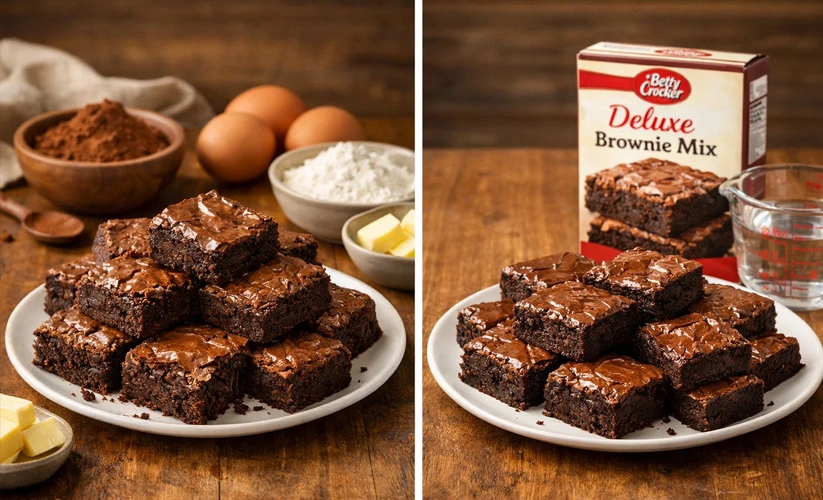
When you pick up the classic Betty Crocker Fudge Brownie Mix (the one that has been a staple in American kitchens since the 1950s), the dry mix itself does not actually contain dairy as a direct ingredient. If you look at the brownie betty crocker ingredients list, you will see sugar, enriched bleached flour, cocoa processed with alkali, palm oil, corn syrup, salt, carob powder, corn starch, and artificial flavor. For a full breakdown of what each of those ingredients does, the Betty Crocker brownie mix ingredients guide explains every component in detail. Notably absent from this list is any milk product or milk derivative.
However — and this is crucial — the box carries an important warning: “May contain milk ingredients.” This phrase is not just cautious legal language. It indicates that while the dry mix does not intentionally include dairy, there is a possibility of cross-contamination during manufacturing. The facility where Betty Crocker brownie mixes are made may also process milk products, and despite rigorous cleaning procedures, trace amounts of milk proteins could theoretically end up in the brownie mix.
Betty Crocker Supreme and Specialty Brownie Mix Varieties
Things change when you move beyond the basic fudge variety. Many of Betty Crocker’s specialty brownie mixes actually do contain dairy as a direct ingredient. For example:
- The Betty Crocker Supreme Original Brownie Mix contains nonfat milk as part of the formula. This is a purposeful addition, not accidental contamination. If you look at the label, you will find “nonfat milk” listed among the ingredients.
- Similarly, the Betty Crocker Milk Chocolate Brownie Mix explicitly contains milk as a key component. The company names this variety “milk chocolate” precisely because dairy is part of the formula.
- The Betty Crocker Salted Caramel Brownie Mix also contains milk, which makes sense because caramel flavoring often involves dairy components.
- Any Betty Crocker brownie mix that includes chocolate chunks or other add-ins mixed into the dry ingredients should be examined carefully, as the chocolate pieces often contain milk.
The Cross-Contamination Factor: What “May Contain” Really Means
Understanding cross-contamination is essential for anyone with a severe dairy allergy. When a brownie mix label says “may contain milk,” it is communicating real information about manufacturing processes.
General Mills, the parent company of Betty Crocker, operates facilities that produce multiple products. Some of these products definitely contain milk. When a facility produces both dairy-containing and non-dairy products, even with thorough cleaning between production runs, some cross-contact can occur.
For someone with a mild lactose intolerance, the “may contain” warning might not be a dealbreaker — the amount of dairy present might be too small to cause symptoms. But for someone with a true milk allergy, especially a severe one, the risk might not be worth taking.
This is why if you are baking for someone with a dairy allergy, the safest approach is to choose a brand that explicitly states the product is “free from milk” or “dairy-free,” rather than relying on a product that merely says “may contain.” You can also read our complete guide to reading food allergy labels for a deeper breakdown of how these warnings are regulated.
Reading Beyond the Ingredient List: Label Literacy
The ingredient list is just one part of the equation. The allergen statement and the facility warnings are equally important. Here is what to look for:
- Direct Ingredients: These are listed in the main ingredient statement. If you see “milk,” “nonfat milk,” “whey,” “casein,” “milk fat,” or any other milk-derived ingredient, the product contains dairy.
- Allergen Statement: This usually appears in bold or a separate section. It will say “Contains Milk” if there is any dairy in the product.
- “May Contain” Warnings: These appear if there is a possibility of cross-contamination. They indicate the risk exists but are not a guarantee that dairy is present.
- Facility Information: Some packages include information like “Made in a facility that processes milk.” This is the most cautious type of warning.
Understanding this hierarchy helps you make informed decisions. A product with “may contain milk” that you bake at home is different from one where “contains milk” appears in bold.
Which Brownie Mixes Are Actually Dairy-Free?
If you need a brownie mix with absolute certainty about dairy content, several brands offer genuinely dairy-free options.
Duncan Hines Chewy Fudge Brownie Mix
This is one of the most accessible dairy-free options. The ingredient list contains no milk products, and critically, many Duncan Hines brownie mix varieties do not carry “may contain milk” warnings. This makes it a significantly safer option than Betty Crocker for people with dairy allergies. See our side-by-side comparison of Duncan Hines vs Betty Crocker brownie mixes for more detail on how these two brands differ across their full product lines.
Specialty and Natural Brands
Brands like Birch Benders, King Arthur Baking Company, and TruEats produce brownie mixes that are certified dairy-free. These are often found in the natural or organic section of grocery stores. They typically cost more than conventional mixes, but the peace of mind is valuable for families with allergies. We cover the best of these in our roundup of the best dairy-free brownie mixes.
Store Brand and Budget Options
Some store-brand brownie mixes (particularly from stores with strong allergy-friendly policies) are also dairy-free. Always check the specific variety, as stores often carry both dairy and non-dairy versions.
Making Brownie Mix Dairy-Free at Home: Smart Substitutions
Even if you have a brownie mix that contains dairy, you might be able to make it work by being strategic about your additions.
The Oil and Water Method
Most basic brownie mix recipes call for eggs, water, and vegetable oil — none of which are dairy. If your mix only requires these three ingredients, you are already safe. The risk only comes in if you add milk where the recipe calls for water. If the recipe says “one-third cup water,” use water, not milk.
When Eggs Are Also a Problem
If you are baking for someone who is both dairy-free and egg-free, you will need an egg substitute. Options include aquafaba (the liquid from canned chickpeas — about 3 tablespoons per egg), flax eggs (1 tablespoon ground flaxseed plus 3 tablespoons water per egg), or applesauce (¼ cup per egg). For a full list of tested options, check out our guide to the best egg substitutes for baking.
Choosing the Right Oil
When substituting oil, stick with vegetable oil, avocado oil, or melted coconut oil. These are all neutral-tasting and dairy-free. Avoid butter or dairy-based shortening if you need the brownies to be lactose-free.
Understanding Brownie Mix Ingredients Beyond Dairy
If you are reading ingredient lists carefully anyway, you might notice other components in brownie mixes worth understanding:
- Soy: Many brownie mixes contain soy lecithin as an emulsifier. This is different from soybeans and is usually safe for people with soy allergies, but not always.
- Gluten: All standard brownie mixes contain wheat flour. Gluten-free brownie mix alternatives exist but are a different product category.
- Eggs: Most brownie mixes require fresh eggs as an addition. This matters for people with egg allergies.
- Tree Nuts: Some specialty mixes include nuts. Check for “may contain tree nuts” warnings if this is an allergen.
Baking Dairy-Free Brownies from Scratch: The Safest Option
If anyone in your household has a severe dairy allergy, the absolute safest approach is to make brownies from scratch using simple, whole ingredients. You control every single component, and there is zero risk of cross-contamination from a shared facility. For a reliable starting point, this dark chocolate brownie mix from scratch recipe gives you complete control over every ingredient from start to finish.
A basic scratch recipe requires cocoa powder (confirm it is dairy-free), sugar, flour, eggs (or egg substitute), oil (vegetable, avocado, or coconut), salt, and optionally vanilla extract or espresso powder for depth. Our step-by-step dairy-free brownie recipe from scratch walks you through the process with tested measurements.
Restaurant and Commercial Brownie Safety
If you are ordering brownies from a bakery or restaurant for someone with a dairy allergy, always ask detailed questions. Bakeries often make brownies with butter, and many recipes include chocolate that contains milk. Additionally, shared baking equipment and surfaces pose cross-contamination risks. For a great overview of nostalgic American baking culture and how home baking traditions developed, Vintage Life of USA on YouTube is a wonderful channel worth exploring. Do not assume that because a brownie “looks” dairy-free, it is safe. Get explicit answers about ingredients and preparation methods.
The Bottom Line: Does Brownie Mix Have Dairy?
The answer to “does brownie mix have dairy” depends on which specific product you choose. Standard Betty Crocker Fudge Brownie Mix does not directly contain dairy ingredients, but it carries a “may contain milk” warning due to manufacturing practices. Many other Betty Crocker varieties actually do contain milk as a direct ingredient. To understand the full history of how this product was developed and formulated, the story of Betty Crocker brownie mix is a fascinating read. Duncan Hines and specialty brands offer genuinely dairy-free options. If you need complete certainty, make brownies from scratch using simple ingredients you control.
For families managing dairy allergies or lactose intolerance, the key is reading labels carefully, understanding the difference between direct ingredients and cross-contamination warnings, and knowing which brands prioritize allergen safety. With this information, you can confidently bake delicious brownies that everyone can enjoy safely.
Frequently Asked Questions
Q1: Can I safely give someone with a dairy allergy Betty Crocker Fudge Brownie Mix brownies?
This depends on the severity of the allergy. Betty Crocker Fudge Brownie Mix does not contain milk as a direct ingredient, but it carries a “may contain milk” warning. For mild lactose intolerance, this might be acceptable. For a serious dairy allergy, the risk of cross-contamination may not be worth it. Always consult with the person’s healthcare provider or allergist when in doubt. Duncan Hines offers a safer alternative without the “may contain” warning.
Q2: What does “may contain milk” mean on a brownie mix label?
“May contain milk” indicates that while the product does not intentionally include dairy, there is a possibility of cross-contamination during manufacturing. The facility produces other products containing milk, and despite cleaning procedures, trace amounts of milk proteins could be present. The FDA does not require companies to list “may contain” warnings, but responsible manufacturers include them for safety.
Q3: Does brownie mix require milk as an ingredient to add?
Most basic brownie mix recipes require only eggs, water, and vegetable oil — no milk. However, some recipes or specialty mixes might call for milk instead of water for a creamier texture. Always check your specific mix’s instructions. If the recipe calls for milk and you need it to be dairy-free, substitute with water or a plant-based milk like oat or almond milk.
Q4: Which brownie mix brands are certified dairy-free?
Brands like Birch Benders, King Arthur Baking Company, TruEats, and most Duncan Hines varieties are reliably dairy-free. Many store brands also offer dairy-free versions. However, brands often produce multiple versions (some with dairy, some without), so always check the specific product label before assuming it is dairy-free. Our dairy-free brownie mix comparison guide covers the top picks across price points.
Q5: Is homemade brownie mix safer than boxed mix for dairy allergies?
Yes. When you make brownies from scratch using whole ingredients you select yourself, you have complete control over every component. There is zero risk of factory cross-contamination. For anyone with a severe dairy allergy, making brownies from simple ingredients (cocoa powder, sugar, flour, eggs, oil, salt) is the safest approach and often results in superior taste. See our dairy-free brownie recipe from scratch to get started.